"Robot" was coined for a 1920 play and means "forced labor"
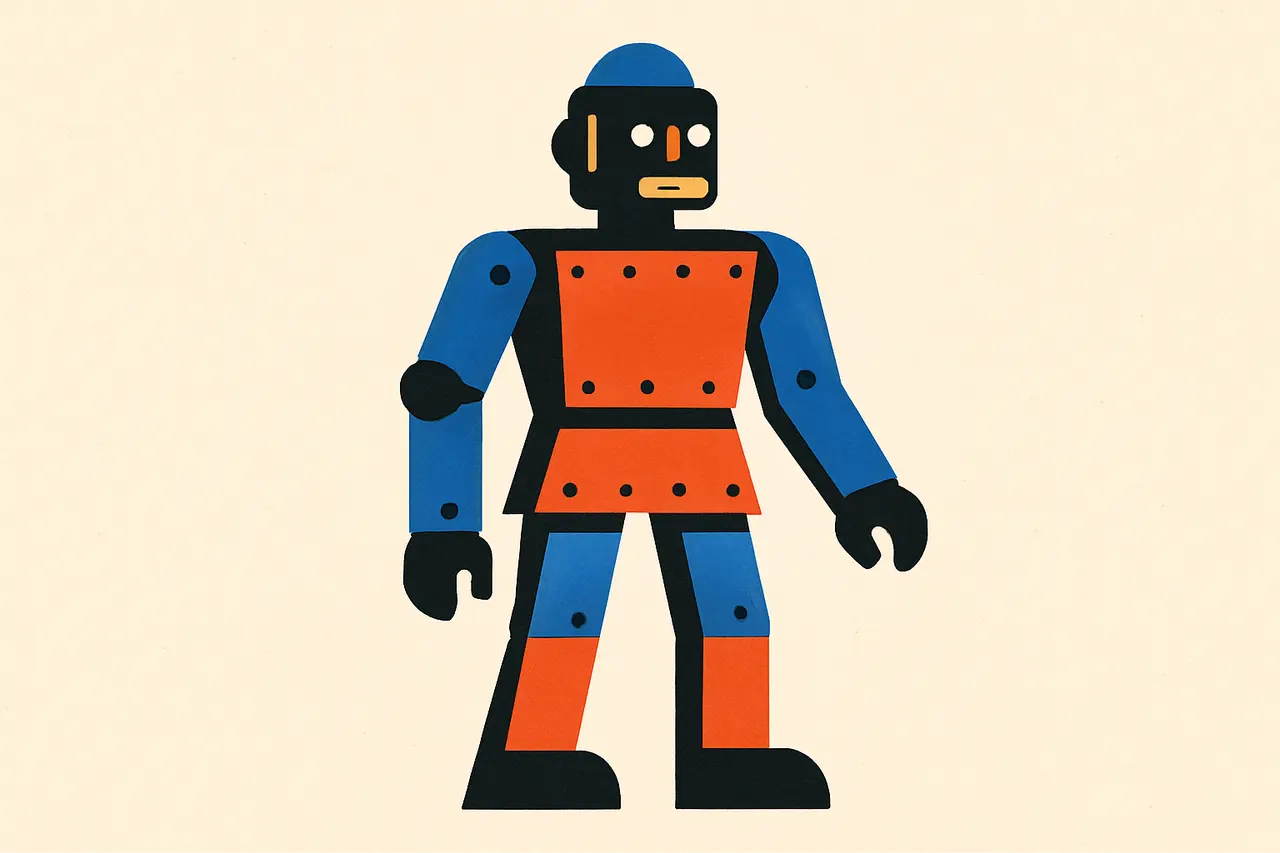
Czech playwright Karel Capek needed a word for artificial workers — his brother supplied it.
Before 1920, the world had automatons and androids, but no robots. The word debuted in R.U.R. (Rossum’s Universal Robots), a play by Czech writer Karel Capek that premiered in 1921, and it swept those older terms aside in language after language.
Capek first tried labori, from the Latin for labor, but found it too bookish. His brother Josef Capek suggested roboti instead. The root is robota — “forced labor, drudgery, serf labor” — drawn from central Europe’s feudal corvee system, under which a peasant owed a lord unpaid days of work and which the Austrian empire abolished only in 1848. It traces back through Old Church Slavonic to a word meaning “slave.”
So the most futuristic-sounding word in technology is really a relic of feudal servitude. Fittingly, Capek’s robots were not clanking metal machines at all. They were organic beings, assembled from synthetic flesh in vats — far closer to what we’d now call androids or clones. And the play is no celebration: the manufactured workers, treated as disposable labor, rise up and exterminate humanity, making “robot” a warning baked into its very etymology.
Capek’s mechanical workers were named not for their machinery but for their servitude.
The word traveled fast. R.U.R. was translated into some thirty languages within a few years and staged from London to New York and Tokyo, and “robot” displaced “automaton” almost everywhere it landed — one of the few coinages to enter the world’s languages from a single stage play. Two decades later, science-fiction author Isaac Asimov spun a new word from it — “robotics” — to name the engineering field that has been chasing Capek’s idea ever since, apparently without realizing he had invented the term. The artificial workers we build today still wear the name of medieval serfs, a four-letter reminder that the dream of tireless machines began as an anxiety about who, exactly, does the labor.
Sources & references
3 referencesWell-established. Corroborated by 3 independent sources.