Goddard's first liquid-fuel rocket flew 41 feet in 1926
On this day · 16 March 1926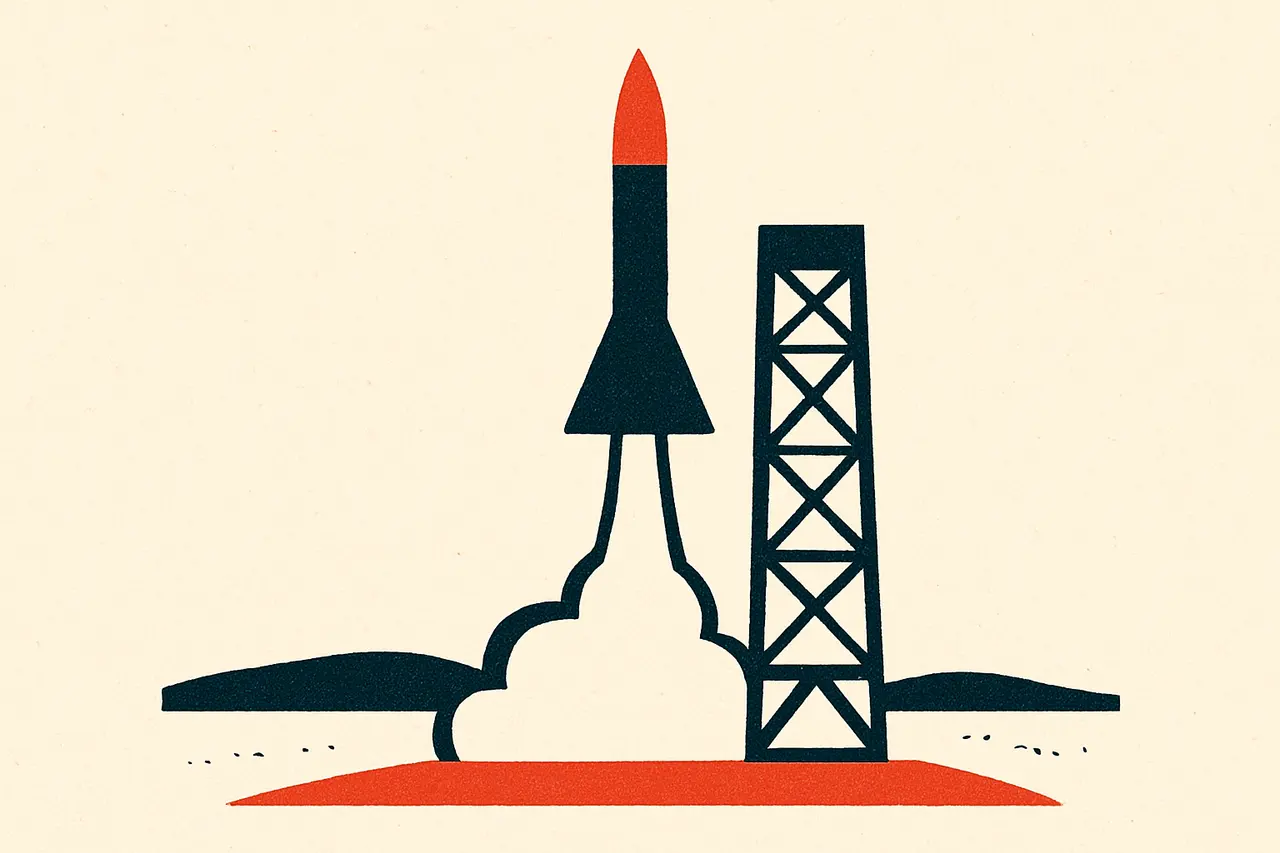
Robert Goddard's 1926 rocket flew for 2.5 seconds, stayed secret for a decade, and drew a New York Times apology 49 years late.
Physicist Robert H. Goddard launched the world’s first liquid-fueled rocket on 16 March 1926 from a snowy farm field in Auburn, Massachusetts, just outside Worcester. Burning gasoline and liquid oxygen, it rose 41 feet in a 2.5-second flight and came down 184 feet away in a cabbage field.
Getting off the ground was the hard part. The rocket, later nicknamed Nell, burned for about 20 seconds on its launch frame before it had used enough propellant to lift itself, and an attempt on 8 March had failed. Goddard mounted the combustion chamber and nozzle on top, with the tanks below, thinking it more stable; a few flights later he found an engine underneath worked fine and was simpler.
The only witnesses were Goddard, his wife Esther, and a couple of assistants from Clark University, where he taught physics. The Smithsonian, which had funded his work since 1917, heard about it weeks later. The newspapers never did: Goddard kept the flight secret for a decade.
He had reason to be wary of the press. In 1920 an anonymous New York Times editorial scoffed at his ideas, wrongly arguing that a rocket could not work in a vacuum because it needed air to push against. The paper took 49 years to correct itself: on 17 July 1969, the day after Apollo 11 lifted off, it printed a brief item headlined “A Correction”:
“Further investigation and experimentation have confirmed the findings of Isaac Newton in the 17th Century, and it is now definitely established that a rocket can function in a vacuum as well as in an atmosphere. The Times regrets the error.”
Goddard did not see it. He died in 1945; his highest-flying rocket had reached about 9,000 feet. NASA named its Goddard Space Flight Center after him in 1959, and Clark University marked the launch’s centenary in March 2026.
Sources & references
5 referencesWell-established. Corroborated by 3 independent sources.