"Quarantine" literally means "forty days"
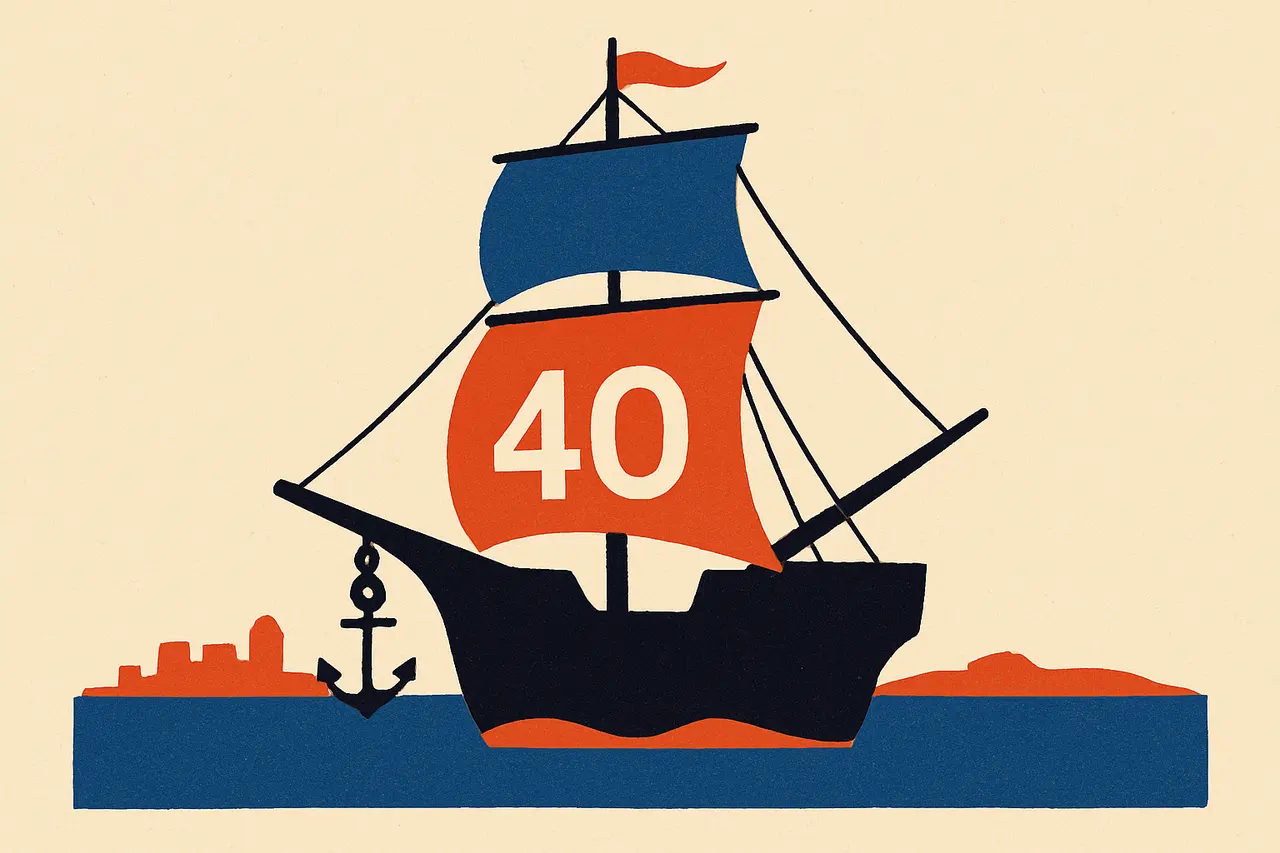
The word is Italian arithmetic: quaranta, "forty" — the span ships once waited out the plague.
When a port wanted to keep the Black Death offshore, it made arriving ships sit at anchor before anyone could land. The Italian for that waiting period gave us quarantine, from quaranta, “forty” — a quarantina, a span of forty days.
The practice grew in stages. In 1377 the Great Council of Ragusa (modern Dubrovnik) imposed a 30-day isolation, a trentino. Over the following decades other cities adopted it and stretched the period from thirty days to forty — a quarantino.
Why forty rather than thirty? The number carried weight beyond epidemiology, echoing biblical forties — the Flood, and Christ’s forty days in the wilderness — as much as any medical reckoning.
So a modern public-health term still wears its medieval arithmetic on the outside: every time we “quarantine,” we invoke a count of forty days first enforced on plague-era docks.
Sources & references
2 referencesWell-established. Corroborated by 2 independent sources.