The planets are named after Roman gods
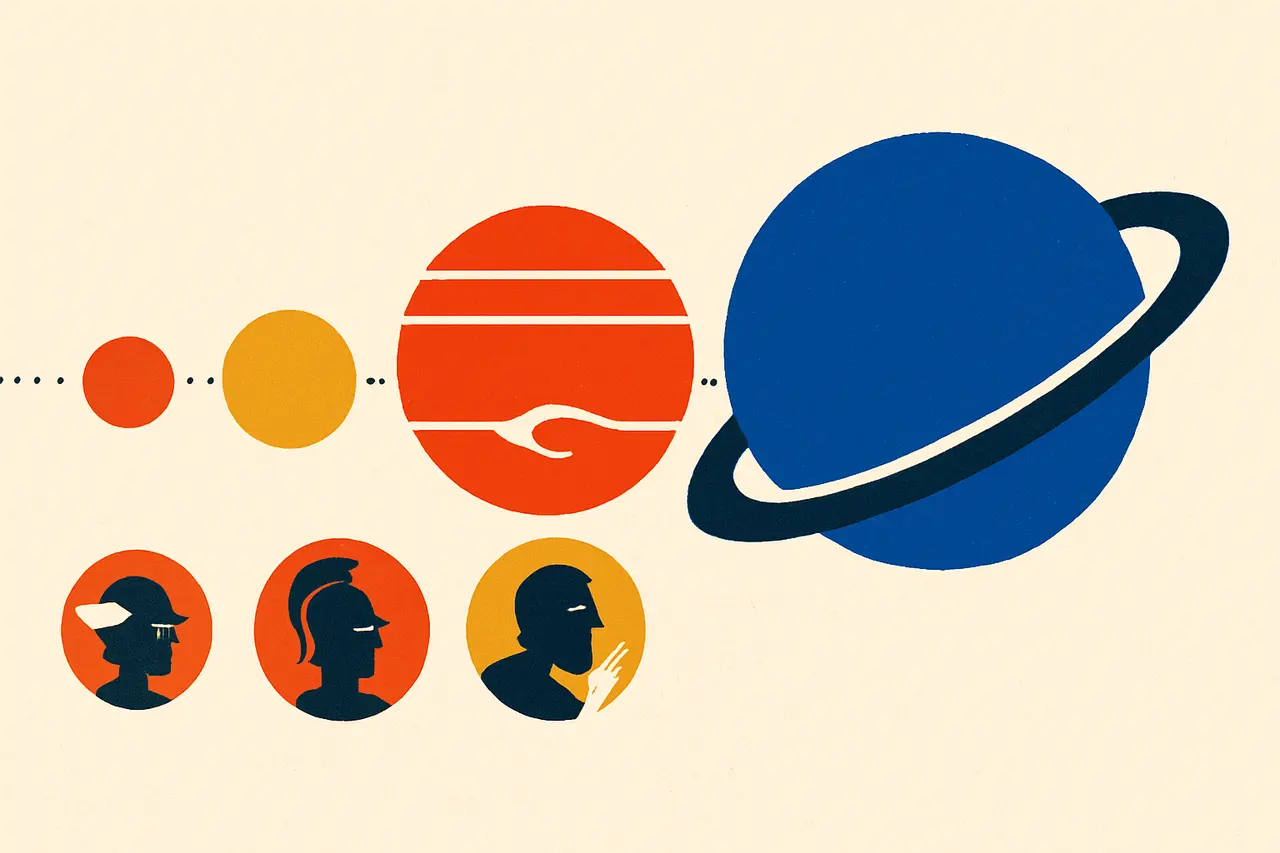
The five worlds visible to the naked eye took the names of Roman deities - and later discoveries kept the theme.
Five planets - Mercury, Venus, Mars, Jupiter and Saturn - are bright enough to see without a telescope, so ancient skywatchers tracked them for millennia. Roman astronomers, writing in Latin, named each after a deity whose character seemed to fit. Venus, bright and beautiful, took the goddess of love; red, ominous Mars took the god of war; Jupiter, the largest, took the king of the gods.
When telescopes revealed worlds the Romans never saw, astronomers chose to keep the tradition going. Uranus, found in 1781, was named for the father of Saturn; Neptune, located in 1846, for the god of the sea.
Because we’re humans, we want to name these things. It gives us a connection to the huge universe around us.
Today the International Astronomical Union oversees the naming of bodies in the sky - but the old mythological theme, set down in antiquity, still rules the solar system.
Sources & references
2 referencesWell-established. Corroborated by 2 independent sources.