China's oldest writing was carved to ask the dead and the gods questions
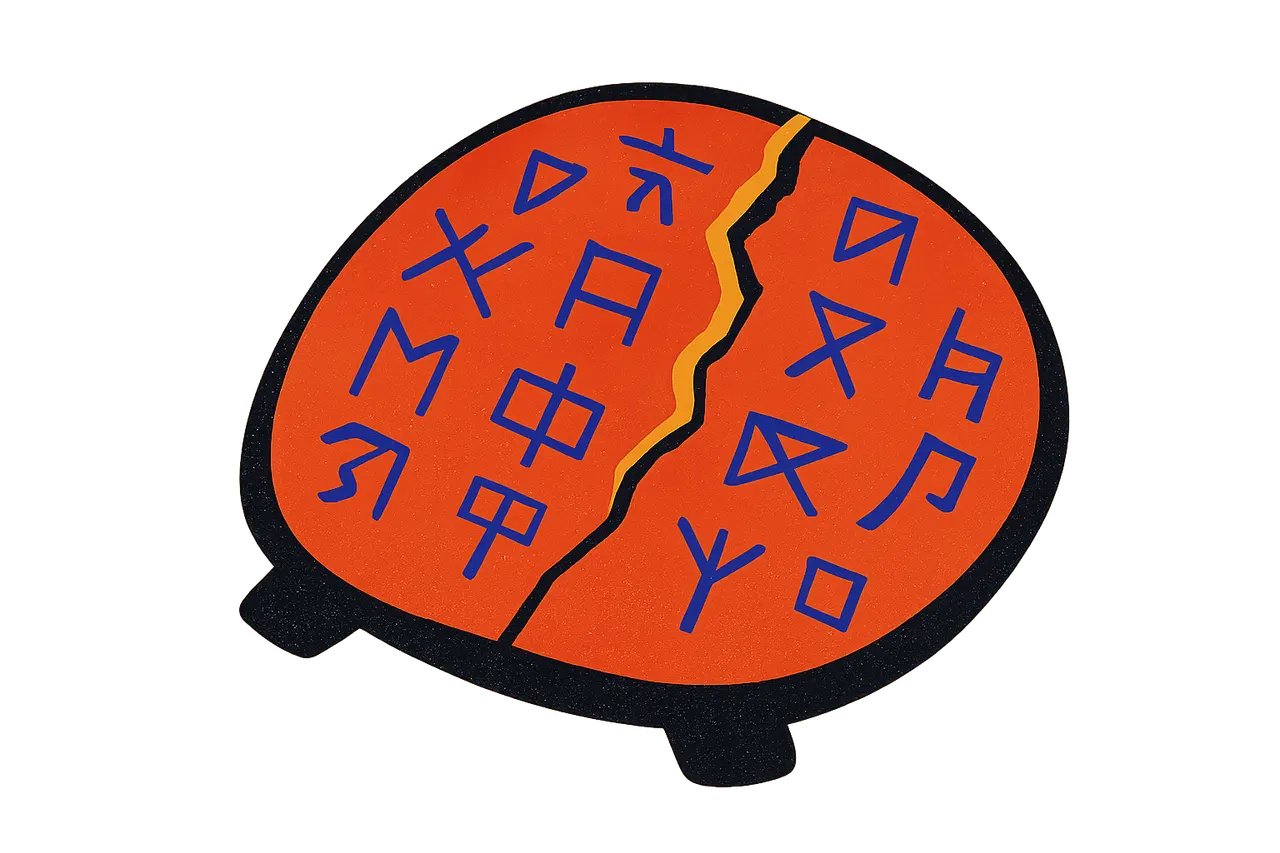
Shang kings heated ox bones until they cracked, then read the cracks - and the records they kept became the ancestor of Chinese script.
Under the late Shang dynasty (c. 1250–1046 BCE), Chinese kings governed partly by divination. Diviners took the shoulder blades of oxen and the undershells of turtles, posed a question, then touched a heated rod to the bone until it cracked. The pattern of cracks was read as an answer from ancestors and the high god Shangdi.
The questions were intensely practical: would the harvest succeed, would it rain, would a military campaign go well? Scribes often recorded the question, the interpretation, and sometimes whether the prediction came true.
The scale is staggering. More than 150,000 inscribed bones and fragments are known, preserving about 4,000 distinct characters — roughly half of them deciphered. These graphs, called jiaguwen, “oracle bone script,” are the earliest known systematic Chinese writing and the direct ancestor of modern Chinese characters, an unbroken thread of more than three thousand years.
They also rewrote history. The inscriptions named Shang kings in an order that matched later king-lists, confirming that the dynasty was real rather than legend, and pinpointed its late capital at Anyang (Yinxu), now a UNESCO World Heritage Site.
The rediscovery reads like fiction. In 1899, the scholar Wang Yirong reportedly noticed ancient graphs on “dragon bones” being ground up and sold as medicine. The realization sparked a frantic hunt — and a wave of looting that stripped many sites before scientific excavation ever began.
Sources & references
2 referencesWell-established. Corroborated by 2 independent sources.