Why the observable universe is 93 billion light-years wide
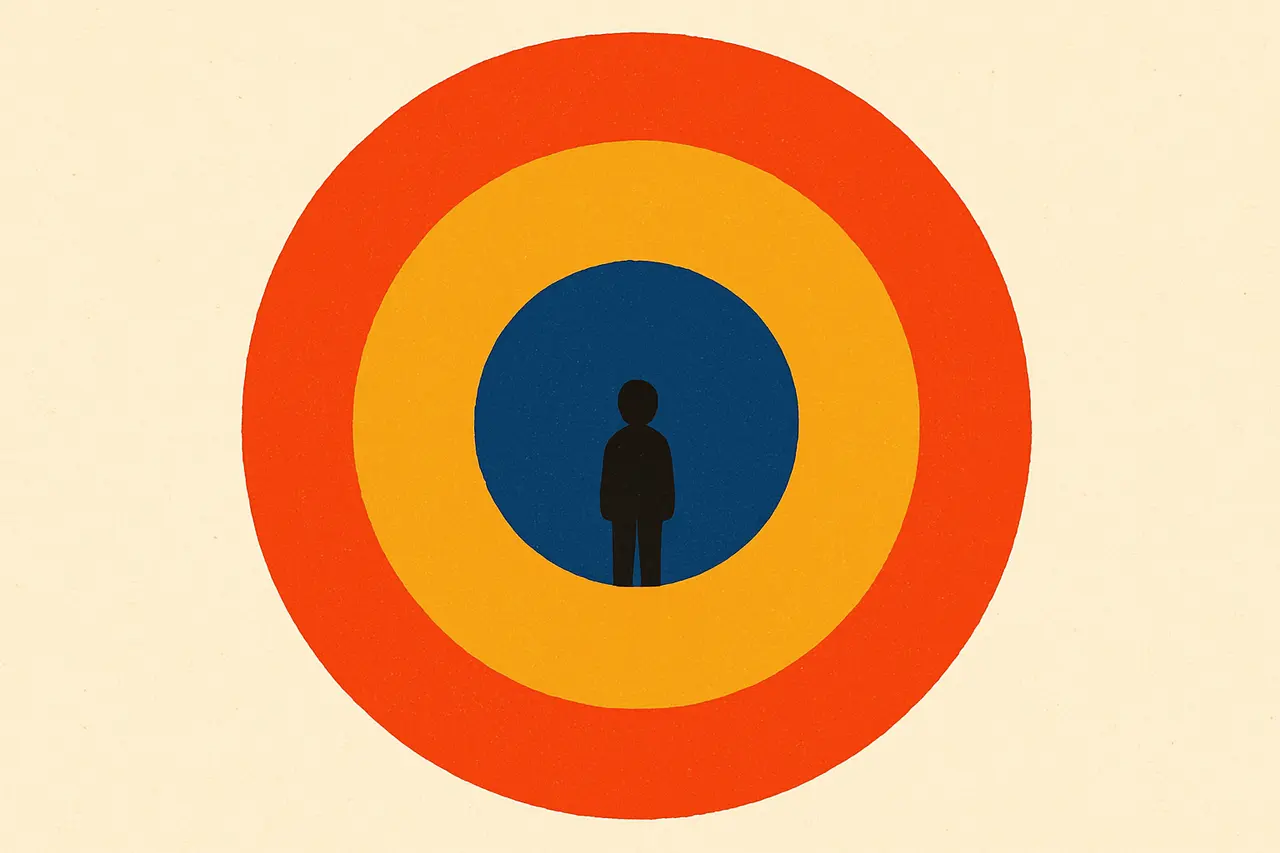
The universe is 13.8 billion years old, yet the farthest matter we can see now lies 46 billion light-years away. Expansion explains it.
The observable universe is about 93 billion light-years across: the most distant matter whose light reaches us now lies roughly 46 billion light-years away in every direction, even though the universe is only about 13.8 billion years old.
The common wrong answer
The tempting answer is a radius of 13.8 billion light-years: light has had 13.8 billion years to travel, so that must be as far as we can see. That is the light-travel distance, how far the light itself journeyed. Cosmologists instead quote where the source is now, and the space the light crossed kept stretching behind it the whole way.
UCLA cosmologist Ned Wright shows how the number grows, using a round 14-billion-year age:
| How expansion is handled | Farthest distance we can see |
|---|---|
| Ignored (light-travel distance) | 14 billion light-years |
| Allowed for as one step | about 22 billion |
| Trip split into two halves | about 26 billion |
| Thousands of steps, matter-only universe | about 42 billion |
| Plus the accelerating expansion of the real universe | about 47 billion |
Tamara Davis and Charles Lineweaver’s calculation puts this horizon at about 46 billion, hence the radius range of 46 to 47 billion and a diameter near 93 billion.
In practice the visible edge is the cosmic microwave background. For roughly the first 380,000 years, light could not travel far through the hot, dense fog of particles, so that released light is the oldest we can see.
The whole universe is bigger still. Observations show space is so close to flat that its radius of curvature exceeds 70 billion light-years, which means the entire universe has more than 20 times the volume of the part we can observe. It may well be infinite.
Sources & references
4 referencesWell-established. Corroborated by 3 independent sources.