The "mare" in nightmare is a demon, not a horse
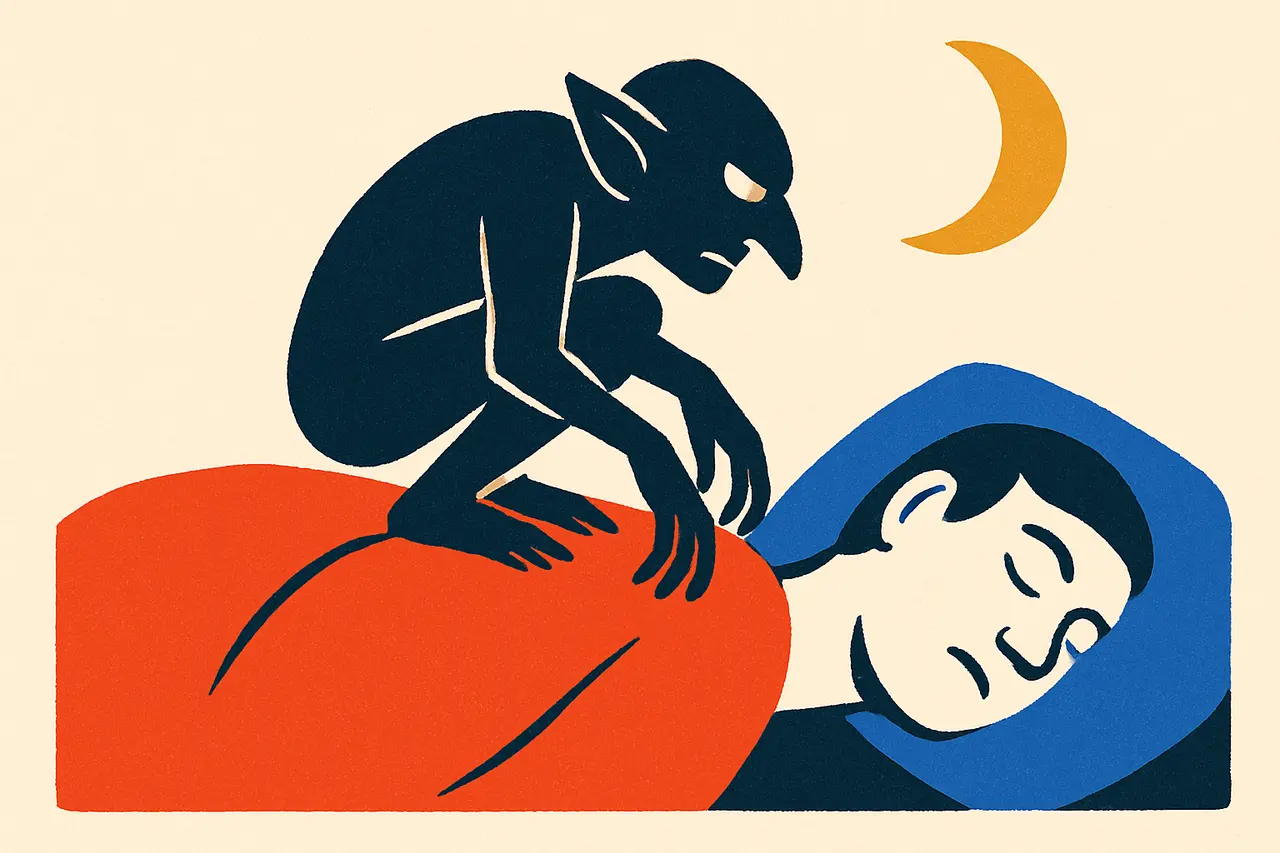
Old English had a goblin called a mare that crouched on sleepers' chests — that's the night-mare.
A nightmare has nothing to do with horses. The mare in the word is a different, now-obsolete term: in Old English, a mare was an incubus — an evil spirit or goblin, from Proto-Germanic maron, with cousins across the Germanic and Slavic languages.
The folklore was vivid and specific. The mare was said to creep into a sleeper’s room, settle on the chest, and press down, producing a feeling of suffocation — what we’d now recognise as sleep paralysis. The compound “nightmare” appears around 1300 for exactly this demon.
Only later did the meaning drift away from the creature. By the mid-1500s the focus shifted from the demon to the suffocating sensation it caused. The familiar modern sense — simply a bad dream — isn’t recorded until the early 19th century.
So the word still carries its monster inside it: every nightmare is, etymologically, a small demon sitting on your chest in the dark.
Sources & references
2 referencesWell-established. Corroborated by 2 independent sources.