Spirit rover landed on Mars in 2004 and outlived its plan 25x
On this day · 3 January 2004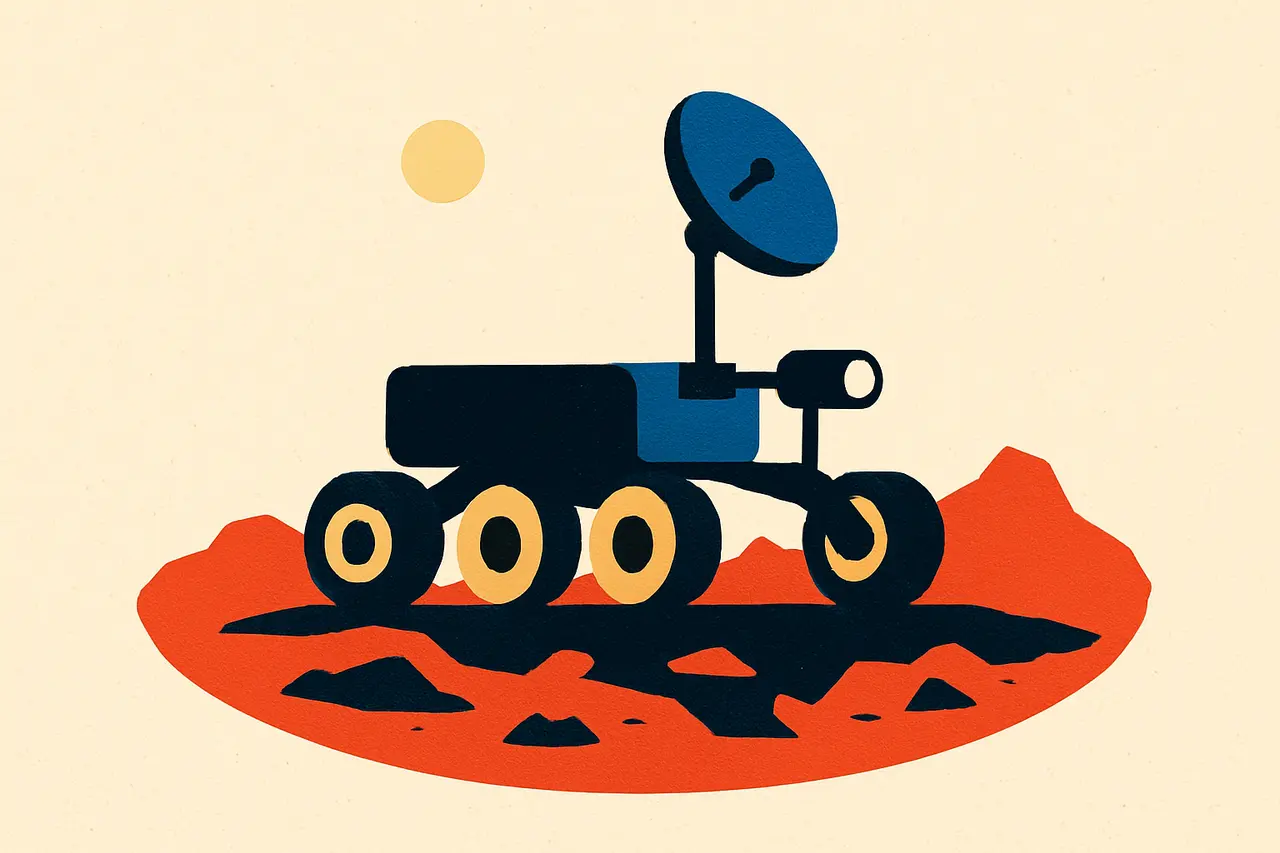
Built for 90 Martian days, Spirit worked in Gusev Crater for six years, and its broken wheel made its best discovery.
NASA’s Spirit rover landed in Gusev Crater on Mars at 8:35 p.m. Pacific time on January 3, 2004, and went on to work for six years, two months and 19 days, more than 25 times its planned lifetime. In UTC the touchdown was already January 4, which is why some sources give that date.
Cocooned in airbags, Spirit hit the ground at about 46 feet per second and bounced 28 times before rolling to a stop, roughly 8 miles from its target. The team named the spot Columbia Memorial Station, after the seven astronauts lost on the shuttle Columbia eleven months earlier. Its twin, Opportunity, landed on the far side of Mars three weeks later.
Spirit’s design life was 90 sols (Martian days). In 2006 its right front wheel stopped turning, so drivers sent the rover backwards on five wheels, dragging the dead one behind it. That handicap produced its most important find.
In 2007 the dragging wheel scraped up a bright patch of nearly pure silica, the main ingredient of window glass. On Earth such deposits form around hot springs or steam vents, places where microbes thrive, so the patch was strong evidence that ancient Mars had been wetter and possibly habitable.
The luck ran out on May 1, 2009, when Spirit bogged down in soft soil at a site called Troy, beside the plateau Home Plate. Another wheel failed that November, and in January 2010 NASA turned the rover into a stationary science platform. It never woke from its Martian winter hibernation: the last signal arrived on March 22, 2010. After more than 1,300 commands went unanswered, NASA ended the mission on May 25, 2011. Spirit had driven 4.8 miles, and it still sits at Troy.
Sources & references
5 referencesWell-established. Corroborated by 3 independent sources.