The first telegraph message asked: What hath God wrought?
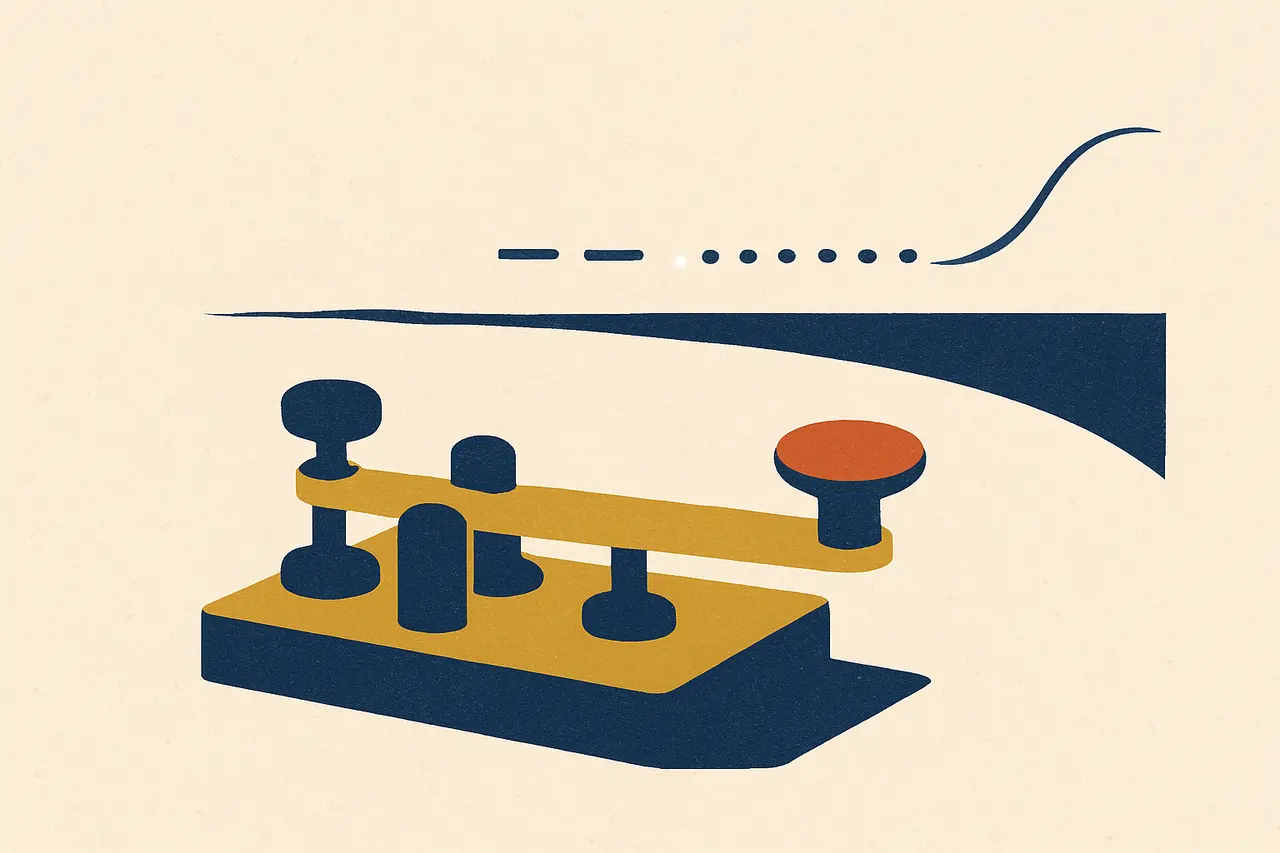
In 1844 four words tapped from Washington to Baltimore proved that information could outrun the fastest horse.
On 24 May 1844, inventor Samuel F. B. Morse sat in the chamber of the U.S. Capitol and tapped out the first message on his experimental electromagnetic telegraph line. Down the wire to Baltimore, his assistant Alfred Vail received the dots and dashes, then sent them straight back.
The phrase—“What hath God wrought”—was chosen by Annie Ellsworth, daughter of the patent commissioner, drawn from the Book of Numbers (23:23). Encoded in the system now known as Morse code, it travelled the roughly 40 miles almost instantly.
For the first time, a message could move faster than the person carrying it.
Before the telegraph, news crawled at the speed of trains, ships and riders. Morse’s demonstration severed that link between distance and time, launching a communications revolution that within decades would wire continents together.
Sources & references
2 referencesWell-established. Corroborated by 2 independent sources.