Did monks see a lunar impact in 1178? Probably not
On this day · 18 June 1178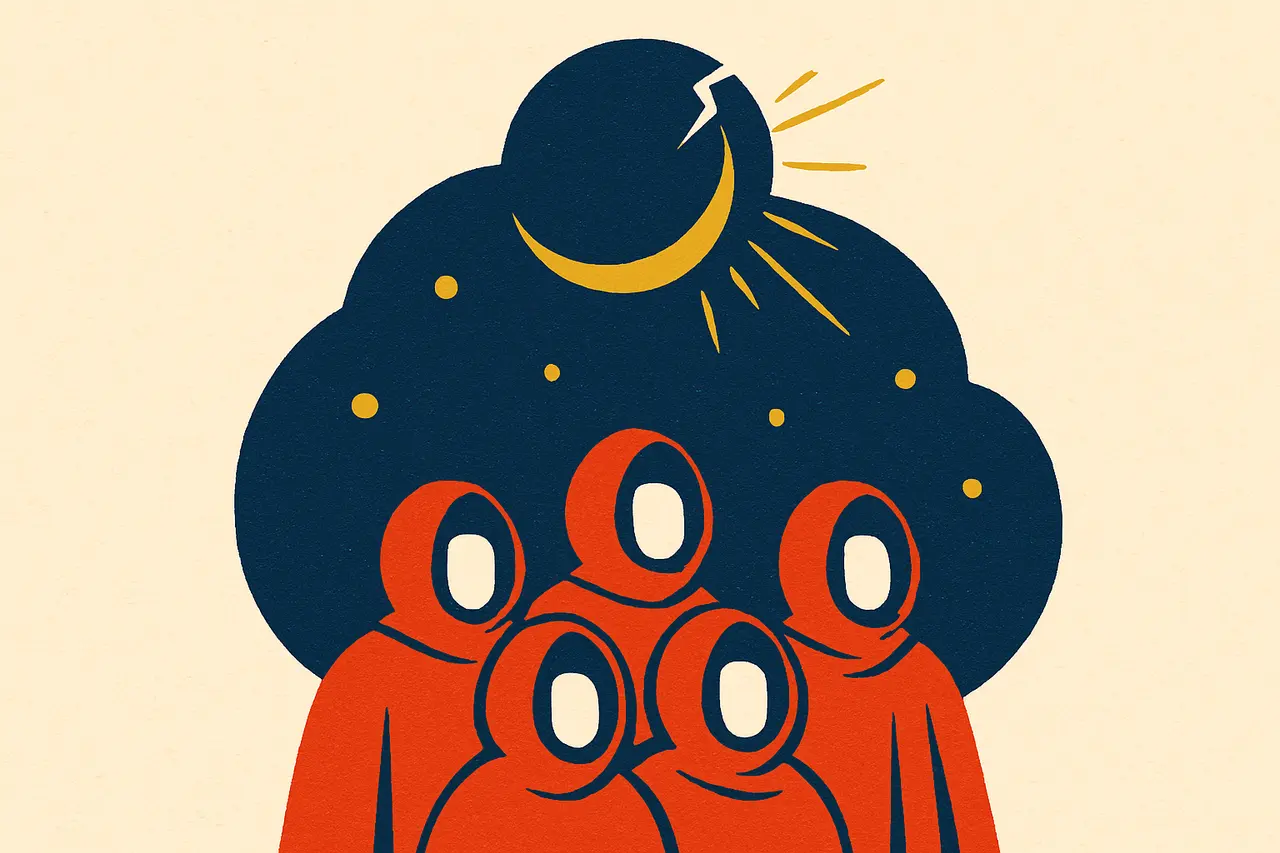
Five Canterbury witnesses saw the Moon 'split in two' in 1178. The crater blamed for it, Giordano Bruno, is likely more than a million years older.
Five men near Canterbury who watched the crescent Moon “split in two” on June 18, 1178, probably did not see a lunar impact, despite a popular theory tying their report to the 22 km crater Giordano Bruno; the strongest evidence against it is a meteor storm that never happened.
The account comes from the chronicle of Gervase of Canterbury. About an hour after sunset, the witnesses saw the upper horn of the new Moon divide, and then:
“From the midpoint of this division a flaming torch sprang up, spewing out … fire, hot coals and sparks.” (Gervase of Canterbury)
They said the display recurred a dozen times or more. In 1976 a geologist noted that Giordano Bruno, the youngest lunar crater of its size or larger, sits in about the right place, and the idea became a favourite of popular astronomy.
Why doesn’t the impact theory hold up?
Because the meteor storm it predicts never happened. In 2001 University of Arizona graduate student Paul Withers worked through the consequences. The impact would have hurled about 10 million tons of debris into Earth’s atmosphere over the following week, around 50,000 bright meteors an hour, a storm comparable to the peak of the 1966 Leonids, visible worldwide. Yet European, Chinese, Arabic, Japanese and Korean records are silent. Withers’ alternative: the five stood in just the right patch of ground to see a meteor heading almost straight at them, lined up with the Moon.
How old is the Giordano Bruno crater?
Crater counts suggest it is far older than 1178. A team using images from Japan’s Kaguya orbiter counted the small craters on Giordano Bruno and estimated it formed more than a million years ago; other counts allow up to 10 million. Lunar Reconnaissance Orbiter Camera scientists caution that some of those small craters may be debris from the original blast, so counts can mislead. Strictly, the crater formed somewhere between 10 million years ago and June 1178, and only radiometric dating of its impact melt, from samples brought back to Earth, would settle it for good.
Sources & references
5 referencesWell-established. Corroborated by 2 independent sources.