Able and Baker were the first US animals to survive space
On this day · 28 May 1959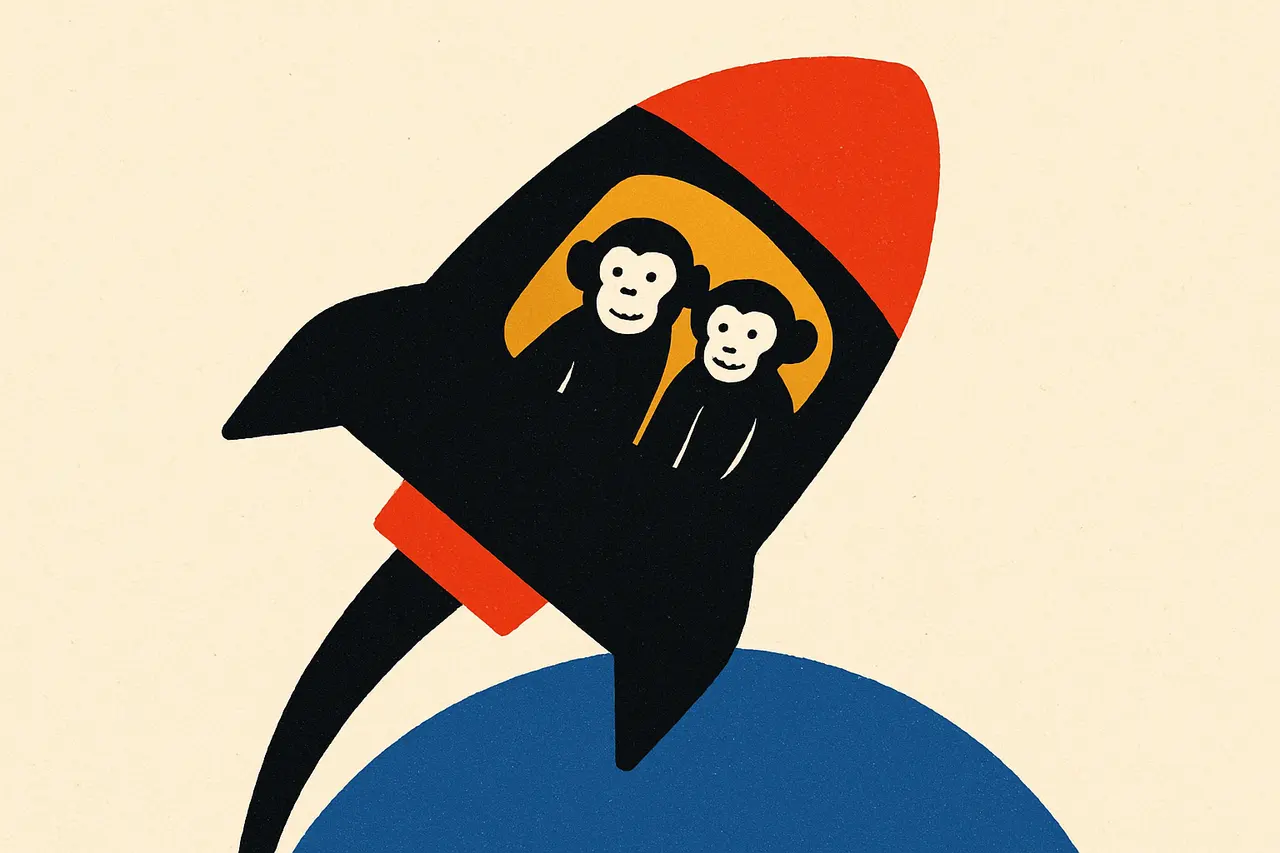
Two monkeys rode a Jupiter missile 300 miles up in May 1959 and came back alive, though Soviet dogs had made the trip years earlier.
On May 28, 1959, a US Army Jupiter missile carried rhesus monkey Able and squirrel monkey Baker about 300 miles high, and both were recovered unharmed, making them the first American animals to enter space and return safely.
Were Able and Baker the first animals to survive a spaceflight?
No. They are often called the first living creatures to survive a spaceflight, a myth that space historian Chris Dubbs told NPR “seems to be out there.” Soviet dogs Dezik and Tsygan were recovered after a suborbital flight on August 15, 1951, and Dubbs counts at least 30 Soviet dogs returned alive from such flights. The American record was grim: Albert II died on impact in 1949, and squirrel monkey Gordo was lost in the Atlantic in December 1958 when his capsule’s flotation gear failed. Earlier American monkeys that came home alive had not flown high enough to count as reaching space.
Able was a late substitute. A trained rhesus born in India was replaced two weeks before launch after President Eisenhower decided that flying a monkey many Indians regard as sacred might cause offence. Able came from Independence, Kansas.
The 16-minute flight included about nine minutes of weightlessness and came down 1,700 miles downrange. Electrodes in Able’s fibreglass cradle, which seated her the way the first astronauts would sit, recorded her responses to noise, acceleration and weightlessness. Sources differ on peak height: NASA and the Smithsonian say over 300 miles, NPR about 360.
Once the USS Kiowa had the nose cone aboard, the team on the ship radioed:
“Able Baker perfect. No injuries or other difficulties.” — message from the recovery ship, as reported by NPR
What happened to Able and Baker afterwards?
Able died within days, on June 1, 1959, when her heart stopped under anaesthesia during the removal of an electrode; her preserved body is at the Smithsonian. Miss Baker lived until 1984, dying of kidney failure at 27, then the oldest squirrel monkey in captivity. Visitors still leave bananas on her grave in Huntsville, Alabama.
Sources & references
3 referencesWell-established. Corroborated by 3 independent sources.