Each step up the magnitude scale means about 32 times more earthquake energy
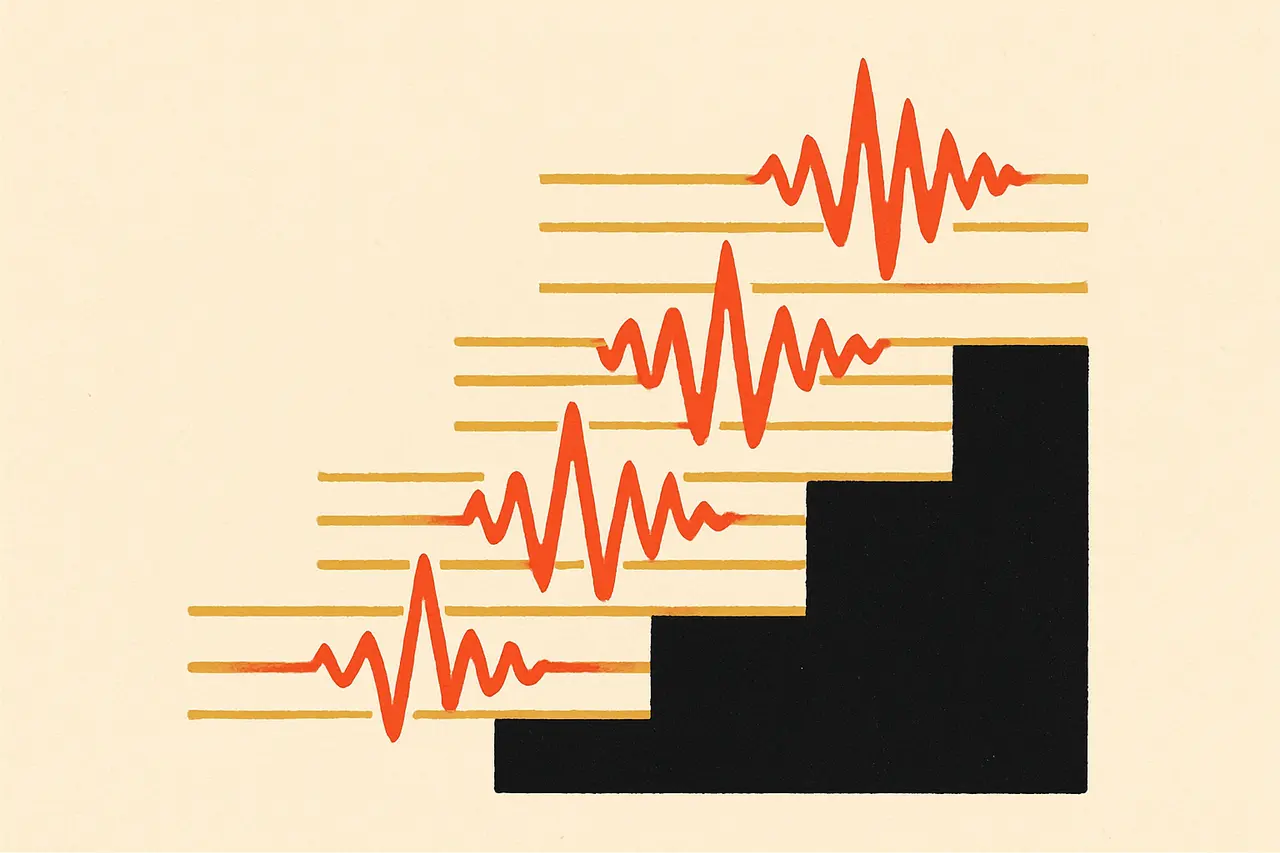
The magnitude scale is logarithmic, so a magnitude 7 quake is not slightly bigger than a 6 — it releases roughly 32 times the energy.
Earthquake magnitude is deceptively gentle-looking. The numbers climb one at a time, but the scale is logarithmic: each whole step represents about a tenfold jump in the size of the recorded waves and roughly 31 to 32 times more energy released.
A magnitude 7 earthquake unleashes about 32 times the energy of a magnitude 6, and a magnitude 8 about 1,000 times that of a magnitude 6.
That is why the gap between a moderate quake and a great one is so vast. The original Richter scale measured wave amplitude on a single seismometer, but it “saturates” for the largest events — it cannot tell a giant from a merely huge one.
Seismologists now use the moment magnitude scale, which is built from the fault’s area and how far it slipped. It captures the total energy of even the greatest earthquakes, which is why every record-breaking quake is reported in moment magnitude.
Sources & references
2 referencesWell-established. Corroborated by 2 independent sources.