Mithraism was a secret Roman cult that worshipped in cave-like temples
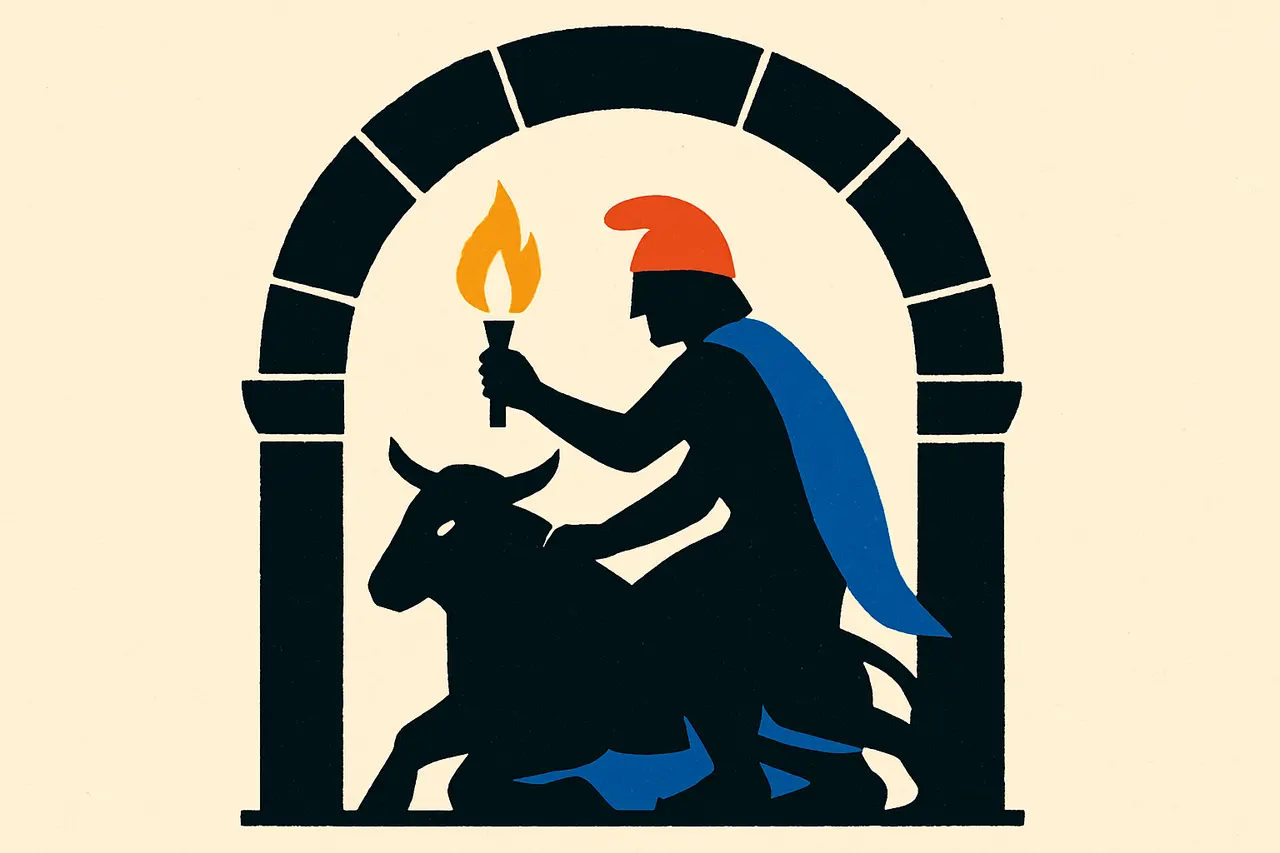
Bull-slaying altars, seven grades of initiation, and an all-male brotherhood that left almost no writings - a rival to early Christianity.
From roughly the 1st to the 4th century CE, a mystery religion centered on the god Mithras spread across the Roman Empire, from Britain to the Near East. Drawing on an older Iranian deity, the Roman cult became something distinct — and deliberately secretive.
Members met in mithraea, small temples built or carved to feel like caves. The defining image, found in shrine after shrine, is the tauroctony: Mithras kneeling on a bull and plunging a dagger into it, attended by a dog, a snake, a scorpion, and a raven. Some scholars read this scene as a star map; David Ulansey argues the bull-slaying encodes the precession of the equinoxes, with each animal standing for a constellation.
Initiates climbed seven grades, each under a planetary guardian: Corax (Raven), Nymphus, Miles (Soldier), Leo (Lion), Perses, Heliodromus, and Pater (Father). The ascent was likened to the soul’s journey up through the celestial spheres. Membership was all-male, the rites involved shared meals and tests of courage, and the cult was especially popular among soldiers.
That very design helped doom it against Christianity. Mithraism excluded women, left no scripture, and depended on small in-person cells. After Theodosius’s anti-pagan edicts late in the 4th century it faded fast. Many mithraea now lie literally beneath churches — as at San Clemente in Rome, where a Christian basilica stands atop the buried temple of a forgotten rival.
Sources & references
2 referencesWell-established. Corroborated by 2 independent sources.