The first photo of Earth from the Moon was taken in 1966
On this day · 23 August 1966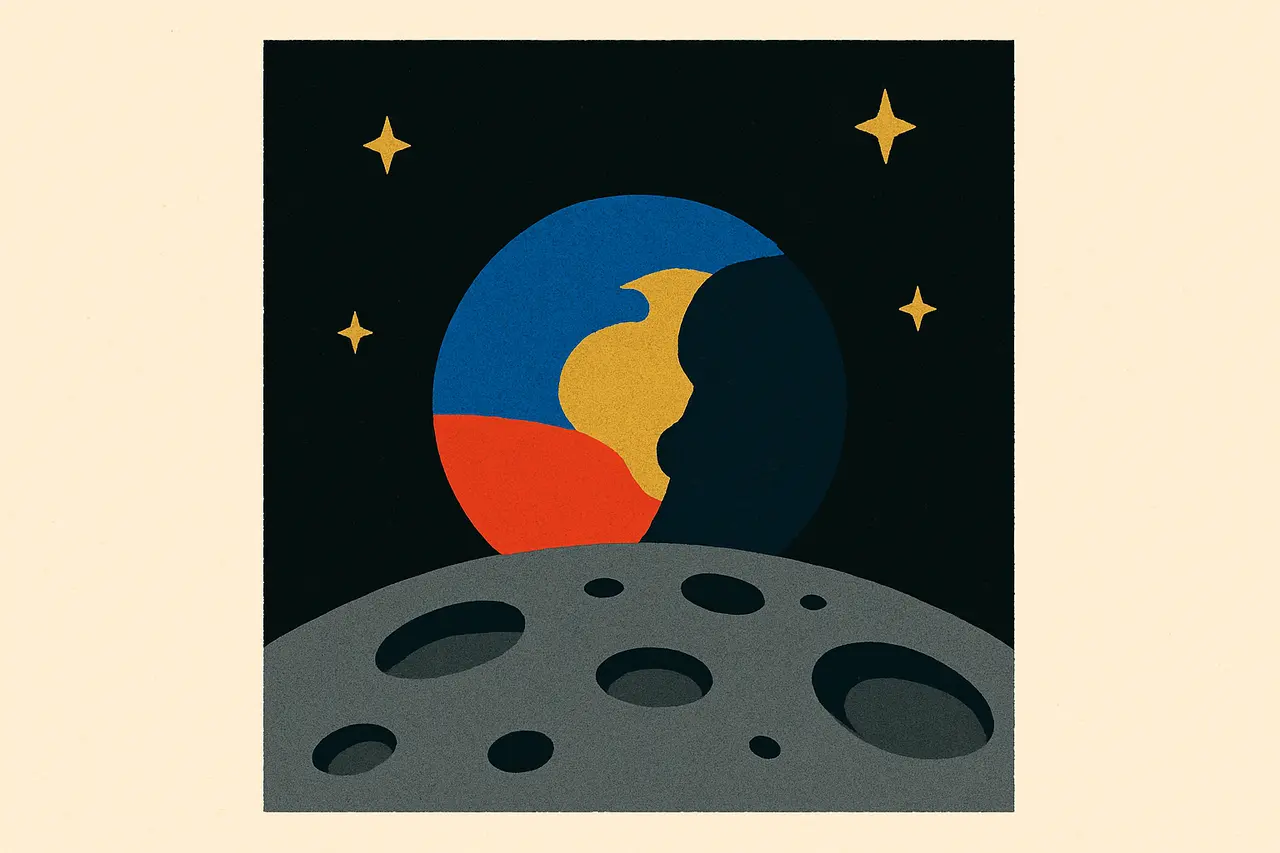
An unplanned 1966 snapshot by a NASA mapping probe, shot with a camera built for a spy satellite, gave us the first view of Earth from the Moon.
NASA’s Lunar Orbiter 1 took the first photograph of Earth from the vicinity of the Moon on 23 August 1966, on its 16th orbit, just before the spacecraft passed behind the Moon. The crescent Earth hung over the lunar horizon in a picture nobody had planned to take.
The probe’s real job was scouting. Launched on 10 August, it became the first U.S. spacecraft to orbit the Moon and photographed all nine potential Apollo landing sites, exposing 205 frames that covered about 2 million square miles. Its pictures came from a 68 kg Eastman Kodak imaging system that worked like a flying darkroom: it exposed 70 mm film, developed it on board, scanned each frame with an electron beam and radioed the result to Earth. NASA has since acknowledged a twist unknown until after the Cold War: the camera was originally developed by the National Reconnaissance Office and flown on the Samos E-1 spy satellite.
Pointing it at Earth meant turning a working spacecraft away from its targets, and engineers argued over the risk. Goddard planetary curation scientist Dave Williams later put it plainly:
“If you turned the spacecraft maybe it wouldn’t turn back again.”
NASA decided it wanted the picture anyway, and the turn worked. The version released in 1966 was far from the full picture: its full resolution was never retrieved from the mission data until 2008, when the Lunar Orbiter Image Recovery Project at NASA Ames got hold of the last surviving set and restored original FR-900 tape drives to read them, producing a far sharper Earth.
Lunar Orbiter 1 itself did not survive long. On its 577th orbit, in October 1966, controllers crashed it into the Moon so its radio would not interfere with the next orbiters.
Sources & references
5 referencesWell-established. Corroborated by 3 independent sources.