Louis Bleriot made the first airplane flight across the English Channel
On this day · 25 July 1909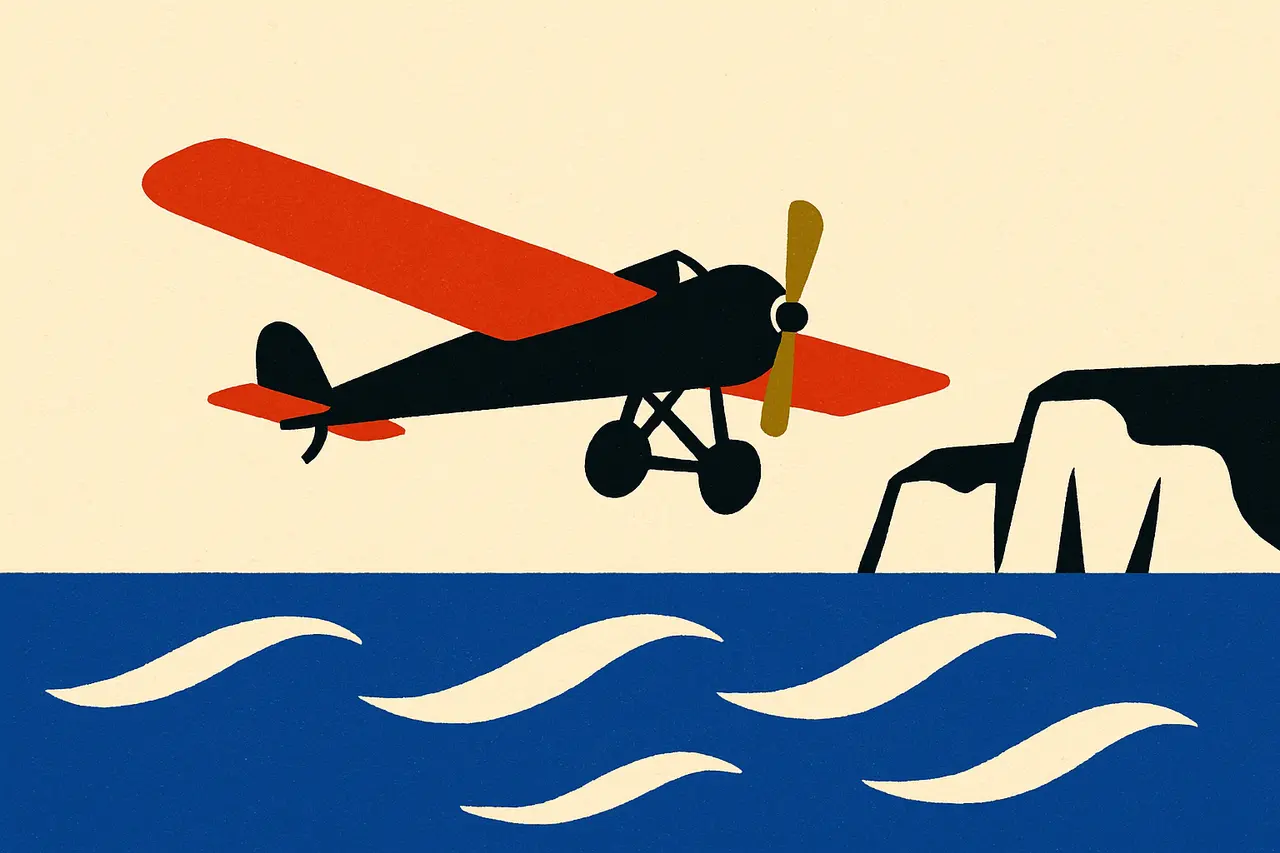
A French pilot in a flimsy monoplane crossed the Channel in about 37 minutes, shrinking the moat that had long protected Britain.
Early on July 25, 1909, French aviator Louis Bleriot lifted off near Calais, France, and flew across the English Channel to Dover, England — the first airplane flight over that stretch of open sea. The crossing of roughly 22 miles took about 37 minutes.
He flew his own Bleriot Type XI, a fragile monoplane powered by a 25-horsepower three-cylinder Anzani engine. With no compass, he briefly lost sight of land before spotting the English coast and setting down hard near Dover Castle.
The flight won a £1,000 prize from the Daily Mail — and rattled a Britain that had trusted its waters for protection.
The feat made Bleriot a celebrity and turned his company into a leading aircraft maker. More striking was its symbolism: for the first time an aircraft had crossed a significant body of water and a national border, hinting that geography would never again shield a nation quite so completely.
Sources & references
2 referencesWell-established. Corroborated by 2 independent sources.