The tallest wave ever recorded towered higher than the Empire State Building
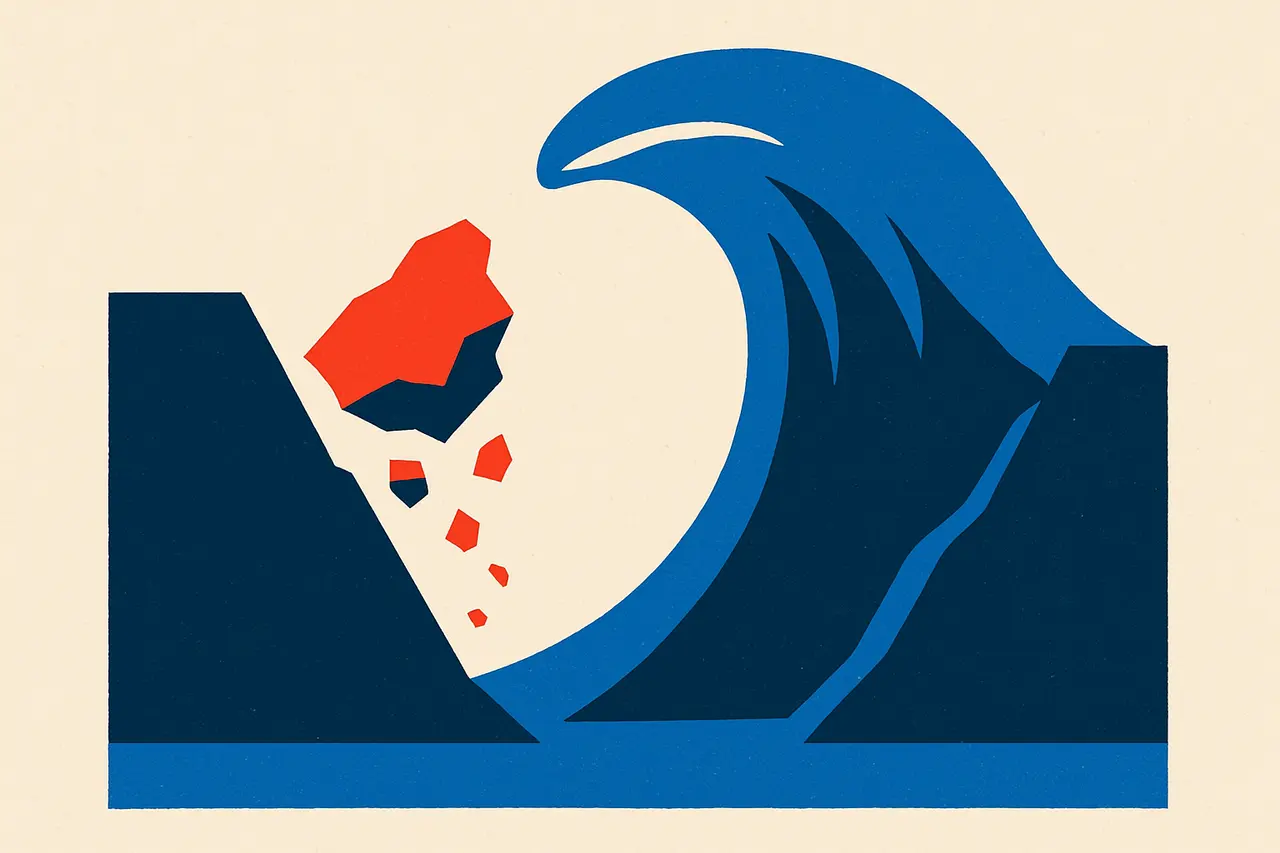
In 1958 a rockslide into an Alaskan inlet threw water 524 metres up a mountainside.
On 9 July 1958, a magnitude 7.8 earthquake ruptured Alaska’s Fairweather Fault. The shaking shook loose an entire flank of mountainside above Lituya Bay, sending some 90 million tons of rock plunging into the narrow inlet below.
The rock displaced an enormous volume of water all at once, generating a megatsunami—a wave driven by a landslide rather than by the seafloor itself. On the opposite slope, the surge stripped the forest bare to an elevation of 524 metres (1,720 feet).
That run-up remains the highest wave height ever documented, taller than New York’s Empire State Building. The water sheared away roughly two square miles of trees, and the pale “trimline” it left on the mountainside is still visible in satellite imagery more than sixty years on.
A megatsunami’s height comes not from its travel across the sea, but from the sheer mass dropped into the water.
Sources & references
2 referencesWell-established. Corroborated by 2 independent sources.