Lightning is hotter than the Sun's surface
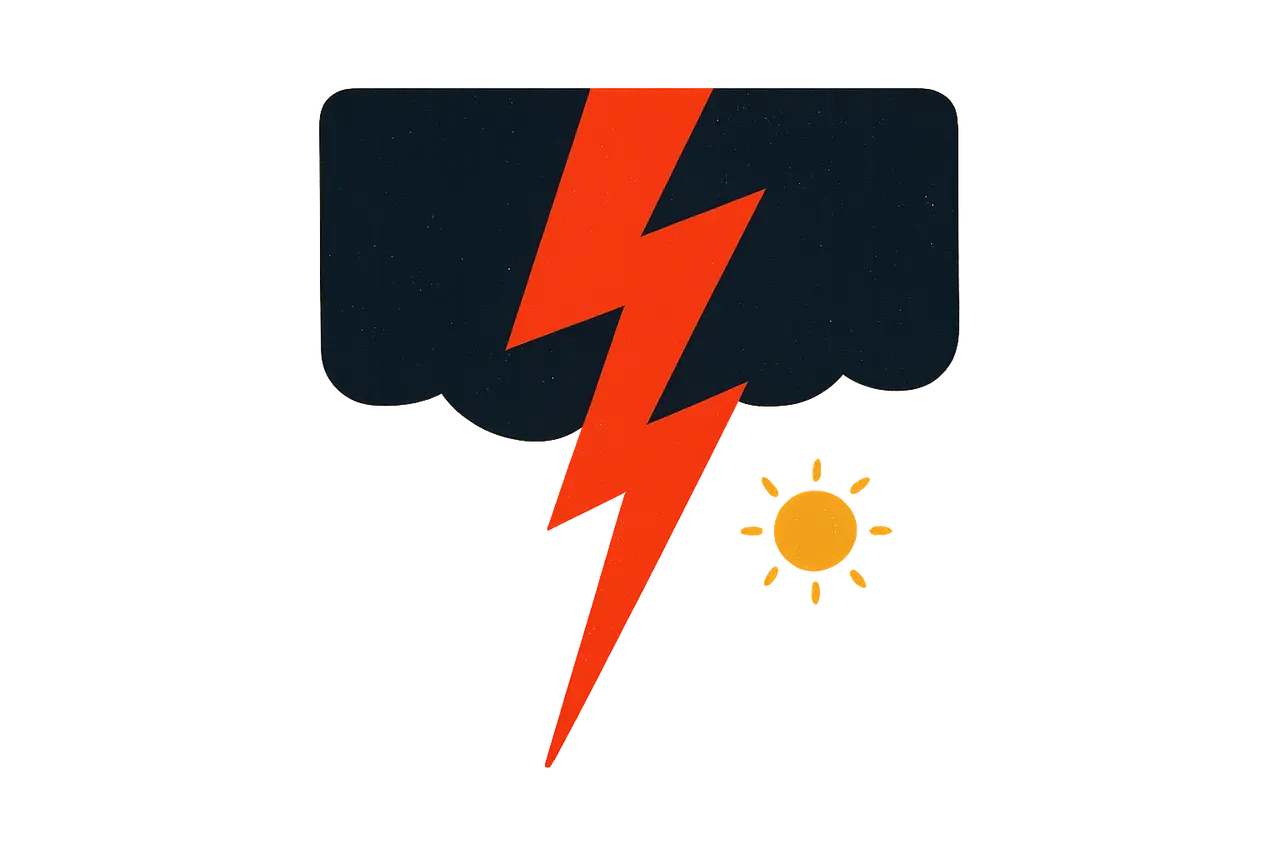
A bolt heats the air to roughly five times the temperature of the Sun's visible surface — and the violent recoil is what we hear as thunder.
A lightning return stroke is one of the hottest things you will ever stand near. The U.S. National Weather Service notes that the discharge can heat the surrounding air to about 50,000°F (around 30,000°C) — roughly five times hotter than the 5,500°C surface of the Sun.
That heat is concentrated in a channel only a few centimetres wide and lasts mere millionths of a second, so it never feels sun-like overall. Temperature measures how energetic each particle is, not the total energy released.
The same superheating explains thunder. NOAA’s National Severe Storms Laboratory describes how the air explodes outward as a shock wave, then settles into the rumble we hear.
The flash and the bang come from one event — light simply reaches you first.
Sources & references
2 referencesWell-established. Corroborated by 2 independent sources.