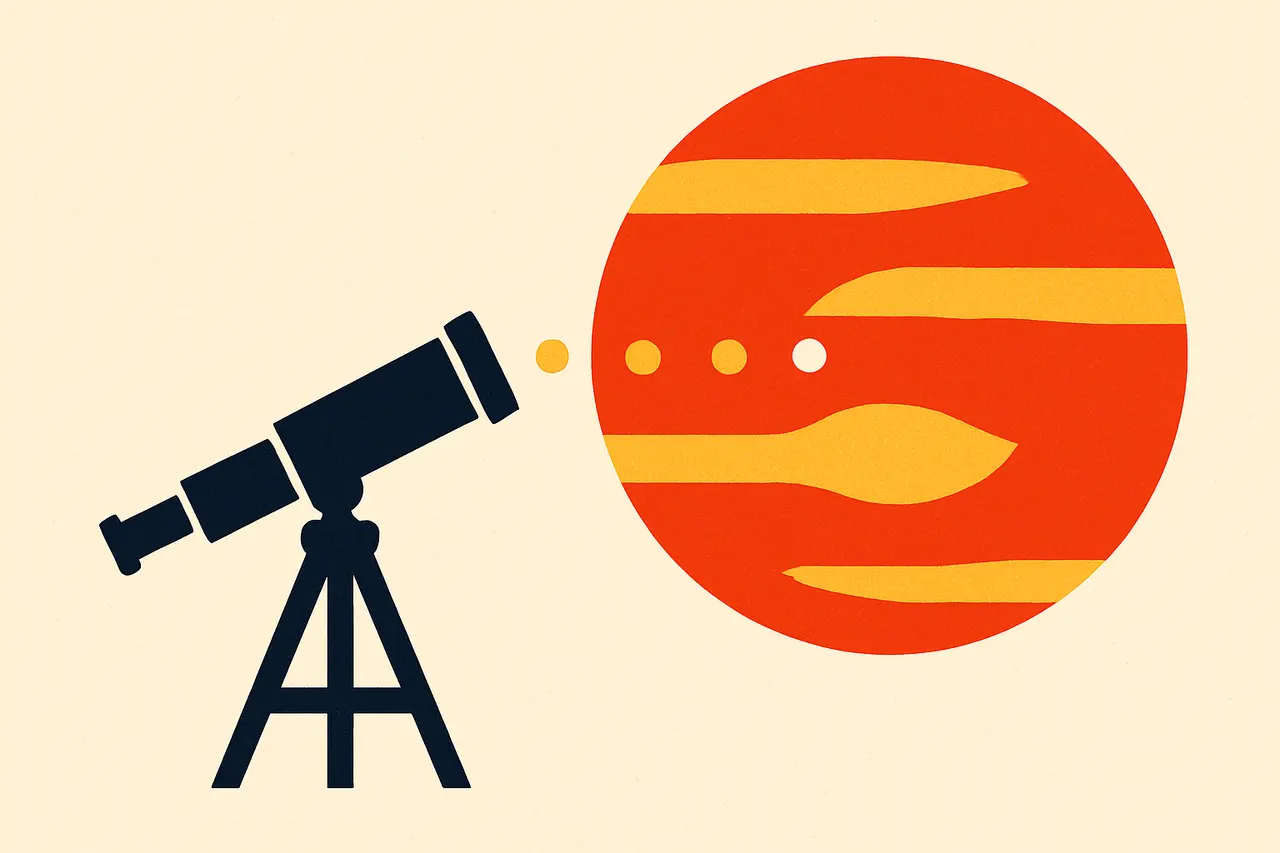
Jupiter's Great Red Spot: a shrinking storm seen since 1831
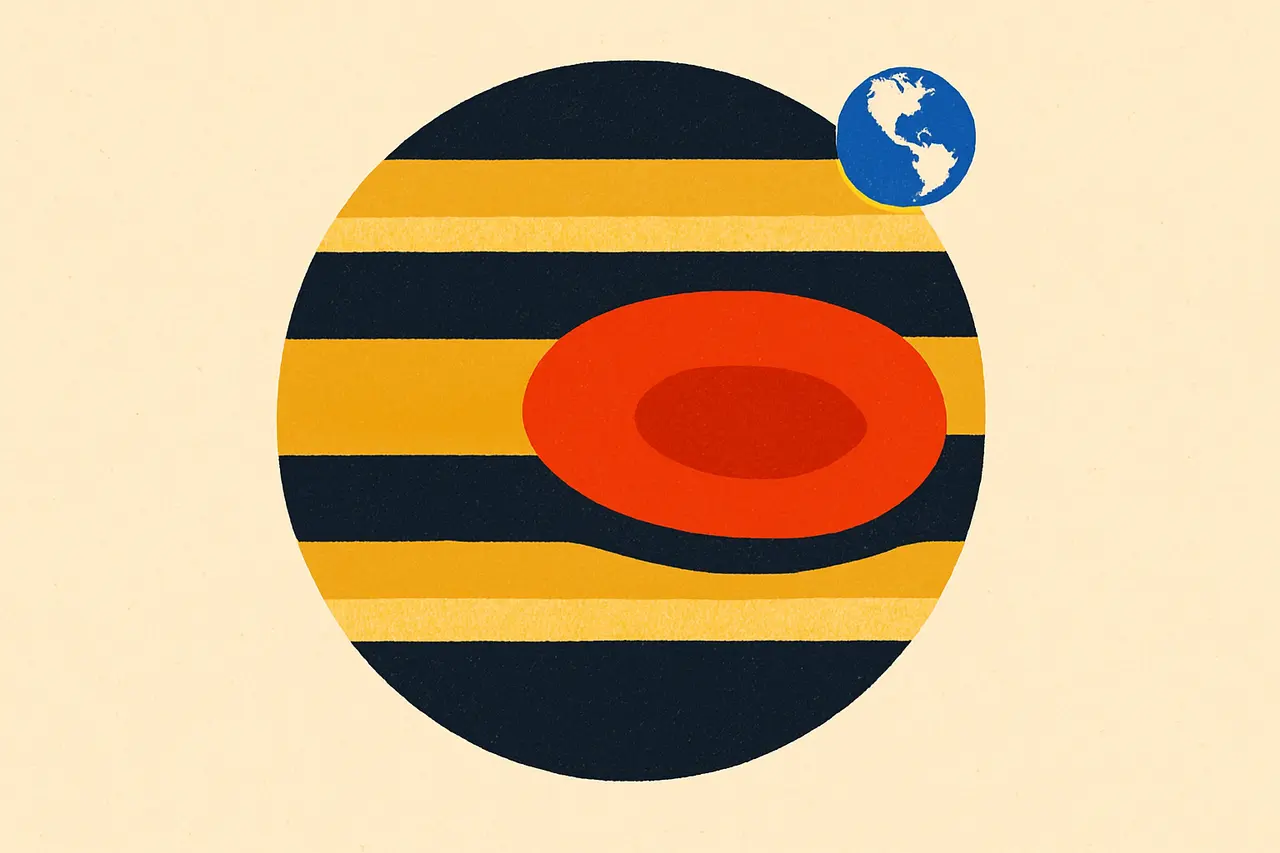
Wider than Earth and watched every year since 1878, Jupiter's great storm has shrunk by more than half since the 1800s while growing taller.
Jupiter’s Great Red Spot is a storm wider than Earth that has been tracked since its first confirmed sighting in 1831, and it is shrinking: in 2014 Hubble measured it at about 10,250 miles across, the smallest it had ever been.
You will often read that the spot has raged for more than 300 years, a line that even appears on one of NASA’s own fact pages. The firmer answer is nearly 200 years. Astronomers did see a red spot on Jupiter in the 1600s, but NASA’s Hubble team notes researchers can’t be sure it was the same storm. What is certain is the record since: observers have measured the spot at least once a year, without a break, since 1878.
That record shows a storm in retreat. In the late 1800s it stretched as much as 25,500 miles along its long axis. The Voyager flybys measured 14,500 miles in 1979; Hubble put it at about 13,020 miles in 1995 and about 11,130 miles in 2009. By 2014 it was shrinking by roughly 580 miles a year and turning from an oval into a circle. The decline has not been smooth: archived observations show the spot grew temporarily in the 1920s, and NASA researchers found that as it narrows it is getting taller, like clay pushed up on a potter’s wheel.
It is also far deeper than its flat face suggests. In 2017 NASA’s Juno spacecraft found the storm’s roots reach 50 to 100 times deeper than Earth’s oceans, and later gravity measurements from two close flybys put its base about 300 miles (500 km) below the cloud tops.
Why it lasts so long comes down to Jupiter itself: a fast-spinning world with no solid surface to create friction and drain a storm’s energy, and jet streams to the north and south that hold the spot at the same latitude. Nobody yet knows whether it will keep contracting or vanish altogether.
Sources & references
4 referencesWell-established. Corroborated by 2 independent sources.