Priestley isolated oxygen in 1774 but Scheele did it first
On this day · 1 August 1774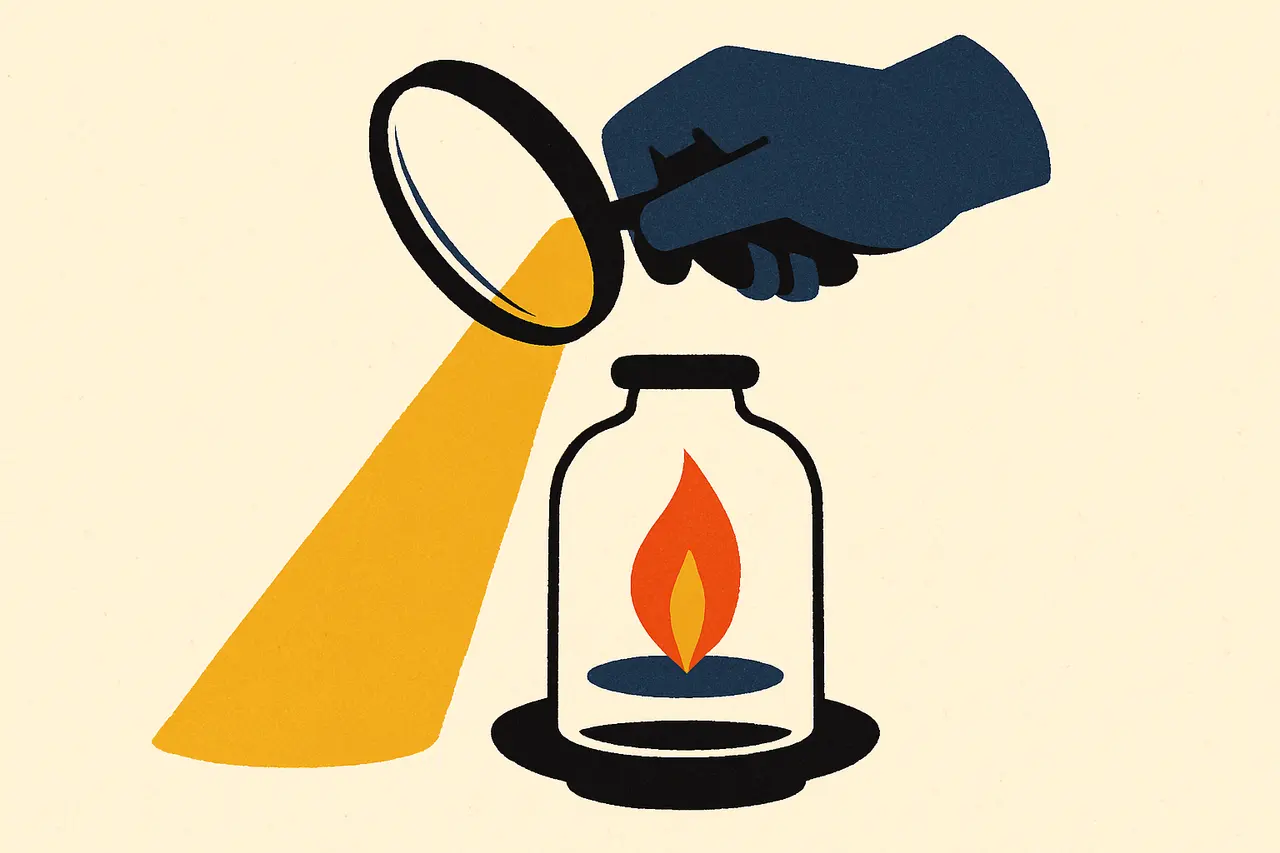
Priestley made oxygen with a burning lens on 1 August 1774 but took months to grasp it, and a Swedish chemist had already beaten him.
Joseph Priestley isolated oxygen on 1 August 1774 in Calne, Wiltshire, by focusing sunlight through a 12-inch burning lens onto red mercuric oxide and collecting the gas it gave off. He was the first to publish the discovery, but not the first to make the gas.
Who really discovered oxygen?
Three chemists share the credit, according to the Royal Society of Chemistry: Priestley, Scheele and Lavoisier. The Swedish chemist Carl Wilhelm Scheele had produced oxygen in June 1771, but his account did not appear in print until 1777. The French chemist Antoine Lavoisier understood what the gas was and named it oxygène, “acid-former”.
What did Priestley think he had made?
At first, nothing special. His own account shows how slowly the penny dropped: even after a candle blazed in his new air, he took it to be much the same as ordinary air. In October 1774 he described the experiment to chemists in Paris, Lavoisier among them, “having no idea, at that time, to what these remarkable facts would lead.”
- 1 Aug 1774: gas driven off mercuric oxide with the lens.
- Oct 1774: results shared with chemists in Paris.
- 1 Mar 1775: he finally tests the air’s purity with “nitrous air”.
- 8 Mar 1775: a mouse that would last about 15 minutes in ordinary air survives a full half hour.
“But what surprized me more than I can well express, was, that a candle burned in this air with a remarkably vigorous flame.” — Joseph Priestley, Experiments and Observations on Different Kinds of Air, 1775
Priestley showed the gas could support combustion about five times better than common air, and called it “dephlogisticated air”, fitting it into the old phlogiston theory of burning. Lavoisier instead built a new chemistry around it, in which things burn by combining with oxygen. Priestley never accepted that view and defended phlogiston until his death in 1804.
Sources & references
4 referencesWell-established. Corroborated by 4 independent sources.