The Islamic calendar drifts 11 days earlier every year
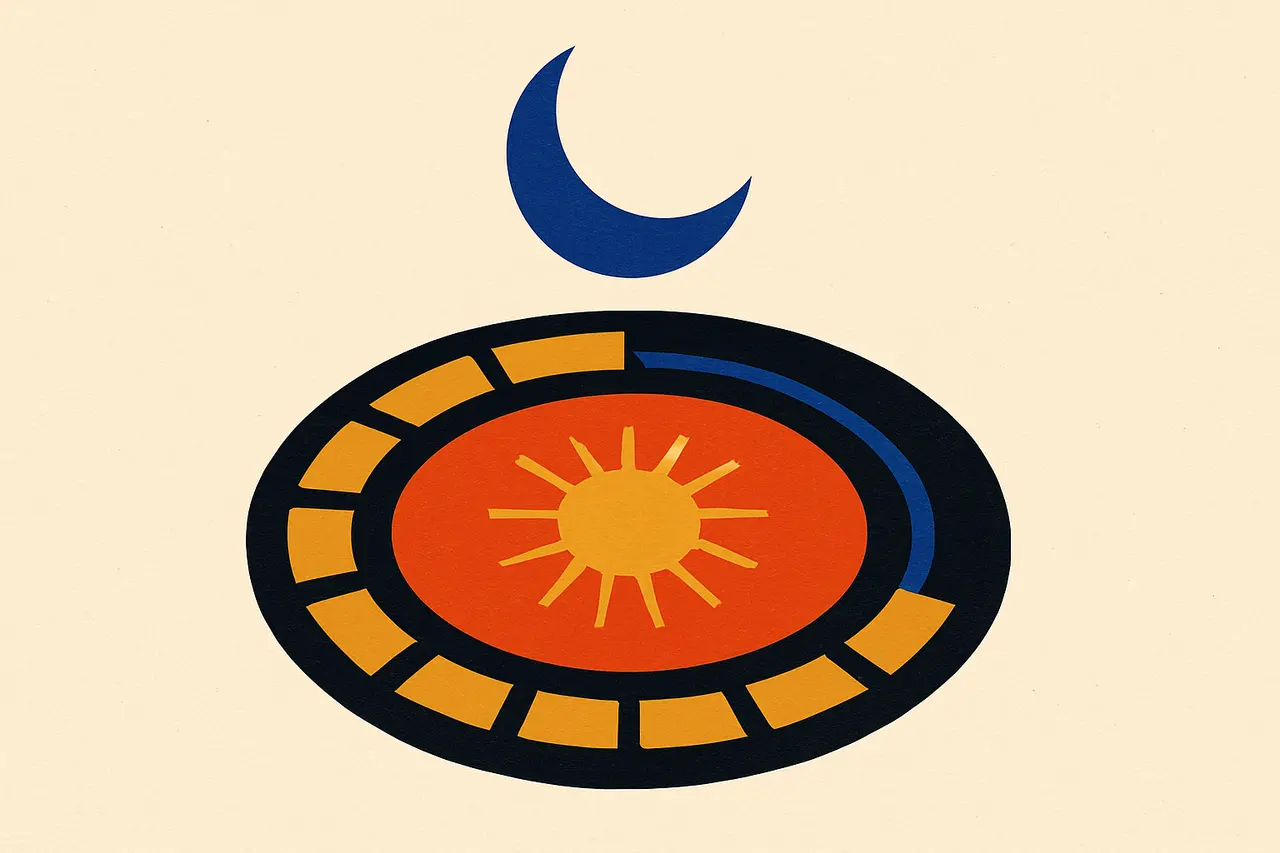
Purely lunar, it never adds leap months, so Ramadan and the Hajj migrate through all four seasons.
Most calendars are tuned to the Sun, but the Islamic calendar is purely lunar. Each month begins with the new crescent moon, running 29 or 30 days, so a year totals just 354 or 355 days - about 11 days shorter than the Gregorian solar year.
The reason is astronomical. A lunar cycle, or synodic month, averages 29.53 days; twelve of them fall well short of the Sun’s roughly 365-day year. Crucially, the Islamic calendar adds no leap month to bridge the gap.
That refusal to correct has a striking effect: the months “retrogress through the entire solar, or seasonal, year” roughly every 33 years. So Ramadan and the Hajj slide steadily earlier, cycling through winter, spring, summer, and autumn over a generation.
A fast that falls in long summer days for one cohort will, decades later, fall in short winter days - sharing the burden across time.
Sources & references
2 referencesWell-established. Corroborated by 2 independent sources.