First aircraft landing on a ship
On this day · 18 January 1911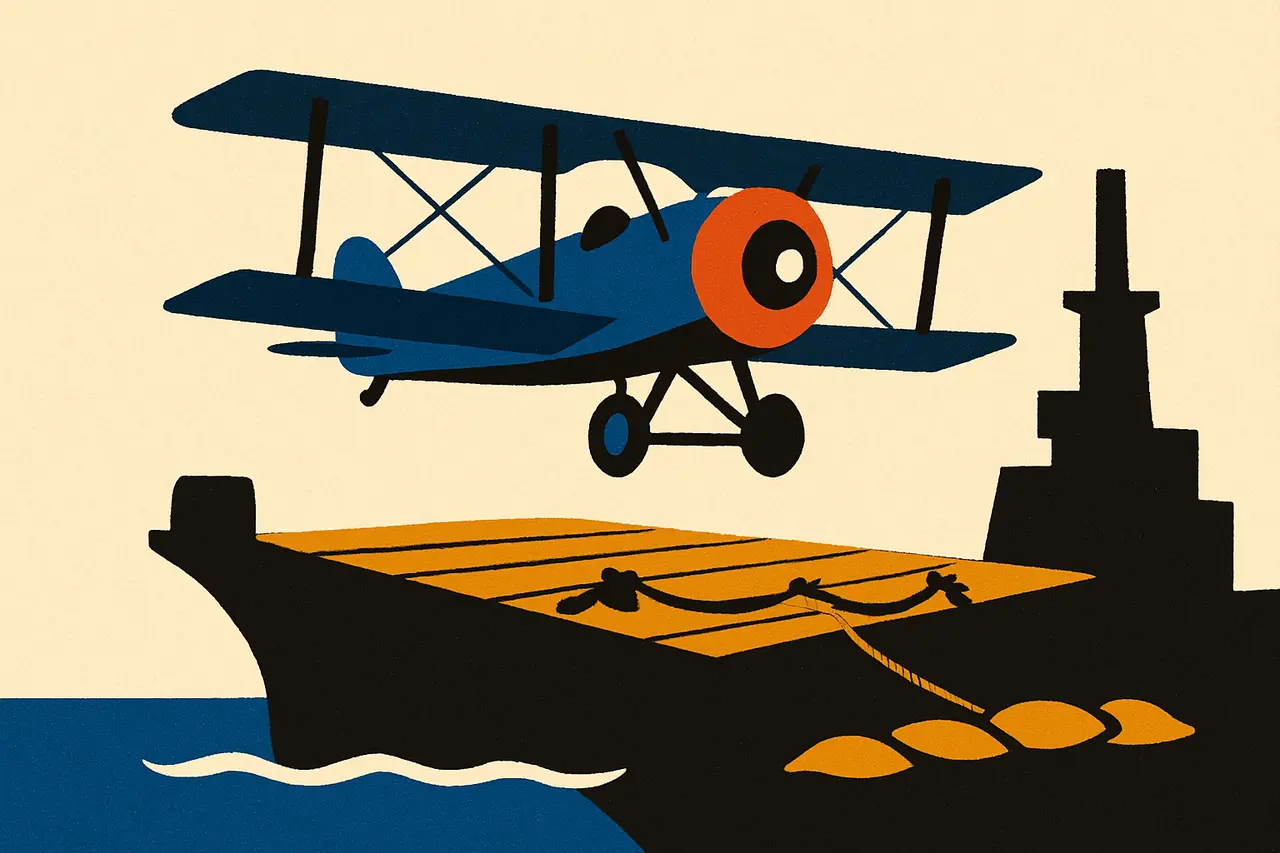
A daredevil pilot, a wooden platform of sandbags and ropes, and the unlikely birth of naval aviation.
On January 18, 1911, aviator Eugene Ely lifted off from the Tanforan racetrack near San Francisco and aimed his fragile Curtiss Pusher biplane at something no pilot had ever targeted: the deck of a warship. Anchored in San Francisco Bay, the armored cruiser USS Pennsylvania carried a hastily built wooden platform, just 120 feet long, rigged with ropes weighted by sandbags to drag the plane to a halt.
The improvised arresting gear worked perfectly. Ely touched down, snagged the ropes, and rolled to a smooth stop before thousands of spectators. After lunch with the ship’s captain, he cleared the deck, took off again, and flew back to shore.
Naval aviation was born on a platform held together by rope and sand.
The stunt proved an aircraft could operate from a ship at sea, foreshadowing the aircraft carrier that would reshape twentieth-century warfare. Ely never saw that future: he died in a crash nine months later, aged just 25.
Sources & references
2 referencesWell-established. Corroborated by 2 independent sources.