Are we made of stardust? Mostly, but not all of it
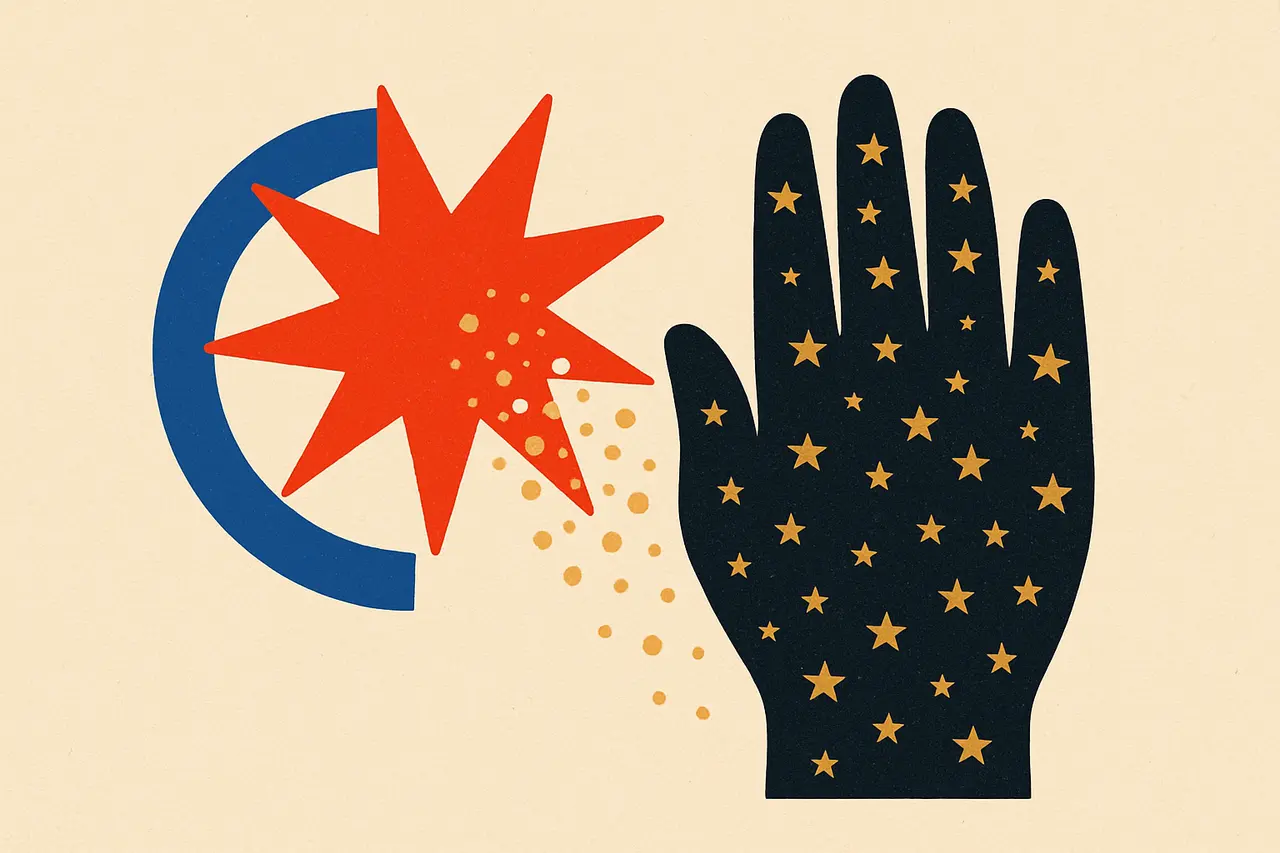
The calcium in your bones and iron in your blood were forged in stars, but your hydrogen is older than any star, and gold needed colliding neutron stars.
Most of your body’s mass really was made in stars: the calcium in your bones, the iron in your blood and the carbon and oxygen in every cell were forged by stars that lived and died before the Sun formed. But “we are made of stardust” is not the whole story, and the exceptions are the interesting part.
Stars build elements by fusion, combining light nuclei into heavier ones in their cores. That takes enormous heat: about 5 million degrees to fuse hydrogen and roughly a billion degrees to fuse carbon. Most elements from oxygen up through iron are thought to come from stars of at least ten times the Sun’s mass, whose supernova explosions blast the enriched material into space. Calcium has a more specific source: most of it is thought to come from a rare class of explosions called calcium-rich supernovae, which a Northwestern University-led team examined in X-rays for the first time in 2020.
Was the hydrogen in your body made in a star?
No: hydrogen is the big exception to the stardust line. Only hydrogen, helium and lithium were made a different way, in the Big Bang itself. Hydrogen makes up about 10% of your body by mass, and none of it was forged in a star.
Where do gold and the heaviest elements come from?
Many of them come from something more violent than an ordinary stellar death. In 2017, telescopes caught the glow of a kilonova from two merging neutron stars first detected by their gravitational waves. Its light pinned down the formation of elements heavier than iron by rapid neutron capture, a process that until then had only been theorised, and showed such mergers scatter gold and platinum into space.
All of this material was already present in the cloud of gas that collapsed to form the Solar System, inherited from stars that died billions of years ago. The calcium in a glass of milk traces back to an ancient stellar explosion; the hydrogen in the water beside it is older still.
Sources & references
5 referencesWell-established. Corroborated by 5 independent sources.