Diwali, the festival of lights, is celebrated by over a billion people
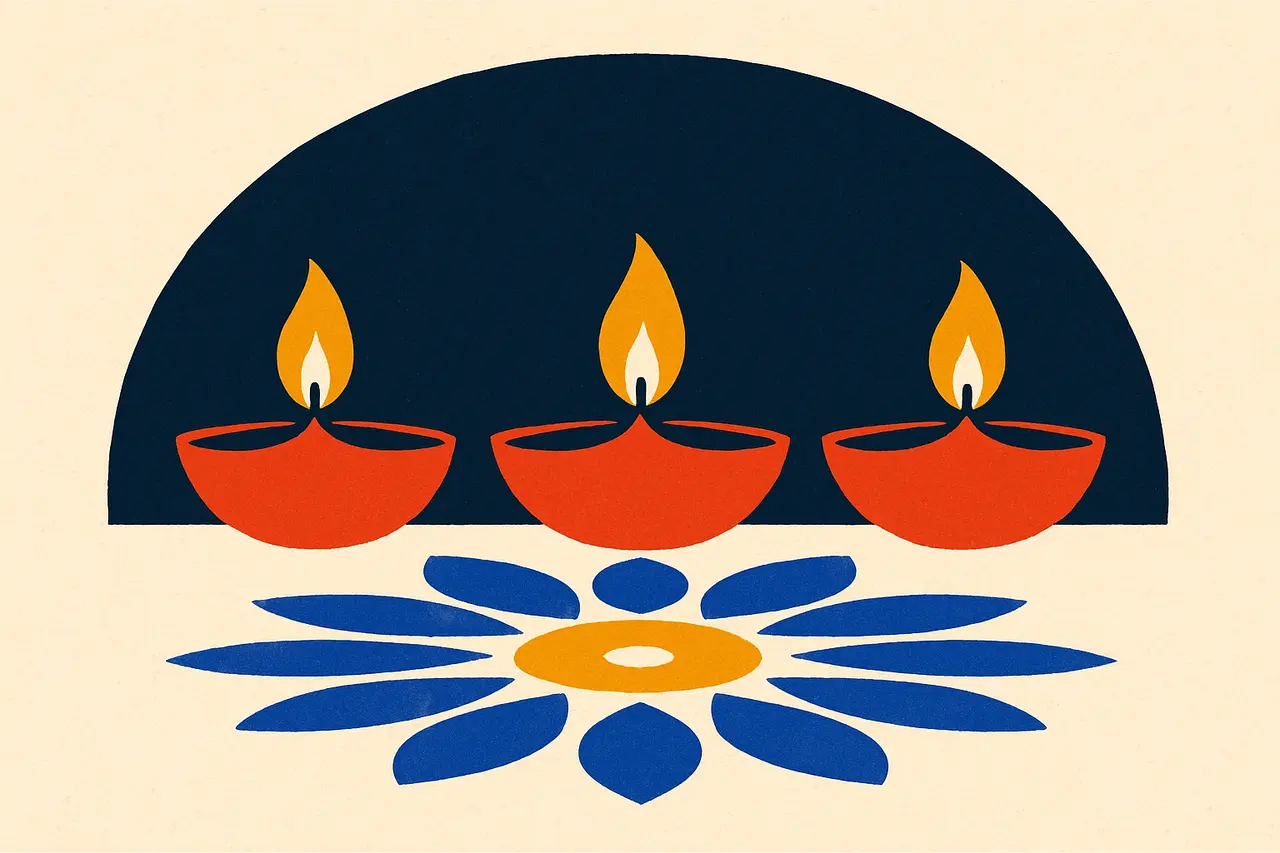
Hindus, Jains, Sikhs and some Buddhists light rows of lamps to mark the victory of light over darkness.
The name Diwali comes from the Sanskrit dipavali, meaning “row of lights” - and the lamps are the point. Across the five-day festival, celebrants line homes and streets with diyas, small earthenware oil lamps, on the new-moon night.
Diwali is a major festival in Hinduism, Jainism, and Sikhism, and is observed by some Buddhists too - each faith attaching its own story, from Rama’s return to Ayodhya to Mahavira’s liberation. What they share is the symbolism: the victory of light over darkness, knowledge over ignorance, good over evil.
Its reach is vast. National Geographic notes Diwali is observed by more than a billion people across India and its global diaspora, marked by prayer, feasts, fireworks, family gatherings, and charitable giving. The festival runs roughly five days.
Sources & references
2 referencesWell-established. Corroborated by 2 independent sources.