Four English weekday names come from Norse gods
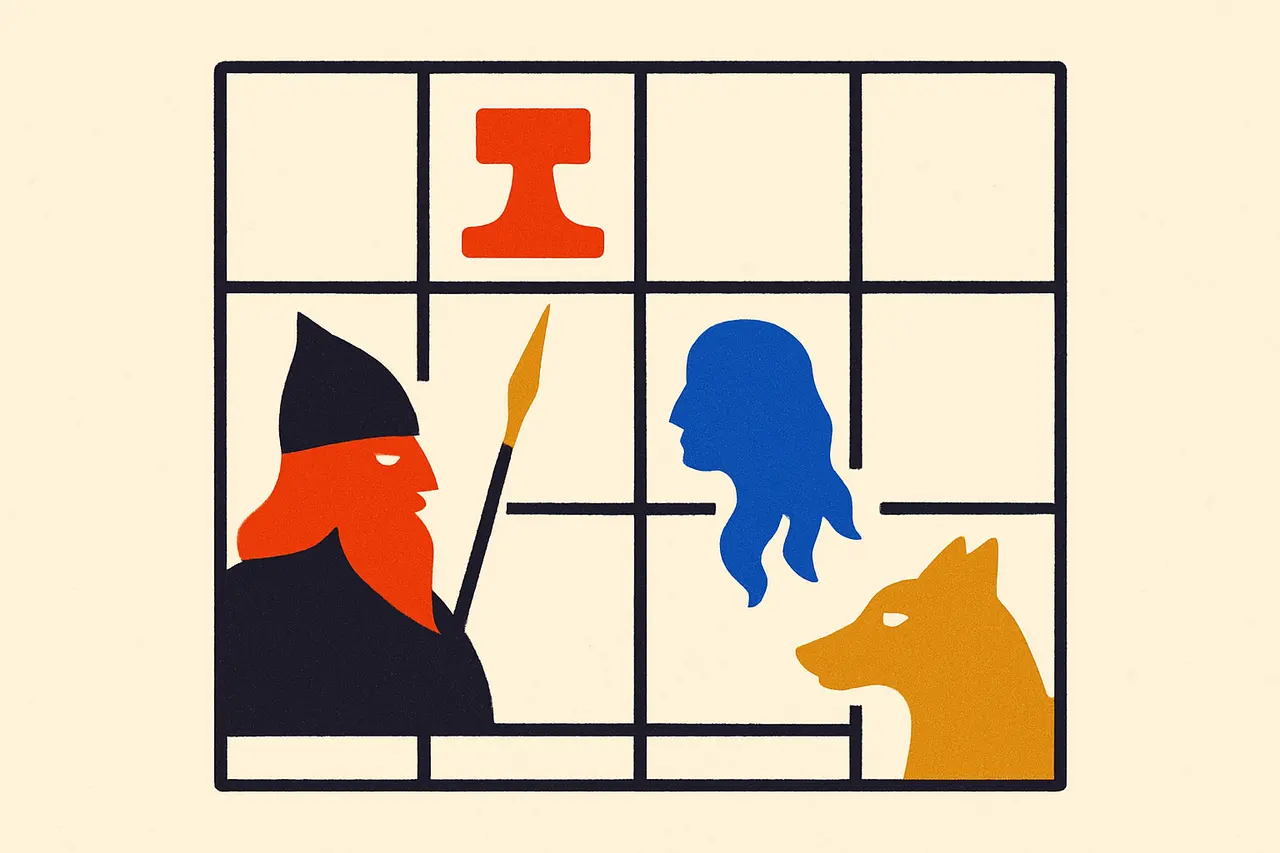
Tuesday, Wednesday, Thursday and Friday still carry the names of the old Germanic gods.
The seven-day week reached northern Europe from the Mediterranean, where the Romans had named the days after the Sun, the Moon and the five visible planets. When the system passed to Germanic-speaking peoples, they swapped in their own gods whose roles matched the Roman ones.
Four of the English names still show it. Tuesday comes from Tiw (the Norse Tyr), a war god standing in for Mars. Wednesday is Woden’s day - Odin, the supreme deity, in the place of Mercury. Thursday honours Thor, god of thunder, echoing Jupiter. Friday is Frigg’s day, Odin’s wife, set against Venus.
The other weekday names in English are derived from Anglo-Saxon words for the gods of Teutonic mythology.
Sunday, Monday and Saturday kept their older astronomical roots - the Sun, the Moon and Saturn. So an ordinary calendar quietly preserves two pantheons at once, Roman and Norse, layered one over the other.
Sources & references
2 referencesWell-established. Corroborated by 2 independent sources.