Coral reefs cover under 1% of the seafloor but shelter a quarter of marine life
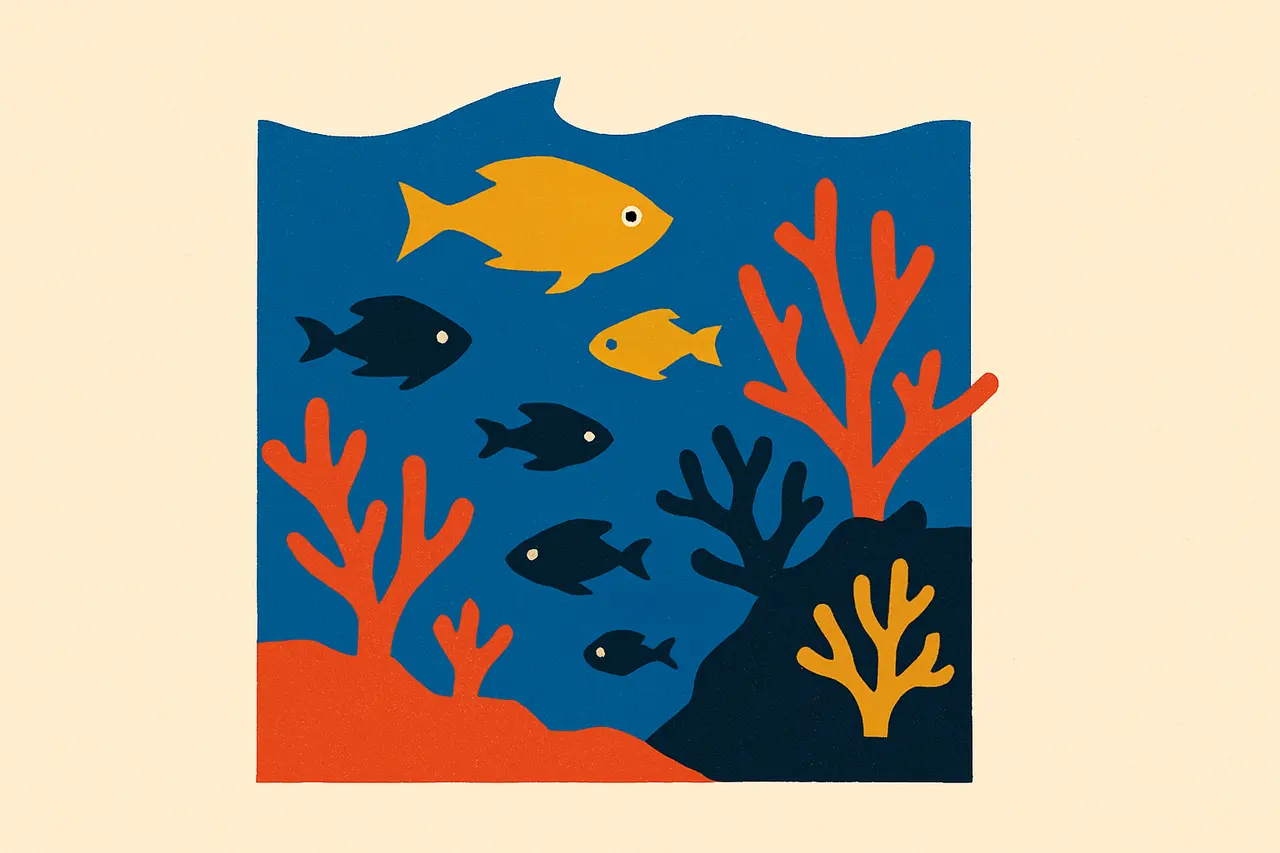
The ocean's most crowded neighborhoods are built by animals smaller than your fingernail.
Coral reefs are built by tiny animals called polyps, each smaller than a fingernail, which secrete limestone skeletons. As generations live and die atop one another, that limestone accretes over millennia into vast living ramparts — the only structures made by living things large enough to be seen from space. According to NOAA Fisheries, reefs cover less than 1% of the ocean floor, yet they support about 25% of all marine species.
That lopsided ratio earns reefs the nickname “rainforests of the sea.” Fish, crustaceans, sponges and sea turtles crowd the nooks and ledges the coral framework provides. The engine behind it is a partnership: reef-building corals host microscopic algae called zooxanthellae in their tissues, which photosynthesize and hand most of their sugars to the coral, giving it both food and color.
A patch of reef the size of a city block can host more species than an entire stretch of open ocean.
That partnership is also the reef’s weak point. When water grows too warm, the stressed coral expels its algae, turning ghostly white and slowly starving — the process called bleaching. If the heat subsides quickly, corals can take their algae back and recover; if it lingers, they die. The Great Barrier Reef has suffered repeated mass bleaching events this century, and a large share of the world’s reefs are now degraded or at risk.
The stakes are human, too. Reefs buffer coastlines from storm waves, anchor fisheries, and underpin the food and livelihoods of an estimated half a billion people.
Sources & references
2 referencesWell-established. Corroborated by 2 independent sources.