Continents drift apart only a few centimeters a year
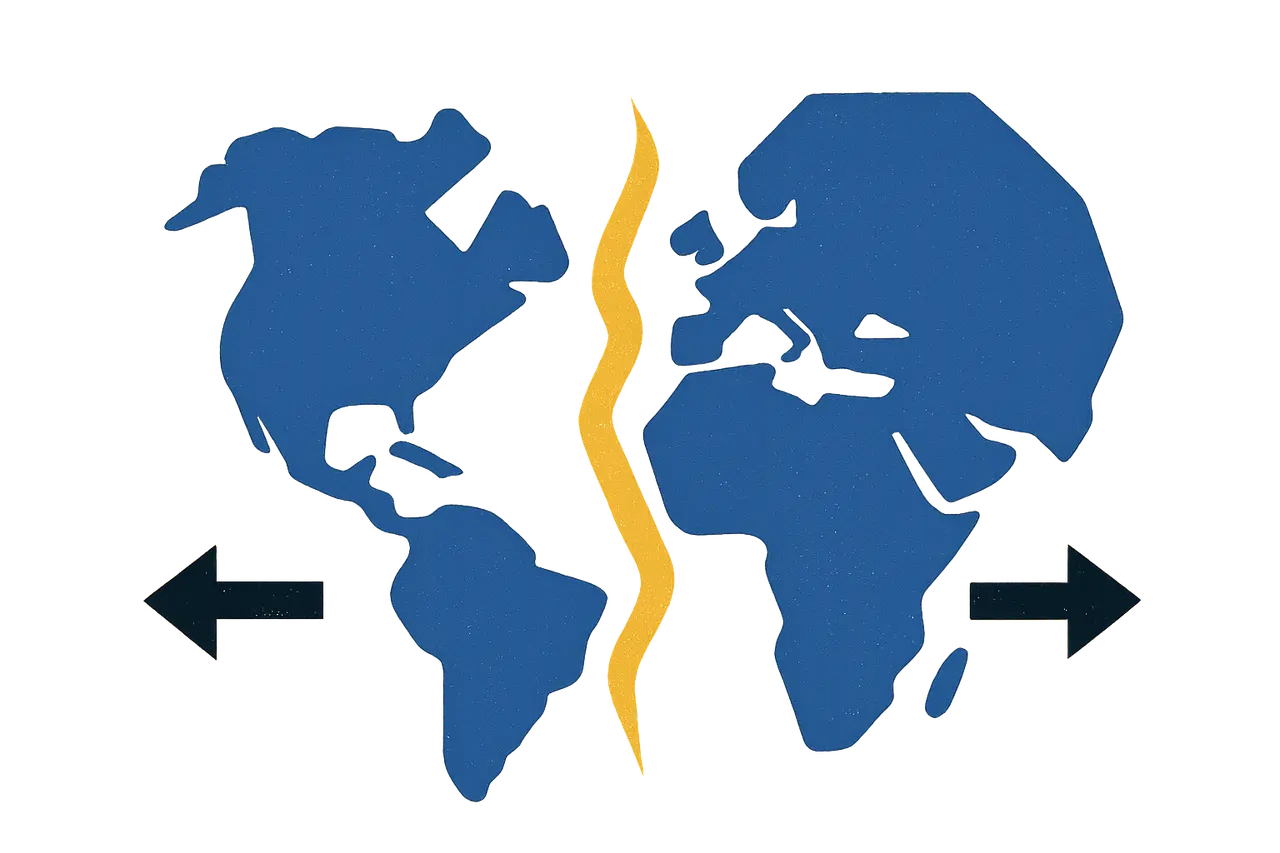
The ground beneath you is moving — about as fast as a slow-growing plant.
Earth’s surface is broken into rigid tectonic plates that ride on the hotter, flowing mantle below. They creep along at just a few centimeters per year — slow enough to be imperceptible, but relentless over geologic time.
The rates aren’t uniform. Along the Mid-Atlantic Ridge, new seafloor spreads at about 2.5 cm per year, or 25 km every million years. The fastest boundary, the East Pacific Rise near Easter Island, opens at more than 15 cm per year.
Over hundreds of millions of years these tiny steps rearrange the globe — splitting supercontinents, opening oceans, and slamming landmasses together to raise mountains. The map of Earth is never finished.
Sources & references
2 referencesWell-established. Corroborated by 2 independent sources.