Champollion announced he had decoded hieroglyphs
On this day · 27 September 1822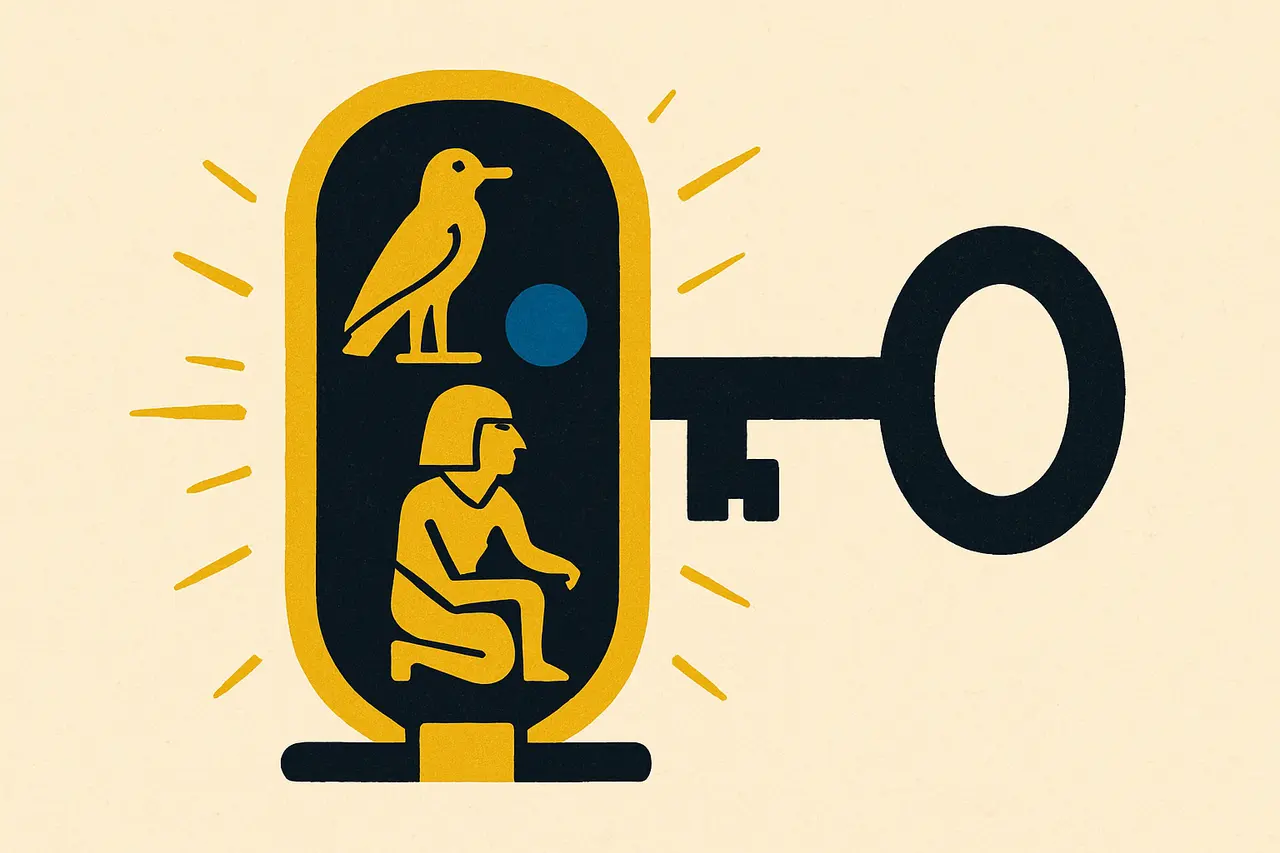
On September 27, 1822, a young scholar read a letter to Paris's academy that finally cracked Egypt's silent script.
On 27 September 1822, Jean-Francois Champollion read his Lettre a M. Dacier before the Academie des Inscriptions et Belles-Lettres in Paris, setting out the alphabet of phonetic hieroglyphs. The reading is widely treated as the day the riddle of Egyptian writing was solved — and as the birth of Egyptology.
Champollion’s key insight was that hieroglyphs were not purely symbolic but partly phonetic, spelling out sounds. Working from the trilingual Rosetta Stone and other inscriptions, he matched royal names such as Ptolemy and Cleopatra across Greek and hieroglyphic text to recover their sound values.
September 27, 1822 is usually considered the day of the resolution of the mystery of the hieroglyphs.
The breakthrough had come weeks earlier: visiting his brother, Champollion reportedly cried “Je tiens l’affaire!” (“I’ve got it!”) before fainting from excitement. His letter turned that flash of recognition into a method, reopening three thousand years of Egyptian records to the modern world.
Sources & references
2 referencesWell-established. Corroborated by 2 independent sources.