Braille fits an entire alphabet under one fingertip
A blind 15-year-old built a reading system from a six-dot cell — and it's still the world standard.
Louis Braille invented his tactile writing system in 1824 while a student in Paris — at just 15 years old. He had been blind since early childhood, the result of a freak accident in his father’s leather workshop: trying to punch a hole with an awl, the tool slipped and pierced his eye, and the infection spread to both, leaving him sightless by about age five.
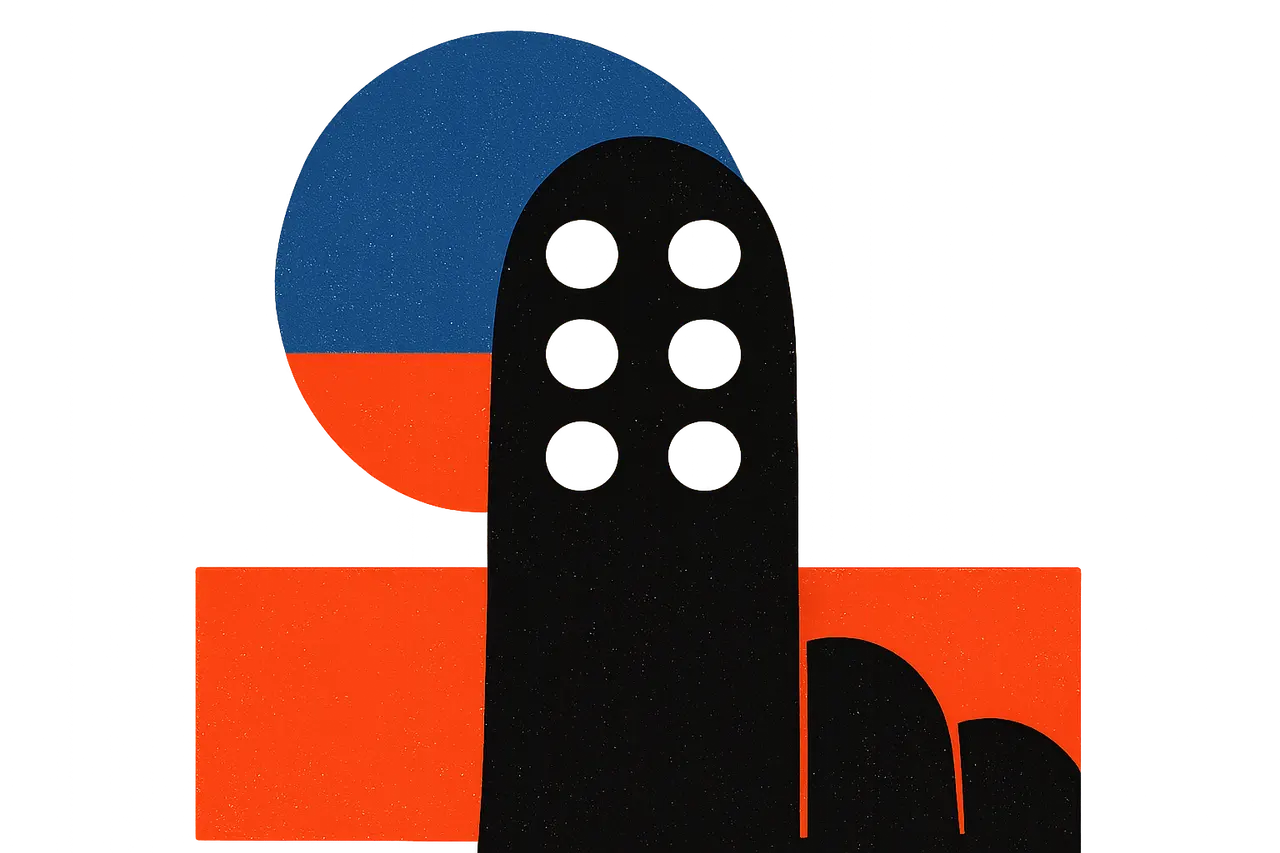
His breakthrough was the six-dot cell: a tiny grid of two columns and three rows, small enough to be read by a single fingertip in one touch. Those six positions yield 63 distinct patterns — enough for letters, numbers and punctuation. Braille adapted the idea from “night writing,” a 12-dot code devised by army captain Charles Barbier so soldiers could read orders silently in the dark, without a lamp giving away their position. Braille saw its flaw — a cluster that big spilled past one fingertip — and halved it, so a reader could take in a whole character at a single touch.
The genius was subtraction: cut the dots in half, and the alphabet finally fit under a finger.
Recognition came slowly and unkindly. One school director burned Braille books and punished students for using them. A public demonstration in 1844, at the inauguration of the school’s new building, began to turn opinion, as sighted onlookers watched blind students read aloud passages they could not possibly have memorized. But Braille himself never saw his system triumph: he died of tuberculosis in 1852, aged 43, with his code still fighting for acceptance and not yet the official standard even in his own country. Only afterward did it spread, language by language, to become the global standard it remains. That a blind teenager’s six-dot grid outlasted every competing scheme — including raised-letter alphabets designed by sighted educators — is a quiet vindication of designing for the hand instead of the eye, a writing system built deliberately around touch rather than sight.
Sources & references
2 referencesWell-established. Corroborated by 2 independent sources.