Argentinosaurus may be the heaviest land animal ever to walk the Earth
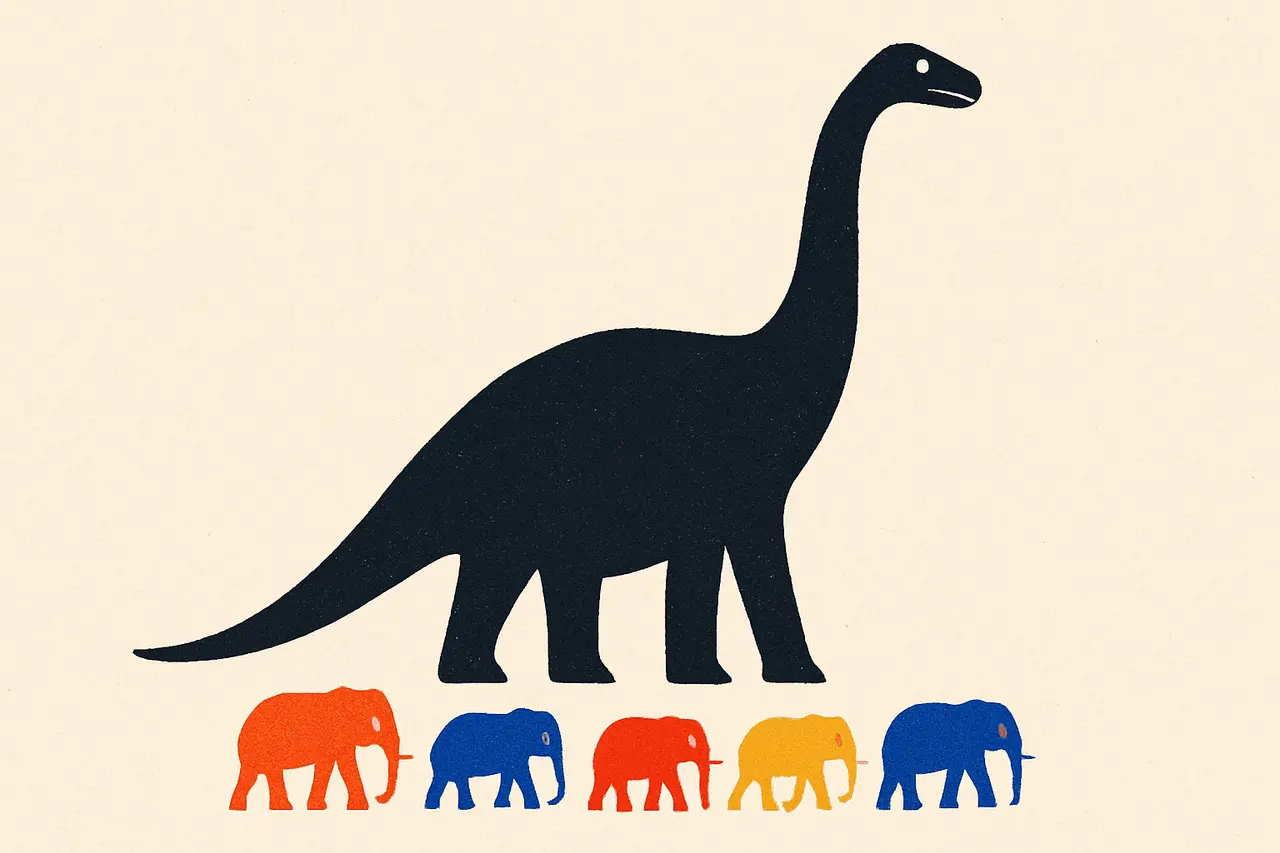
From a handful of colossal vertebrae, scientists reconstructed a creature that likely outweighed a dozen elephants—near the limit of what land can hold up.
In the Late Cretaceous of what is now Argentina, a sauropod called Argentinosaurus huinculensis may have pushed the upper limit of how big a land animal can be. Stretching an estimated 30 to 40 meters and weighing somewhere around 65 to 90 tonnes, it likely outmassed a dozen-plus African elephants in a single body.
The astonishing part is how little we have to go on. Argentinosaurus is known from only a scattering of bones—around nine giant, mostly incomplete vertebrae, a partial femur and fibula, and some ribs. A single back vertebra stands over 1.5 meters tall.
From those fragments, paleontologists reconstruct the whole beast by comparison with better-known relatives, which is why estimates vary so widely—published figures range from 60 to 124 tonnes, with most experts favoring the lower end.
Guinness World Records lists it as the heaviest dinosaur known.
Animals this large brush against the physics of being alive on land: bones, hearts, and lungs all have to scale up faster than the body they serve. Argentinosaurus sits at—or very near—the ceiling that gravity has ever allowed a walking creature to reach.
Sources & references
2 referencesWell-established. Corroborated by 2 independent sources.