Apollo 9 gave the lunar module its first crewed flight
On this day · 3 March 1969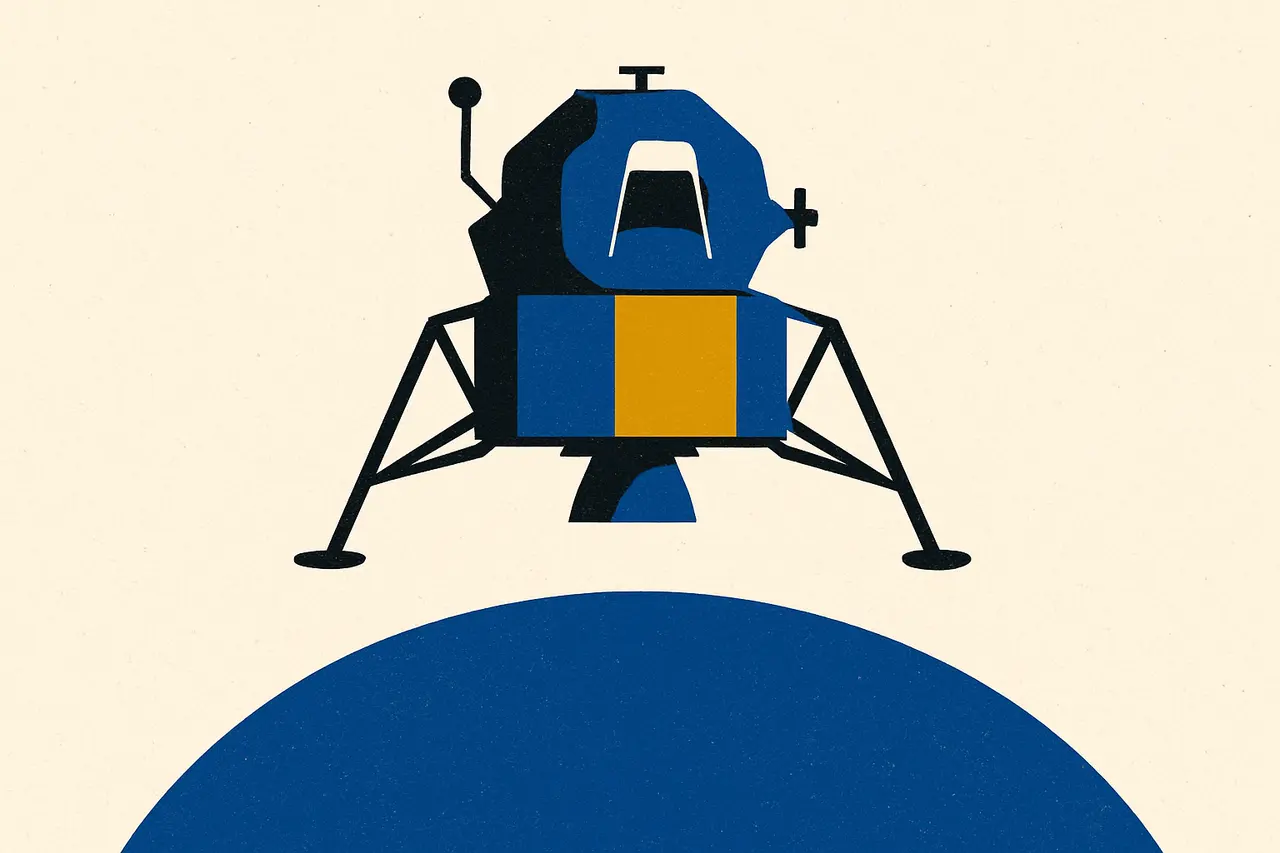
Ten days in Earth orbit in March 1969 proved the lunar module could fly people, separate 113 miles away and find its way back.
Apollo 9, launched on March 3, 1969, was the first mission to fly the lunar module with astronauts aboard, rehearsing in Earth orbit the separations, engine burns and rendezvous a Moon landing would need.
It was not the lander’s first flight, a point many summaries blur. An uncrewed lunar module had flown on Apollo 5 in January 1968, firing its descent and ascent engines under automatic control. Apollo 9 was the first time people flew one, and the first flight of the complete set of Apollo lunar hardware.
Commander James McDivitt, command module pilot David Scott and lunar module pilot Russell Schweickart were the first Apollo crew allowed call signs, needed once the two craft flew apart. They named the lunar module Spider for its gangly look and the command module Gumdrop for the blue covering it was wrapped in.
Ten days in orbit
- March 5, 1969: McDivitt throttles Spider’s descent engine by hand, the first crewed throttling of an engine in space.
- March 6: nausea delays Schweickart’s planned two-hour spacewalk, which becomes a 37.5-minute test of the backpack later worn on the Moon.
- March 7: McDivitt and Schweickart fly Spider away from Scott, drifting 113 miles from Gumdrop, then drop the descent stage, fire the ascent engine and redock about six hours later.
- March 13: splashdown in the Atlantic after 151 orbits.
The quieter final days left a lasting legacy. A four-camera rig shooting in visible and near-infrared bands exposed 127 four-frame sets over the southern United States and beyond, an experiment NASA describes as a precursor to the Landsat Earth-observation satellites.
Apollo 11 landed on the Moon about four and a half months later.
Sources & references
5 referencesWell-established. Corroborated by 3 independent sources.