Antarctica is the largest desert on Earth
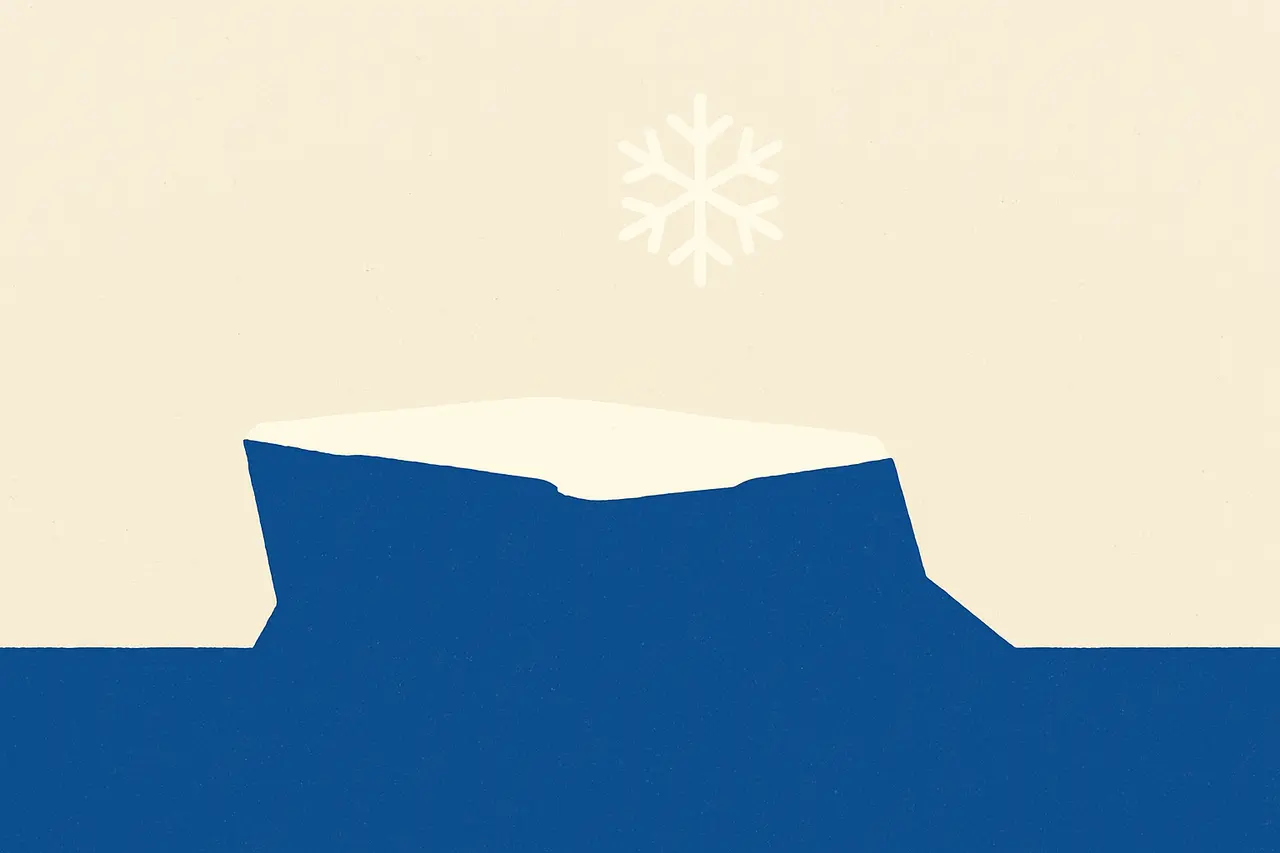
A desert is defined by how little falls, not how hot it gets — and almost nothing falls on Antarctica's frozen interior.
The word “desert” conjures sand dunes and blistering heat. But geographers define a desert by one thing only: how little precipitation it receives. Cross a low-enough threshold and you’ve got a desert, whether it’s 50°C or 50 below. By that measure, the single largest desert on the planet is the coldest place on it.
Antarctica spans roughly 14 million km² — larger than the Sahara, and bigger than the United States and India combined. Across that vast white expanse, almost no moisture falls. The continent averages only about 50 mm (2 inches) of water-equivalent precipitation a year, and the high interior plateau gets even less, drying to near nothing far from the coast.
With an average precipitation of 50 millimetres water equivalent per annum, the driest continent is Antarctica.
The reason is the cold itself. Frigid air holds almost no water vapor, so even when the polar sky does produce precipitation, it amounts to a dusting of ice crystals rather than rain or heavy snow. In the McMurdo Dry Valleys, conditions are so arid that some areas may not have seen meaningful precipitation in millions of years — a landscape NASA studies as a stand-in for Mars.
So the biggest desert isn’t the Sahara. It’s a continent of ice, where the snow you see has been accumulating, grain by grain, for a very long time.
Sources & references
3 referencesWell-established. Corroborated by 3 independent sources.