Anders Celsius, born 1701, put boiling water at 0 degrees
On this day · 27 November 1701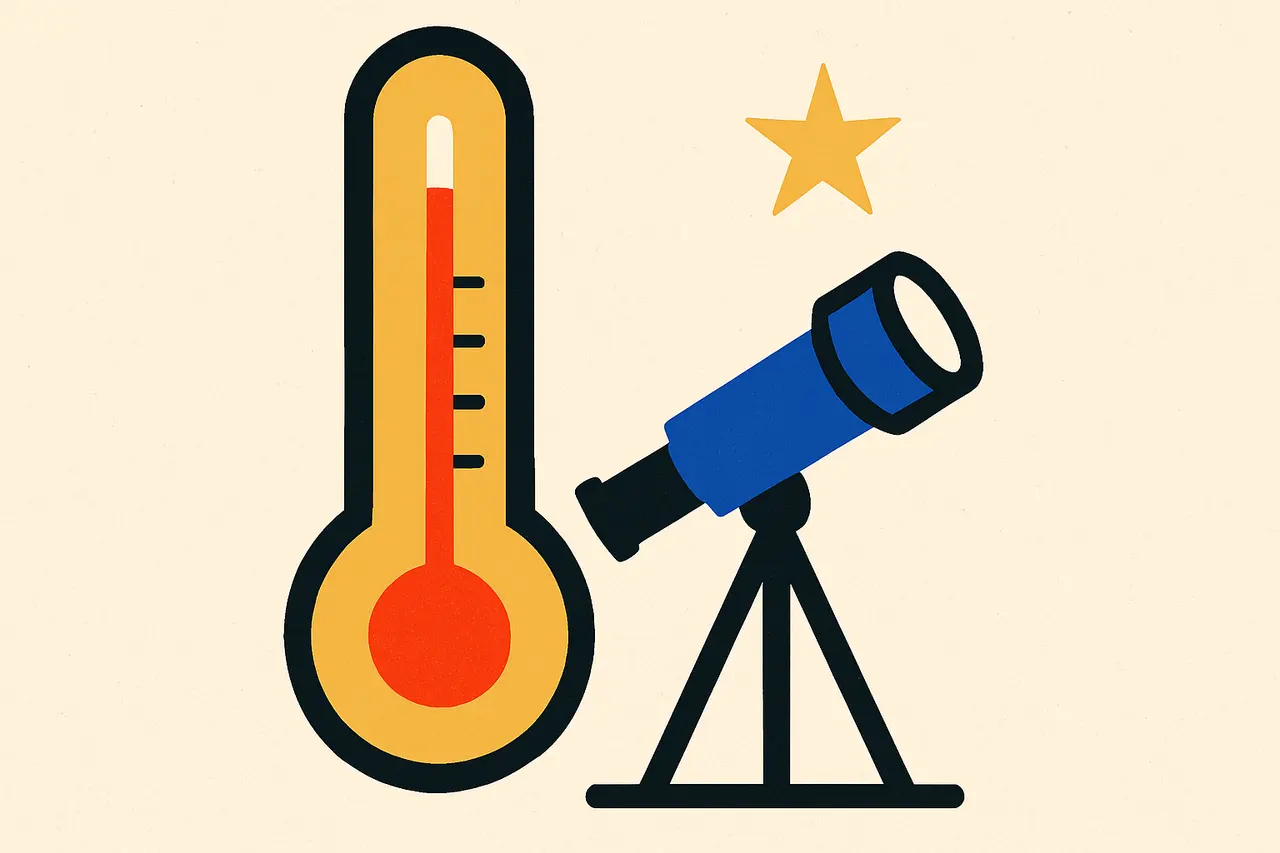
The Uppsala astronomer born in 1701 built the 100-degree scale upside down — and today water doesn't quite boil at 100 on it either.
Anders Celsius, the Swedish astronomer whose name labels the world’s everyday temperature scale, was born in Uppsala on November 27, 1701, into a family of university professors. He became professor of astronomy at Uppsala at 28 and died of lung disease in 1744, aged just 42.
In 1742, unhappy with the inaccuracy of the thermometers of his day, he presented to the Swedish Academy of Sciences a 100-step scale fixed by the freezing and boiling points of water at normal air pressure. It ran upside down: water boiled at 0 and froze at 100. The scale was flipped soon after his death, a change usually credited to the botanist Carl Linnaeus, and since 1948 it has carried Celsius’s name rather than “centigrade”.
Both of his anchors have since been retired, and water no longer boils at 100. Under the International Temperature Scale of 1990, the Celsius degree is tied to the kelvin and calibrated against fixed points such as the triple point of water and the melting and freezing points of gallium and indium. On that scale, pure water at one atmosphere boils at about 99.974 °C. The water hasn’t changed; the scale was redefined around the kelvin, and on that definition the old 100 sits just above the real boiling point.
Temperature was almost a sideline. Celsius joined the 1736–37 French expedition to the Arctic Circle in Swedish Tornedalen whose measurements helped tip the debate over the Earth’s shape in Newton’s favour. He and his assistant Olof Hiorter linked the northern lights to swings in Earth’s magnetic field, and in 1743 he made the first estimate of Scandinavia’s post-glacial land uplift: just over 1 cm a year, about the right value.
He also left a data legacy. With his professor Erik Burman, Celsius started Uppsala’s daily weather observations on 12 January 1722, and that record is now one of the longest temperature series in the world.
Sources & references
4 referencesWell-established. Corroborated by 4 independent sources.