An octopus tastes with its arms — and partly thinks with them too
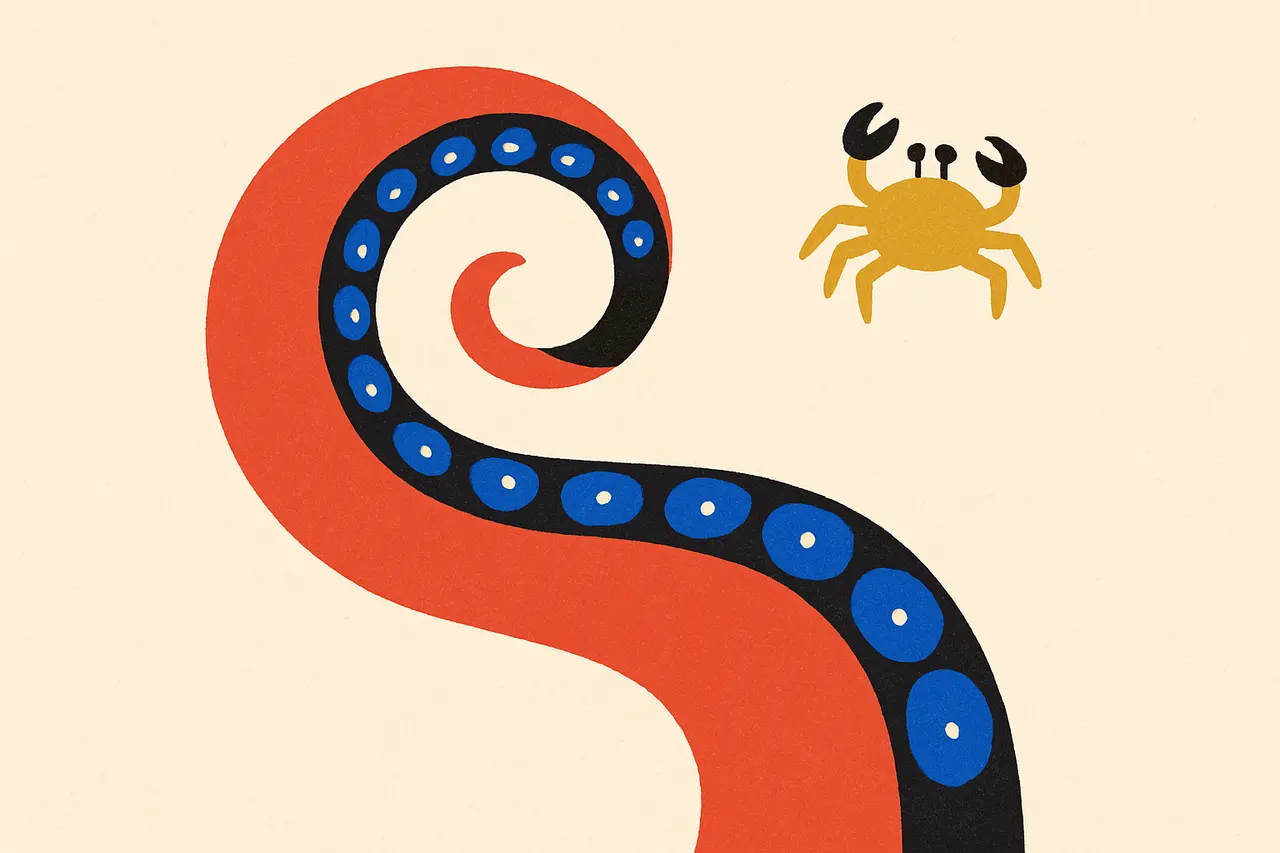
Two-thirds of an octopus's neurons live in its arms, which 'taste by touch' using sensors no other animal has.
An octopus is not built like us, and nowhere is that clearer than in its arms. About two-thirds of its neurons sit not in the central brain but distributed down the eight arms. Each arm carries enough local processing to explore, decide, and grab semi-independently — so much so that a severed arm can still reach for and seize an object on its own.
The arms don’t just move on their own; they sense the world in a way no human organ does. Embedded in the suckers are specialized sensory cells that Harvard researchers identified as chemotactile receptors — a family of detectors unlike any found in other animals.
These receptors respond to molecules that barely dissolve in water, the kind that coat the surfaces of prey and other sea creatures. When an octopus’s sucker touches a surface, it registers both shape and chemistry at once.
Scientists describe it as “taste by touch” — chemistry and texture sensed in the same instant.
That fusion lets an arm probing a dark crevice instantly judge whether it has found a crab worth grabbing or an inedible rock, without waiting on the central brain. The findings, published in the journal Cell in 2020, reveal an intelligence that is radically distributed — a creature that thinks, in part, with its limbs and tastes with its skin.
Sources & references
2 referencesWell-established. Corroborated by 2 independent sources.