The first powered flight lasted just 12 seconds
The age of aviation began with a hop shorter than the wingspan of a modern jumbo jet.
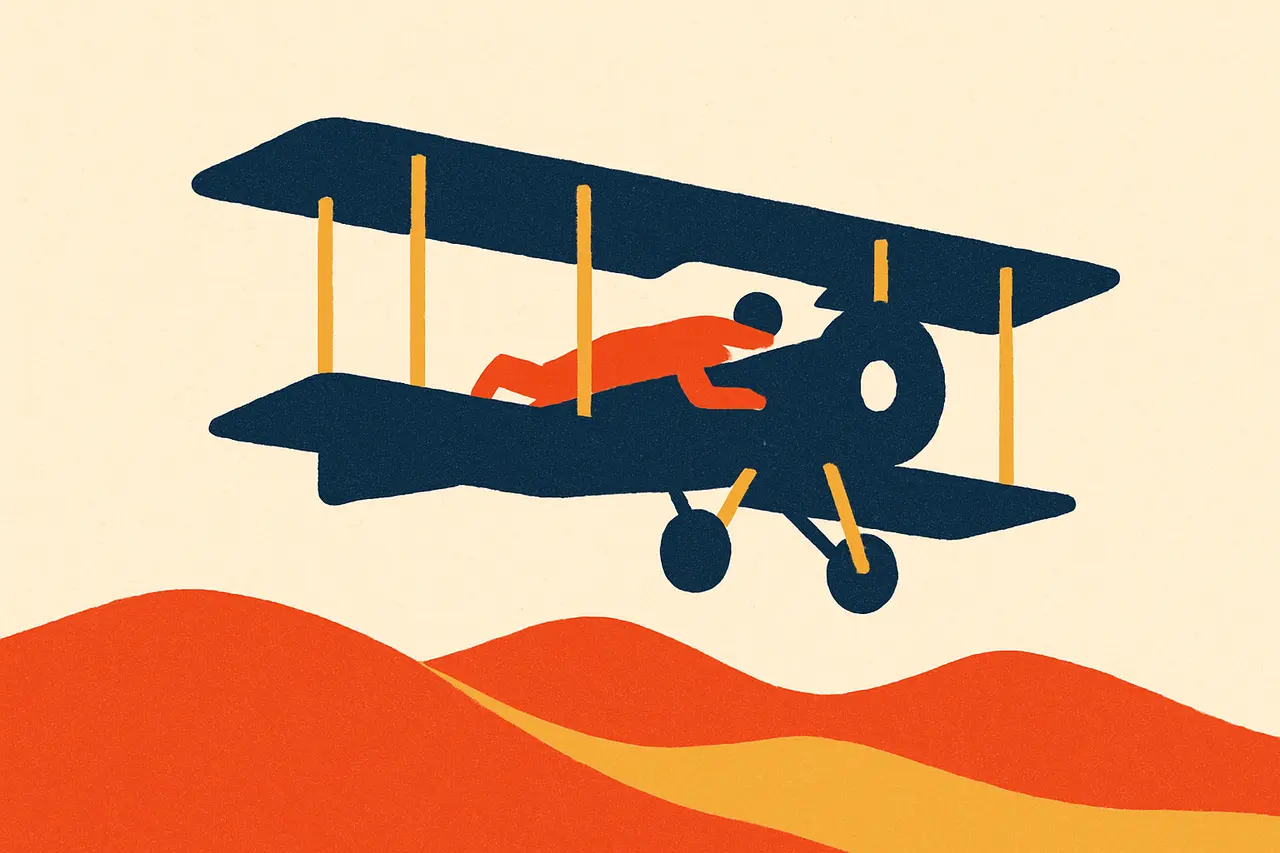
On the morning of 17 December 1903, on the windswept dunes of Kill Devil Hills near Kitty Hawk, North Carolina, Orville Wright lay prone on the lower wing of a fragile spruce-and-muslin biplane and lifted into the air. The flight covered just 120 feet and lasted only 12 seconds — shorter than the wingspan of a modern Boeing 747. It was, nonetheless, the first sustained, powered, controlled flight of a heavier-than-air machine carrying a person. The brothers flew four times that day, alternating at the controls; Wilbur’s final attempt stretched to 852 feet in 59 seconds.
A short flight — only 12 seconds — but a true flight nevertheless.
What set the Wrights apart was not raw power but control. Rivals chased bigger engines and machines that would fly themselves, betting on inherent stability. Watching buzzards bank and recover, the brothers grasped that a pilot must actively steer — twisting, or wing-warping, the wingtips to roll the craft, coordinated with rudder and elevator. That insight, three-axis control, is the principle behind every airplane built since.
Their method was as radical as their idea. As bicycle mechanics they distrusted the published lift tables everyone else relied on, so in 1901 they built their own wind tunnel and tested dozens of model wings to find shapes that actually worked. They designed a custom lightweight gasoline engine because no manufacturer would, and they treated their propellers as rotating wings — solving the math from scratch.
The wider world barely noticed. Reporters doubted the claims, and the Wrights deliberately kept a low profile to lock down patents before exposing their secrets. They flew little in public until 1908, when demonstrations in France finally erased the skepticism — even as lawsuits over their control patent dragged on for years.
Sources & references
2 referencesWell-established. Corroborated by 2 independent sources.