The transistor — the device that built the modern world — debuted in 1947
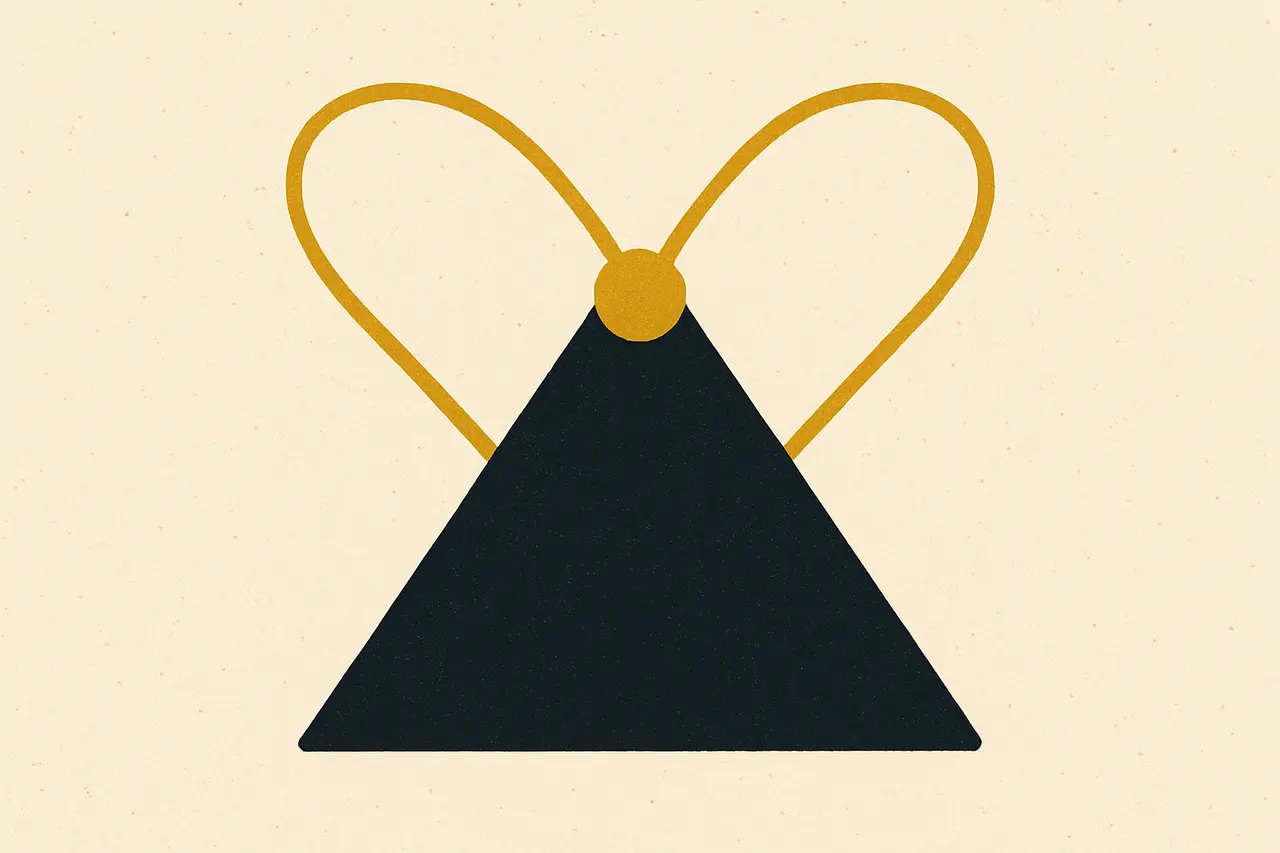
A sliver of germanium and two gold contacts replaced the bulky vacuum tube and made every chip since possible.
In December 1947, at Bell Telephone Laboratories in New Jersey, physicists John Bardeen and Walter Brattain pressed two closely spaced gold contacts onto a slab of high-purity germanium — and watched it amplify an electrical signal. On December 16 they had a working device; a week later they demonstrated it to lab management.
This point-contact transistor did the job of a vacuum tube but was tiny, rugged, and sipped power — and that mattered concretely. A vacuum tube needed a fragile heated filament that burned out, ran hot, and drew real wattage; ENIAC used roughly 18,000 of them. A solid-state switch had no filament, made far less heat, and could be shrunk and packed together in ways tubes never could.
But the human story curdled fast. Team leader William Shockley, feeling sidelined from a breakthrough his two colleagues had actually made, went off and secretly developed a more practical junction (bipolar) transistor in 1948 — and it was his design, not the point-contact original, that became the manufacturable foundation of the whole industry.
Shockley called the breakthrough “a magnificent Christmas present.”
The trio shared the 1956 Nobel Prize in Physics, but Shockley’s ambition reshaped geography too. He left to found Shockley Semiconductor in California; his disgruntled “traitorous eight” walked out to start Fairchild, which in turn seeded Intel and Silicon Valley itself. Today billions of transistors fit on a fingernail-sized chip — all descended from that 1947 experiment.
Sources & references
2 referencesWell-established. Corroborated by 2 independent sources.