"Tragedy" literally means "goat song"
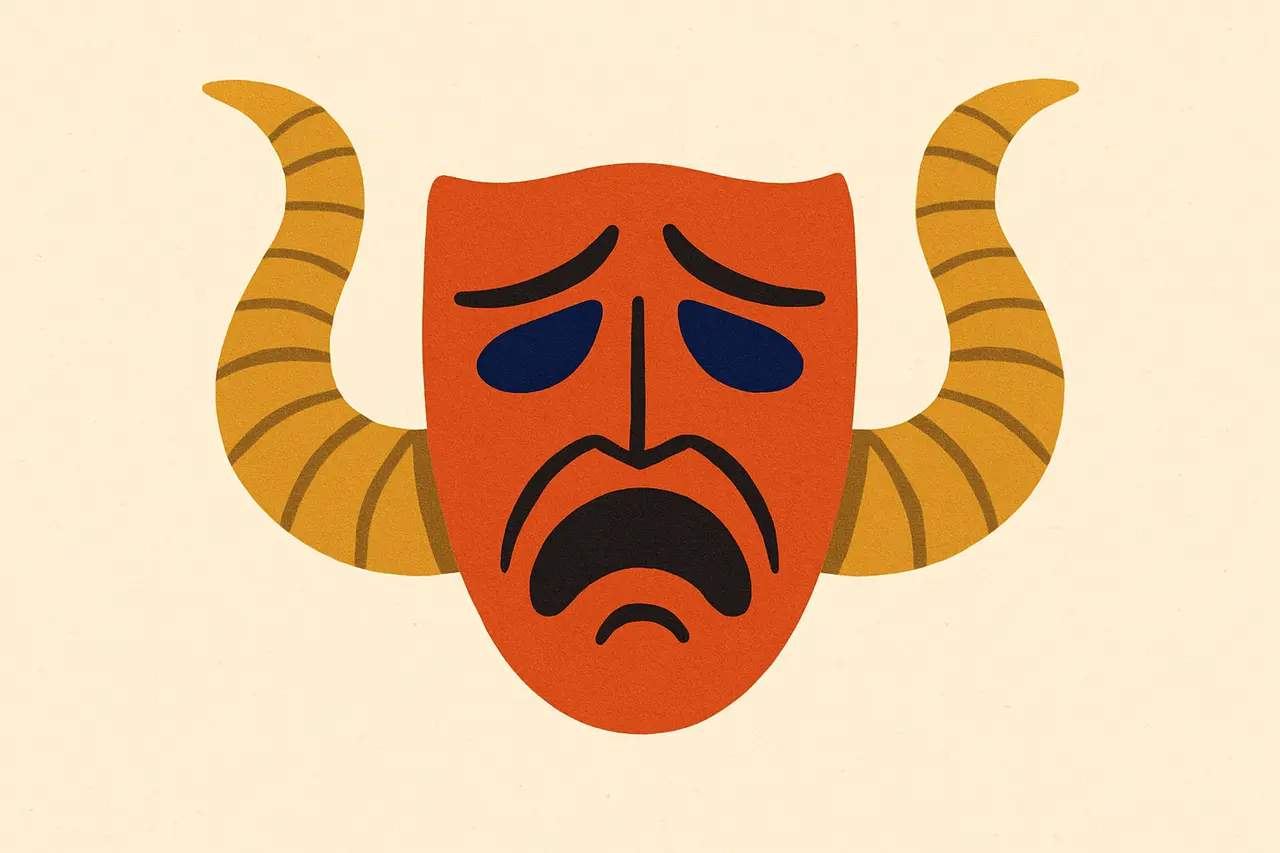
Western drama's most serious genre takes its name from goats — sung over, sacrificed for, or won as a prize at ancient Greek festivals.
The English word tragedy descends from the ancient Greek tragoidia — a compound of tragos (“goat”) and aeidein (“to sing”). Literally, it means “goat song.”
Nobody is certain why. Greek tragedy grew out of the festivals of Dionysus, god of wine and vegetation, to whom the goat was sacred. One theory holds that the “goat” was the prize awarded to the winning playwright; another that performers wore goatskins to play the goat-legged satyrs; a third, popularised by Aristotle, links the name to the chorus of satyrs in the hymns that preceded drama.
Comedy has a gentler root: komoidia, the “song” of the komos, a band of revellers.
These plays were staged as competitions at the City Dionysia in Athens from the 6th century BCE, where playwrights like Aeschylus, Sophocles and Euripides vied for the top honour — and, perhaps, a goat.
Sources & references
2 referencesWell-established. Corroborated by 2 independent sources.