One 1918 law gave America its time zones and daylight saving
On this day · 19 March 1918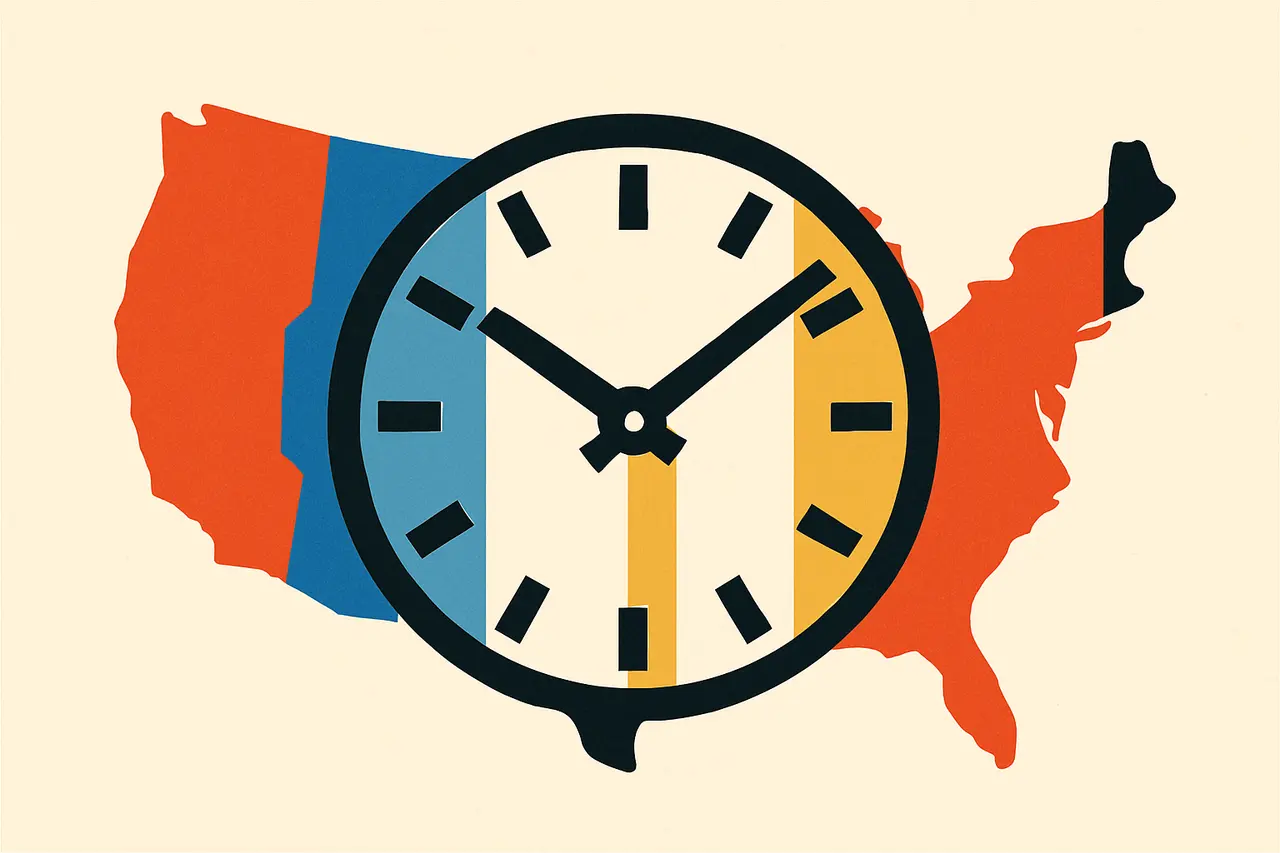
The Standard Time Act of 1918 finally wrote the nation's railroad time zones into federal law and bolted on a wartime daylight saving experiment.
On March 19, 1918, Congress enacted the Standard Time Act, the first U.S. federal law to fix the country’s standard time zones — and, in the same stroke, to impose daylight saving time. The railroads had agreed on standardized time back in 1883, but until 1918 it carried no force of law.
The act carved the continental United States into five zones, each anchored to a meridian: the 75th, 90th, 105th, and 120th degrees of longitude west of Greenwich, with a fifth zone for Alaska at the 150th. It handed the Interstate Commerce Commission authority to draw the boundaries.
Daylight saving, adopted to conserve fuel during World War I, proved deeply unpopular. Congress repealed it in 1919, overriding President Woodrow Wilson’s veto.
The time zones stayed; the clock-changing did not return nationally until World War II.
So a single wartime statute gave Americans both the durable map of their time zones and the perennial springtime ritual of resetting their clocks.
Sources & references
2 referencesWell-established. Corroborated by 2 independent sources.