The transcontinental railroad is completed at Promontory, Utah
On this day · 10 May 1869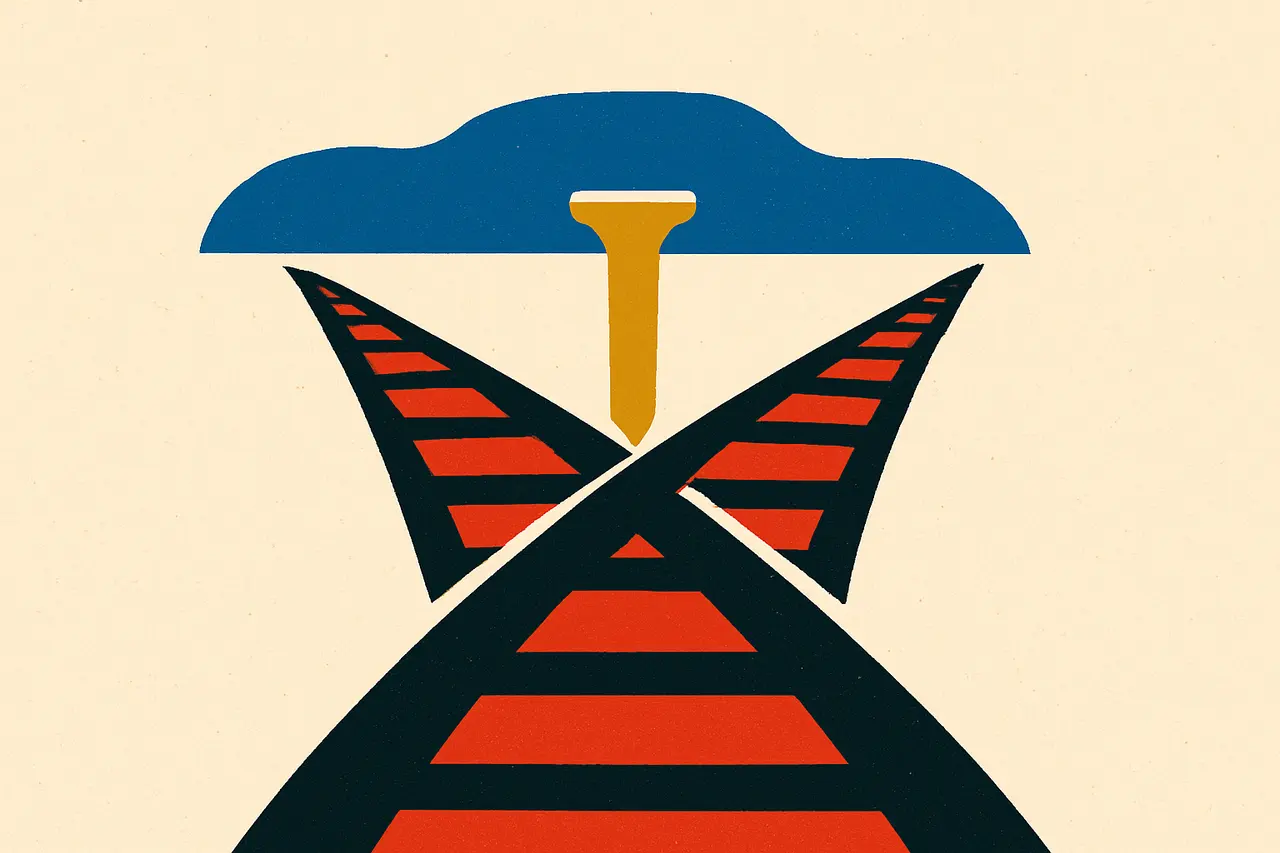
A ceremonial golden spike joined two railroads at Promontory Summit, and a single telegraphed word — DONE — announced a coast-to-coast nation.
On May 10, 1869, the rails of the Central Pacific and Union Pacific railroads met at Promontory Summit, Utah Territory, completing the first transcontinental railroad across the United States. The work had begun in 1863, with crews laying track eastward from Sacramento and westward from Omaha through deserts, mountains, and bitter winters.
At the joining ceremony, officials tapped a ceremonial golden spike into a polished laurelwood tie. Central Pacific president Leland Stanford, Union Pacific’s Thomas Durant, and a regular rail worker took part in driving the final spikes.
At 12:47 p.m. the telegrapher tapped a single word to the nation: D-O-N-E.
A journey that had once taken months by wagon could now be made in about a week. The link transformed commerce, migration, and time itself, helping push the country toward standardized time zones, while reshaping the lives of the Indigenous nations and immigrant laborers whose work and lands made it possible.
Sources & references
2 referencesWell-established. Corroborated by 2 independent sources.