The 50-megaton Tsar Bomba is still the biggest bomb ever
On this day · 30 October 1961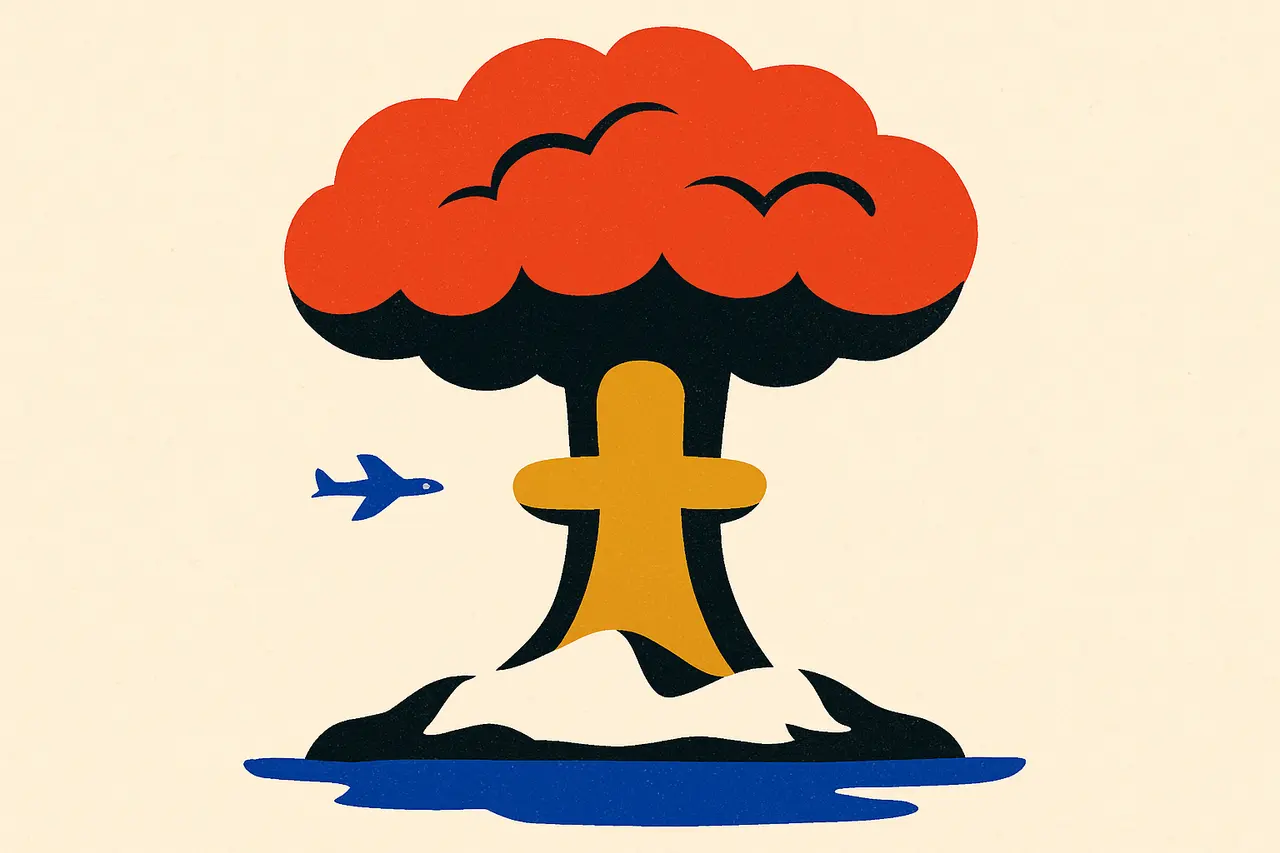
The Soviet Tsar Bomba of 30 October 1961 was 1,570 times Hiroshima and Nagasaki combined, yet its designers deliberately made it unusually clean.
The Tsar Bomba, detonated by the Soviet Union on 30 October 1961 over Mityushikha Bay on Severny Island in the Arctic, is still the largest explosion humans have ever caused: about 50 megatons of TNT.
Its scale is easiest to grasp by comparison. It was roughly 1,570 times the Hiroshima and Nagasaki bombs combined, ten times all the conventional explosives used in World War II, and more than three times Castle Bravo, at 15 megatons the largest US test. The biggest weapons either superpower actually deployed were about 25 megatons. That single shot equalled about a tenth of the combined yield of all nuclear tests up to that point. US analysts first estimated 55 to 60 megatons; Russian sources since the Cold War have confirmed 50.
Huge, but deliberately clean
The three-stage design could have reached 100 megatons, but at that size it would have produced about a quarter of all the fallout generated since 1945, and the bomber could not have escaped. So the team led by Yuli Khariton, which included Andrei Sakharov, replaced the uranium-238 tamper of the third stage with lead. Fusion then supplied as much as 97% of the energy, and despite its yield the bomb produced little fallout. Exploding it 13,000 feet up helped too: its own shockwave kept the five-mile-wide fireball from touching the ground.
The 27-tonne bomb fell on a parachute so the stripped-down Tu-95 could get about 30 miles away; the crew had been given 50/50 odds of survival. The shockwave dropped the aircraft about half a mile, but it made it home. One airborne witness described the fireball:
“The ball was powerful and arrogant like Jupiter.”
The test drew condemnation around the world, and in 1963 the United States, the Soviet Union and Britain signed the Limited Test Ban Treaty, ending their atmospheric tests. Classified footage of the explosion was released in 2020.
Sources & references
3 referencesWell-established. Corroborated by 3 independent sources.