The 1963 Great Train Robbery stole millions in untraceable banknotes
A gang halted a night mail train and made off with £2.6 million in used notes — most of it never recovered.
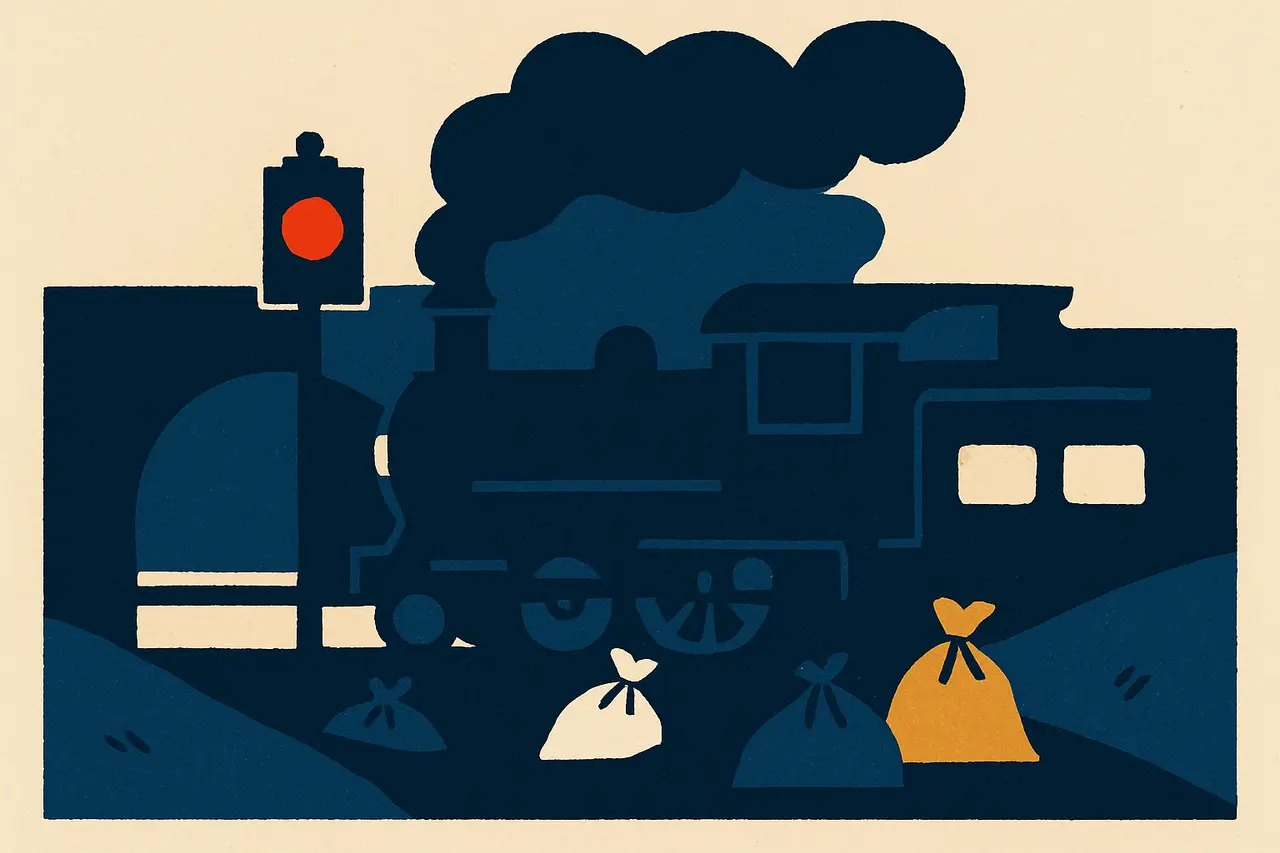
Just after 3 a.m. on 8 August 1963, a Glasgow-to-London Royal Mail train slowed to a halt at Bridego Bridge in Buckinghamshire. The signal ahead had turned red — but only because a gang had rigged it, covering the green light and wiring up a battery-powered red. It was the opening move of what Britain still calls the crime of the century.
The 15-strong gang, led by Bruce Reynolds, swarmed the train, uncoupled the front carriages and forced the driver to pull forward to their waiting trucks. They formed a human chain and unloaded 120 mailbags in minutes.
Inside was roughly £2.6 million — worth tens of millions today. Crucially, it was mostly used banknotes being sent to London for destruction. Old, low-denomination and out of sequence, the notes carried no neat run of serial numbers to trace, making the haul close to untraceable cash.
The genius wasn’t the violence. It was the timing — hitting the one train carrying money already marked for the incinerator.
The getaway was the easy part. Police later raided the gang’s hideout at Leatherslade Farm and lifted fingerprints from a ketchup bottle and a Monopoly board the robbers had been playing with — using real money. Twelve of the fifteen were caught and imprisoned. Most of the cash, however, was never recovered, vanishing into legend along with names like Ronnie Biggs.
Sources & references
2 referencesWell-established. Corroborated by 2 independent sources.