The first U.S. patent for a gasoline-driven automobile was granted
On this day · 5 November 1895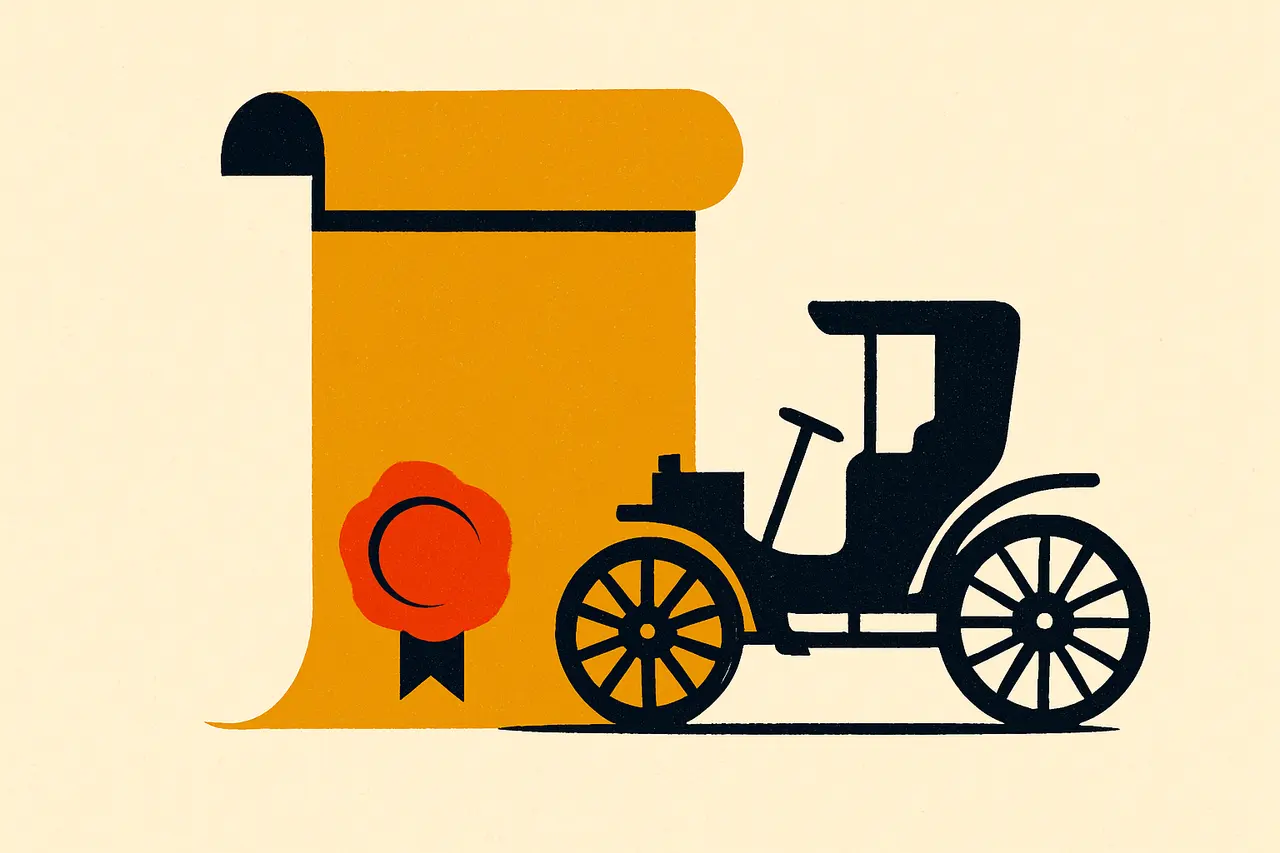
On November 5, 1895, patent attorney George Selden won a sweeping U.S. patent on the automobile—without ever building one.
George B. Selden was a patent attorney with an eye for timing. He filed his application for a gasoline-powered self-propelled vehicle back on May 8, 1879, then used clever amendments to keep it pending for years while the technology—and the money—caught up. The strategy paid off when U.S. Patent No. 549,160 was finally granted on November 5, 1895.
The patent was extraordinarily broad, and Selden licensed it to a manufacturers’ association that collected royalties on nearly every American car sold. There was just one wrinkle: Selden had never actually built a working automobile.
A paper invention claimed a cut of an entire industry.
Henry Ford refused to pay and fought the claim through the courts. The eight-year battle ended in 1911, when judges ruled the patent “valid but not infringed” by Ford’s engines—gutting its value and helping open the car market to all comers.
Sources & references
2 referencesWell-established. Corroborated by 2 independent sources.