The first computer mouse was a wooden box with two metal wheels
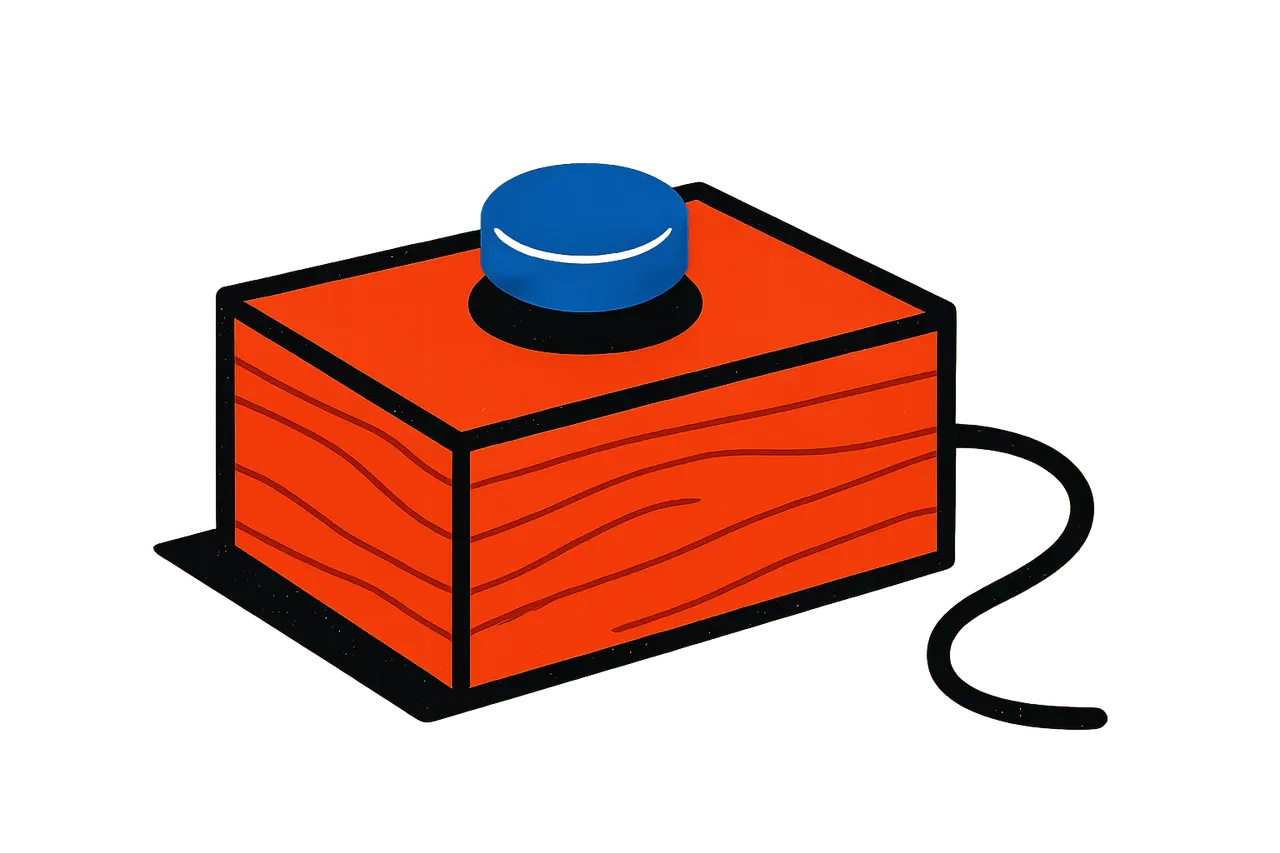
Before sleek plastic and lasers, the device that conquered every desktop began as a hand-carved block trailing a single wire.
The pointer you nudge a billion times a year started life as a chunk of wood. In 1964, at the Stanford Research Institute, Douglas Engelbart and engineer Bill English built the first computer mouse: a small wooden box housing two perpendicular metal wheels, a single button, and a wire running back to the machine. Roll the box across the desk, and the cursor on screen copied the motion. One wheel tracked side-to-side, the other up-and-down.
The name was an accident nobody bothered to fix. With the cord trailing out the back, the prototype, as Engelbart put it, “just looked like a mouse with a tail.” The lab nickname stuck, and “mouse” outlived every committee that might have chosen something more dignified.
“It just looked like a mouse with a tail … and the name ‘mouse’ just took.”
The public got its first look on December 9, 1968, when Engelbart staged a 90-minute presentation at a San Francisco computer conference. Historians now call it the “Mother of All Demos,” because it didn’t just unveil the mouse. In one sitting, the audience saw interactive on-screen editing, hypertext links, multiple windows, real-time collaborative documents, and video conferencing, technologies that wouldn’t reach ordinary desks for two or three decades.
Most of it looked like science fiction in 1968. The wooden mouse was the one piece everyone could hold, and it became the part that changed the world first.
Sources & references
2 referencesWell-established. Corroborated by 2 independent sources.