Eastman's 1885 Film Helped Movies Move
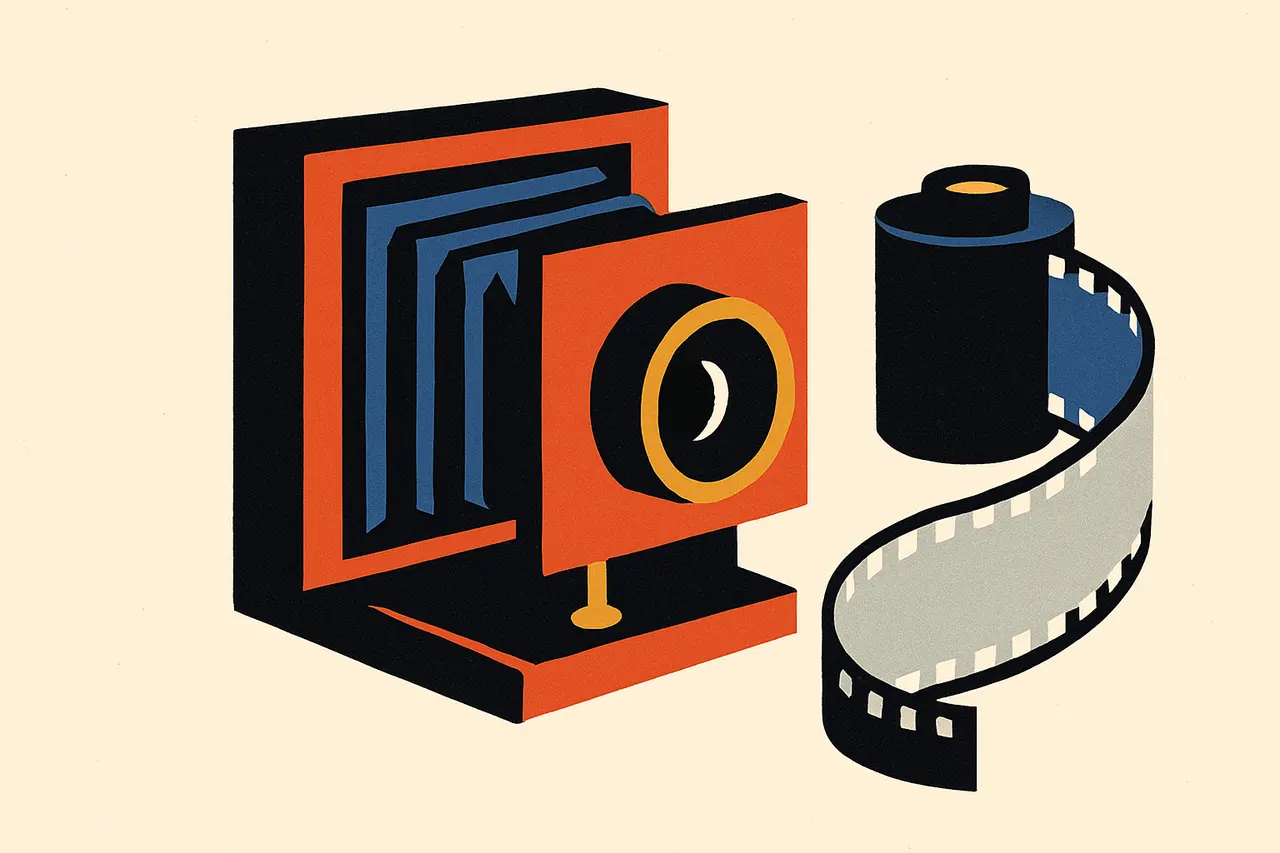
In 1885 George Eastman began selling flexible roll film, a leap from glass plates that early motion pictures would later be built upon.
Photography once meant lugging fragile glass plates. In 1885, George Eastman changed that, beginning to market the world’s first commercial roll film — transparent, flexible, and able to be cut into narrow strips and wound on a spindle.
The breakthrough that made it practical was the Eastman-Walker roll holder, a removable spooling device that fed film through ordinary cameras. William H. Walker and Eastman patented it as the “Roller Holder for Photographic Films,” granted on May 5, 1885.
Flexible film freed the camera from the rigid, breakable glass plate.
That flexible base proved essential when motion pictures arrived. Eastman later supplied film for Thomas Edison’s motion-picture camera, and the roll-film lineage that began in 1885 became the medium on which early movies were shot. The convenience that started with snapshots ended up running through every cinema projector.
Sources & references
2 referencesWell-established. Corroborated by 2 independent sources.