The Silk Road was a web of routes, and silk was only part of it
No single highway, no mostly-silk cargo - and nobody called it the 'Silk Road' until the 1800s.
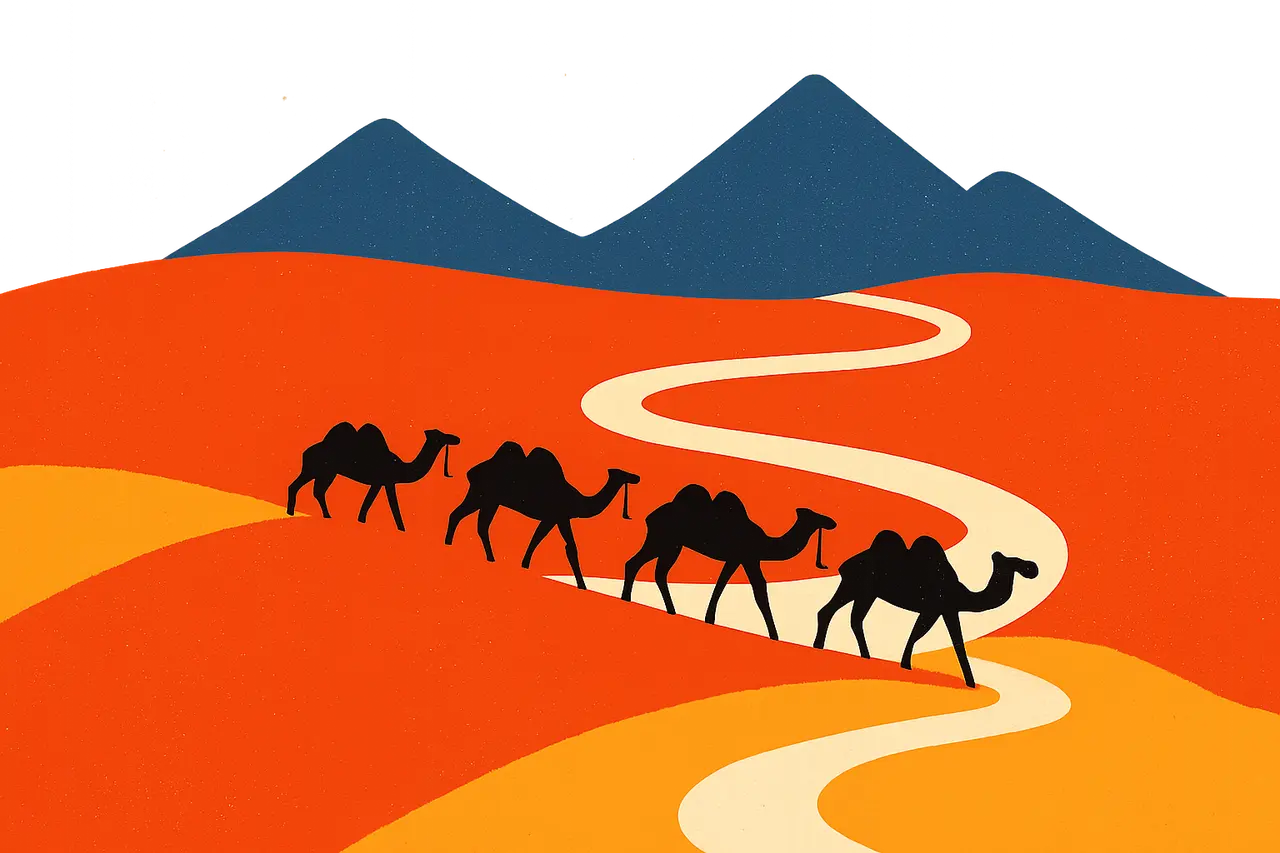
For roughly 1,600 years, from around the 2nd century BCE, a sprawling web of caravan tracks and sea lanes linked China to the Mediterranean across some 4,000 miles (6,400 km). We call it the Silk Road, but the name is misleading on two counts.
First, it was never one road. Merchants chose from many overland routes through Central Asia and the Middle East, plus maritime paths across the Indian Ocean. Goods passed hand to hand through middlemen rather than travelling end to end. Second, silk was just one commodity among textiles, spices, precious stones, metalwork, fruits and more.
The term ‘Silk Road’ was coined only in the 1870s, by German geographer Ferdinand von Richthofen.
What moved along these routes mattered as much as the trade goods: paper and printing, religions including Buddhism and Christianity, art, science - and, devastatingly, disease.
Sources & references
2 referencesWell-established. Corroborated by 2 independent sources.