A steel box cut shipping costs more than thirtyfold
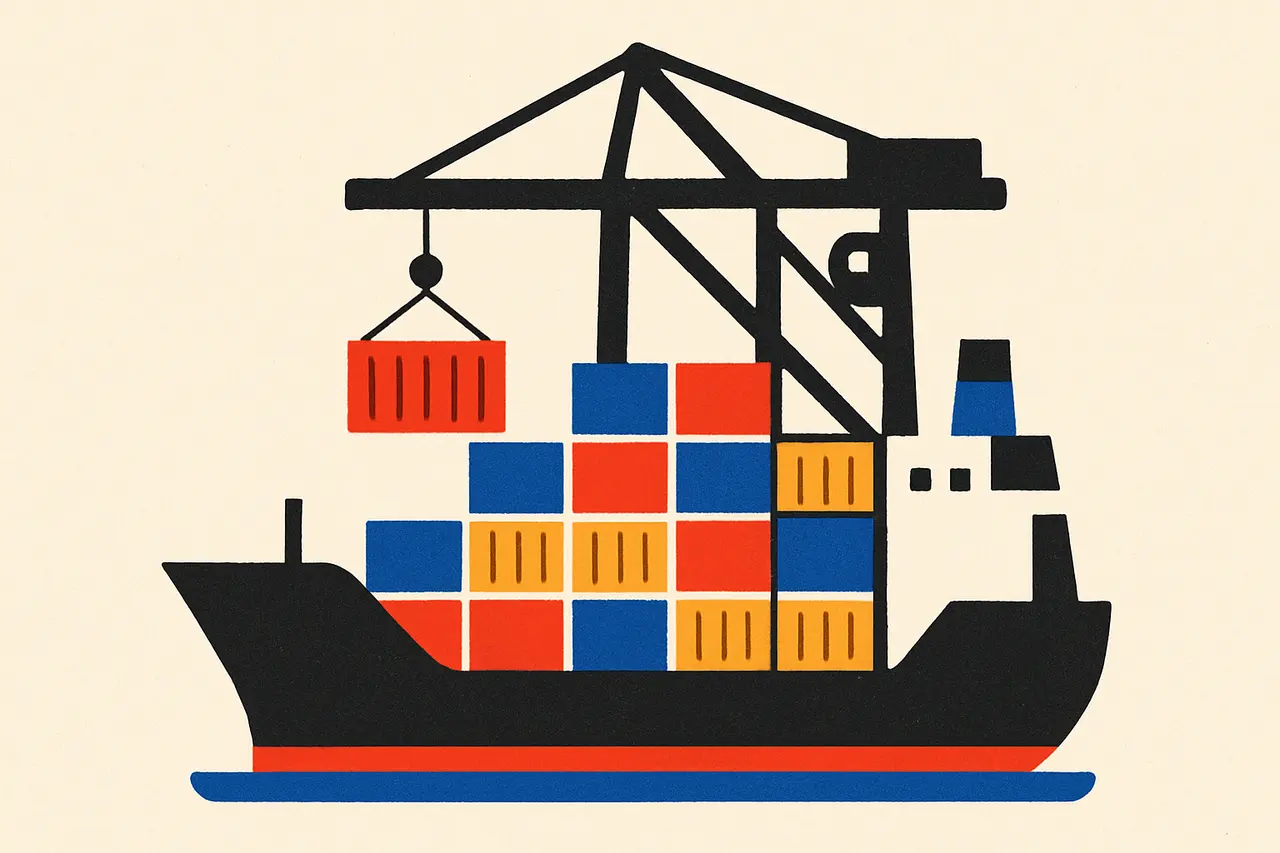
One trucking entrepreneur's metal box quietly made globalisation possible.
On 26 April 1956, a converted tanker called the Ideal-X sailed from Newark, New Jersey, to Houston, Texas, carrying 58 steel containers stacked on its deck. It was the brainchild of trucking entrepreneur Malcolm McLean, and it marked the birth of modern container shipping.
The economics were staggering. Loading a ship the old way — longshoremen manhandling barrels, crates and sacks one by one — cost about $5.83 per ton. Loading standardized containers cost roughly 16 cents per ton, a saving of more than thirtyfold, and loading time collapsed from days to hours.
The real magic, though, wasn’t the box — it was making every box identical. Once ISO standard dimensions (the twenty-foot equivalent unit, or TEU) were agreed, any container could fit any ship, crane, truck chassis and rail car on the planet. McLean even opened up his patent to spur adoption, betting that a universal standard beat a proprietary one.
The truck driver who reinvented shipping helped reinvent the world economy.
The upheaval was not painless. Containerization gutted the traditional work of longshoremen and hollowed out the dock communities built around hand-loading, while shifting power to a handful of mega-ports big enough to run the giant cranes. Today, roughly 90% of world trade moves by sea, and the largest ships carry 20,000-plus containers — against the Ideal-X’s 58. The humble steel box became one of the great quiet enablers of globalization.
Sources & references
2 referencesWell-established. Corroborated by 2 independent sources.