Picasso and Braque made Cubist works so alike that experts still can't always tell them apart
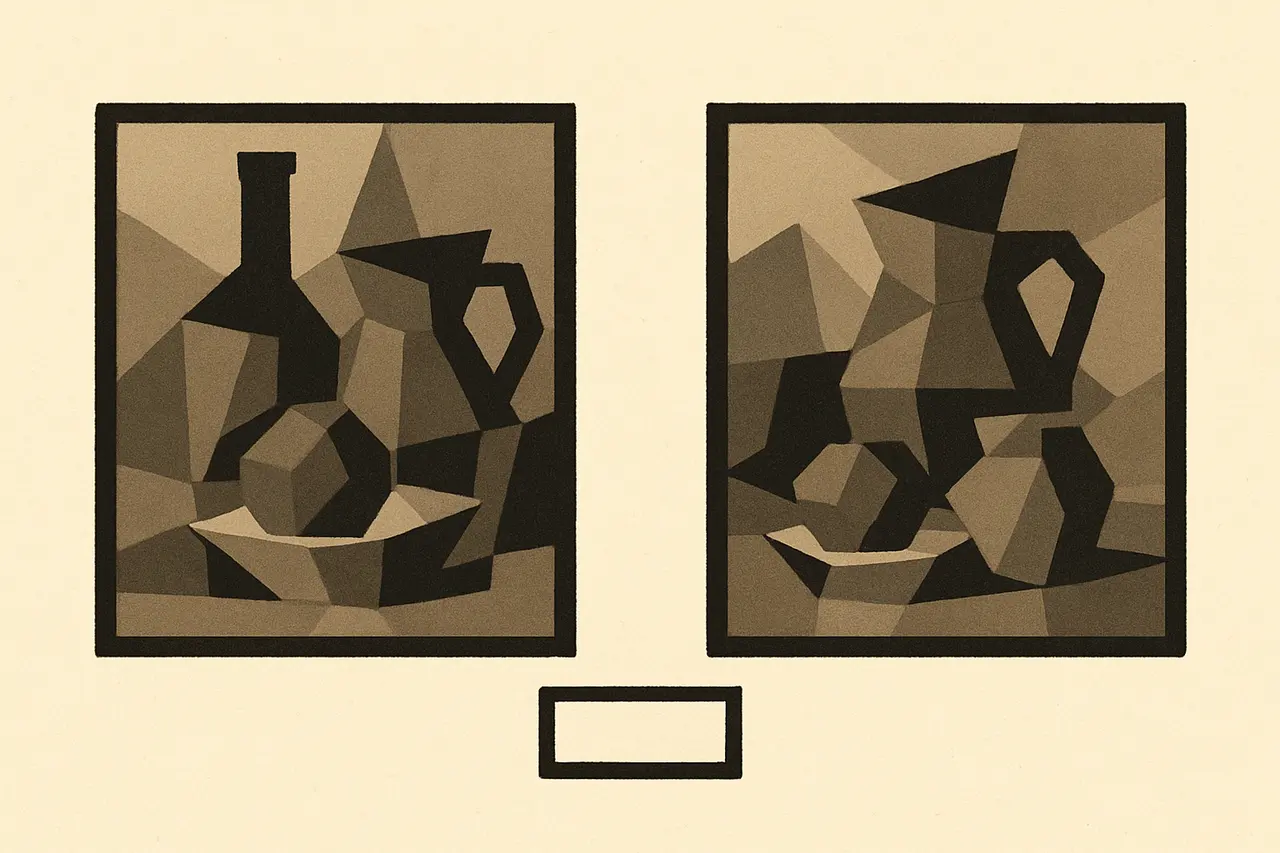
For a few intense years the two painters worked so closely that their canvases became, in places, virtually impossible to attribute.
Between roughly 1909 and 1912, Pablo Picasso and Georges Braque built Analytic Cubism together fracturing objects into faceted planes, draining color to browns and grays, and sharing every discovery as they made it. They met almost daily, visiting each other’s studios in Montmartre, and worked so tightly in tandem that their paintings from this stretch can be genuinely difficult to tell apart.
Braque later described the partnership in mountaineering terms.
“We were like two mountain climbers roped together,” he said and the closeness shows on the canvas.
With subjects dissolved into the same gridded scaffolding and the palette reduced to near-monochrome, the two men’s personal touches all but vanished. They often left works unsigned, or signed only on the back, treating the project as a shared invention rather than a contest of individual authorship. The result is that the attribution of some Analytic Cubist pictures still rests on provenance and connoisseurship rather than anything obvious in the paint itself.
Museums today acknowledge the blur openly: their work from this period, curators note, became “virtually indistinguishable.” That was partly the point. Cubism was less a style two rivals competed in than a language they invented together each man pushing the other toward an abstraction neither could have reached alone. When they later went separate ways Braque to the war, Picasso onward into collage their styles diverged again. The brief period in which even the painters reportedly hesitated over which canvas was whose is the truest signature of how that collaboration worked.
Sources & references
2 referencesWell-established. Corroborated by 2 independent sources.