One lightning bolt carries enough energy to power a house for over a week
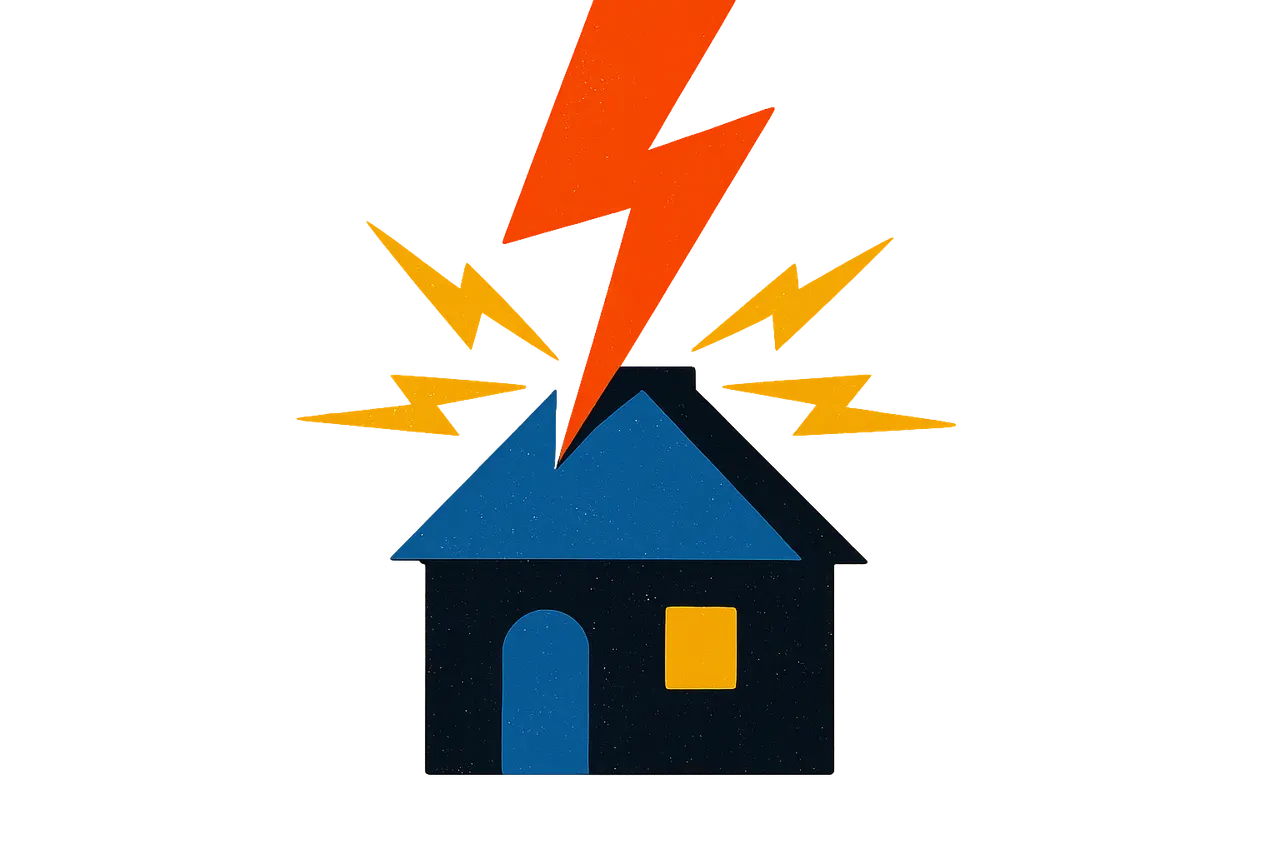
A single strike packs a billion joules into a few millionths of a second — far more than your home burns through in days, yet almost impossible to catch.
A lightning flash is a staggering burst of power compressed into almost no time at all. The National Weather Service puts a typical flash at about 300 million volts and roughly 30,000 amps — figures that dwarf the 120 volts in a wall outlet. NOAA’s National Severe Storms Laboratory notes the channel can heat to above 50,000 degrees Fahrenheit, around five times hotter than the surface of the Sun, all in a few millionths of a second.
Add it up and an average cloud-to-ground bolt delivers on the order of one billion joules of energy. A typical American home uses a few dozen kilowatt-hours a day, so that single discharge — if you could bottle it — would keep the lights on for a week or more. Stronger strikes carry several times as much.
So why aren’t we wiring our houses to the sky? Because the energy arrives all at once, in a pulse lasting microseconds. No battery or capacitor can swallow that much current that fast, and much of the energy never becomes usable electricity at all — it goes into heat, light, and the thunderclap of air exploding outward.
The problem isn’t how much energy lightning holds. It’s that the bolt hands it all over in an instant, then vanishes.
Lightning is also maddeningly unpredictable, striking where and when it pleases. Plenty of power, no practical way to keep it.
Sources & references
2 referencesWell-established. Corroborated by 2 independent sources.