Oliver Cromwell Dissolved England's Rump Parliament
On this day · 20 April 1653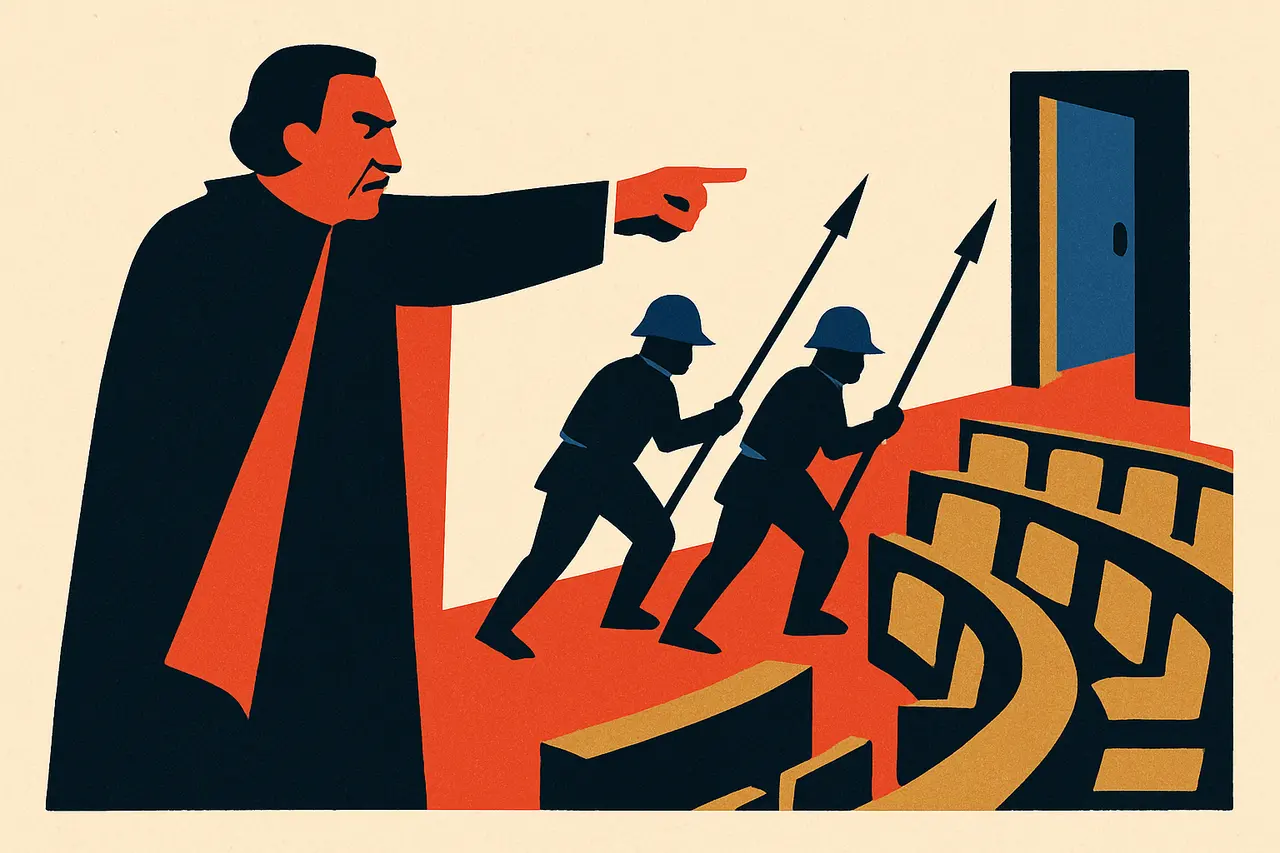
With soldiers at his back, a furious Cromwell swept away the last of England's Long Parliament in a single afternoon.
On 20 April 1653, Oliver Cromwell marched into the House of Commons and forcibly dissolved the Rump Parliament — the remnant of the Long Parliament left sitting after Pride’s Purge of December 1648. He had grown convinced the members were clinging to power and stalling the reforms he and the army demanded.
After listening to the debate, Cromwell rose, denounced the assembly, and called in a file of musketeers commanded by Major-General Thomas Harrison to clear the chamber. Tradition records his blistering dismissal: in the name of God, the members were told simply to go.
“You have sat too long for any good you have been doing. Depart, I say, and let us have done with you. In the name of God, go!”
The expulsion ended more than a decade of parliamentary continuity and left England without a representative assembly. Within months Cromwell installed a hand-picked Nominated Assembly — the so-called Barebones Parliament — and by the end of 1653 he had become Lord Protector, ruling England as a republic in all but name.
Sources & references
2 referencesWell-established. Corroborated by 2 independent sources.