Why an octave sounds 'the same' note: it's a perfect 2:1 frequency ratio
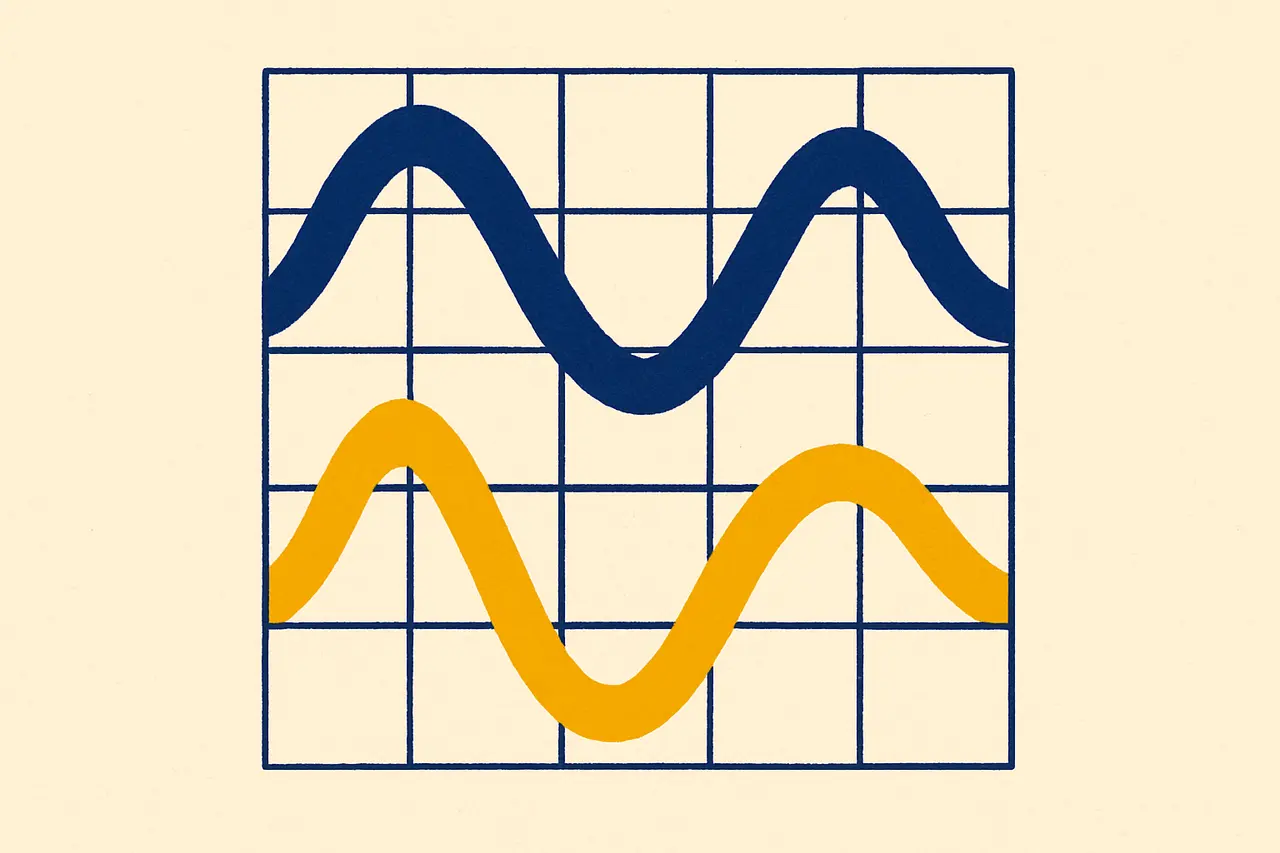
Double a note's frequency and your brain hears the same note again, higher up — a rule found in nearly every musical culture.
Play the A above middle C and it vibrates at 440 hertz. The A an octave above vibrates at exactly 880 Hz, and the octave below at 220 Hz. An octave is always a clean 2:1 frequency ratio — the upper note vibrates twice as fast as the lower one.
That simple doubling is why the two notes sound, in Britannica’s words, “qualitatively identical” despite their different pitch. The matching waveforms line up so neatly that the ear groups them as the same pitch class — which is why both are called “A.”
The pull of this relationship runs deep. The octave is the one interval that appears as a constant in the musical scales of nearly every culture on Earth. Whatever the tradition or instrument, doubling the frequency tends to land on a note that feels like home again — an acoustic coincidence written into how human hearing itself works.
Sources & references
2 referencesWell-established. Corroborated by 2 independent sources.