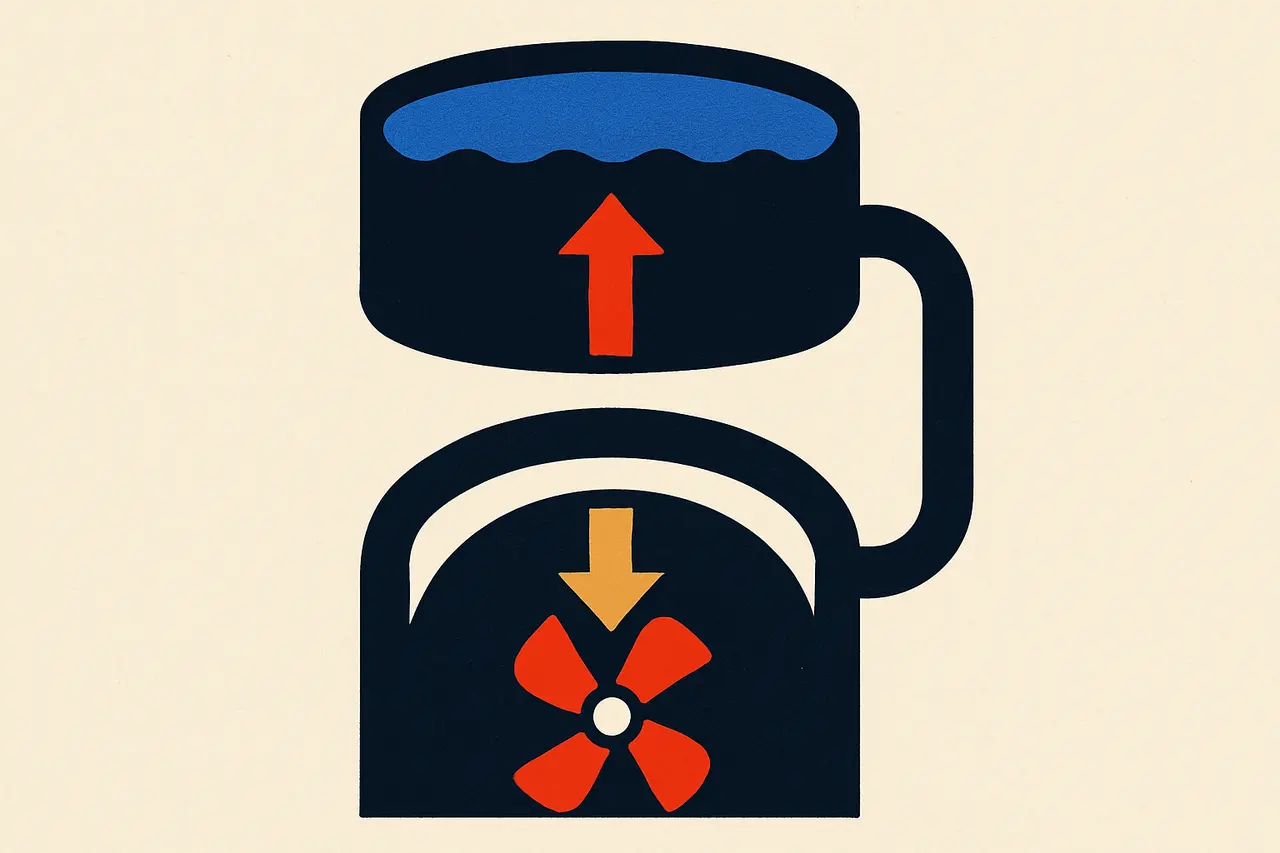
LEDs Turn Almost All Their Energy Into Light, Not Heat

The old bulb was basically a tiny heater that happened to glow.
An incandescent bulb makes light by heating a metal filament until it glows white-hot. The glow is almost an afterthought: the overwhelming majority of the electricity becomes heat, not visible light. That is why old bulbs are too hot to touch.
Light-emitting diodes (LEDs) generate light directly in a semiconductor, wasting far less energy as heat. According to the U.S. Department of Energy, residential LEDs — especially ENERGY STAR-rated products — use at least 75% less energy and last up to 25 times longer than incandescent lighting.
A typical incandescent bulb burns out after about 1,000 hours; a quality LED can run for 15,000 hours or more.
The efficiency gap is so large that the United States has steadily phased out the least efficient incandescent bulbs. Swapping a home’s bulbs for LEDs is one of the simplest energy savings available, cutting both electricity use and the steady stream of dead bulbs headed to the trash.
Sources & references
2 referencesWell-established. Corroborated by 2 independent sources.